
Classic Potato Salad
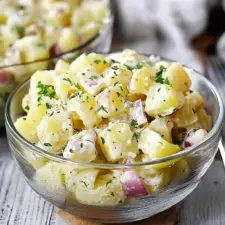
Classic American potato salad pairs tender baby potatoes with crunchy celery, pickles and onion in a creamy, tangy dressing. It is a make-ahead side for barbecues, picnics and family meals.
Ingredients
- 907 g (2 lb)baby potatoes
- 75 g (½ cup)chopped celery
- 50 g (⅓ cup)chopped dill pickles or relish
- 40 g (¼ cup)finely chopped red or yellow onion
- 75 ml (5 tablespoons)mayonnaise
- 30 ml (2 tablespoons)buttermilk or natural yoghurt
- 15 ml (1 tablespoon)Dijon mustard
- unspecifiedvinegar
- unspecifiedherbs
- to tastesalt and pepper
Instructions
- 1
Boil the potatoes
Boil the baby potatoes in salted water for 7–8 minutes, until a fork passes through them easily. Drain, leave to cool slightly, then cut into pieces.
- 2
Mix the dressing
In a mixing bowl, combine the mayonnaise, buttermilk, Dijon mustard, vinegar, salt and pepper.
- 3
Combine the salad
Put the cooled potatoes in a large bowl with the celery, pickles, onion and half of the herbs. Pour over the dressing and gently mix.
- 4
Chill before serving
Refrigerate the salad for a few hours before serving so the flavours can meld.
What is classic potato salad?
This American-style side dish combines cooked potatoes with chopped vegetables and a creamy dressing. Potato salads have many regional forms, but this version brings together familiar picnic flavours: mayonnaise, mustard, pickles and onion.
The soft potatoes soak up the tangy dressing, while celery and pickles add crunch. Chilling gives the flavours time to come together.
Nutrition and macros by portion
The nutrition label shows one serving as written: 280 calories, 5g protein, 32g carbs, 16g fat.
| Portion | Adjustment | kcal | Protein | Carbs | Fat |
|---|---|---|---|---|---|
| Lighter | Use less mayonnaise | 196 kcal | 4g | 22g | 11g |
| This serving | As written | 280 kcal | 5g | 32g | 16g |
| Hungry | Serve a larger portion | 420 kcal | 8g | 48g | 24g |
The potatoes provide most of the carbohydrates, while mayonnaise contributes much of the fat; the yoghurt or buttermilk and potatoes provide some protein. Serve a portion alongside a protein-rich main and extra vegetables to round out the plate.
Choosing the potatoes
Baby potatoes: their small size makes them quick to cook, and they can be cut into bite-sized pieces after boiling. Cook them only until fork-tender so they hold their shape when mixed.
Even cooking: choose potatoes of similar size, or halve any noticeably larger ones before boiling.
Building the dressing
Creamy base: mayonnaise gives the dressing body, while buttermilk or natural yoghurt adds a slight tang. Dijon mustard and the vinegar mentioned in the method sharpen the flavour.
Seasoning: salt and pepper are added to taste. The pickles also bring salt and acidity, so taste the finished salad before adding more.
Keeping the texture
Gentle mixing: cool the potatoes slightly before cutting and dressing them. Fold everything together carefully to avoid turning the potatoes into mash.
Crunch: celery, pickles and onion contrast with the soft potatoes. Chop them finely so they are distributed through the salad.
Allowing time to chill
The recipe gives a total time of 25 minutes, but also calls for chilling the salad for a few hours before serving. Plan for that resting time separately.
Cover and refrigerate the bowl while the flavours meld. Stir gently before serving if the dressing has settled.
What to serve with it
This salad fits naturally alongside barbecue dishes, grilled food or sandwiches. Its creamy, tangy dressing also works well with simply cooked vegetables.
For a balanced plate, pair a modest serving with a protein-rich main and a fresh green salad or other vegetables.
Recipe notes & tips
- Use potatoes of a similar size so they cook at roughly the same rate.
- Check the potatoes with a fork at 7 minutes and drain once tender.
- Let the potatoes cool slightly before adding the dressing so they are easier to handle.
- Fold the salad gently to keep the potato pieces intact.
- Taste after mixing, as the pickles can affect how much extra seasoning is needed.
- Allow a few hours for chilling, as specified in the method.
Variations
- Use yoghurt: replace the buttermilk with natural yoghurt, as allowed in the ingredient list.
- Choose relish: use chopped dill pickles or relish for the pickle element.
- Pick the onion: use either red or yellow onion for the finely chopped portion.
- Adjust the tang: vary the amount of Dijon mustard to suit your preference.
- Add the herbs: use the herbs mentioned in the method, adding half before chilling.
Common mistakes to avoid
- Overcooking the potatoes: they can break up during mixing; drain them when a fork passes through easily.
- Mixing while very hot: the potatoes are harder to handle; let them cool slightly before cutting.
- Stirring too firmly: this can mash the potatoes; fold the dressing and vegetables through gently.
- Skipping the chill: the recipe calls for a few hours in the fridge; allow that time before serving.
- Adding too much seasoning at once: pickles are already savoury; taste the mixed salad before adjusting.
How to store
Keep the salad covered in the refrigerator and serve it chilled. The recipe does not specify a storage duration; return leftovers promptly to the fridge and stir gently before serving. Reheating is not needed.
Frequently asked questions
Can I use natural yoghurt instead of buttermilk?
Yes. Natural yoghurt is listed as an alternative to buttermilk; use the same 30 ml amount.
Can I use relish instead of dill pickles?
Yes. The ingredients allow either chopped dill pickles or relish.
How do I know when the potatoes are cooked?
They should be fork-tender after about 7–8 minutes of boiling. Drain them once a fork passes through easily.
How long should the salad chill?
The method says to chill it for a few hours before serving so the flavours can meld.
Why are vinegar and herbs missing from the ingredient list?
The method mentions both, but the supplied ingredient list gives no amounts for them. Add them only if you have them and season to taste.
Cook it from the original
This recipe comes from bazarecipe.com. Their page has the author’s own photos, notes and tips — the best place to cook it from.
Open the recipe on bazarecipe.com