
Turmeric Coconut Rice Roll In Seaweed
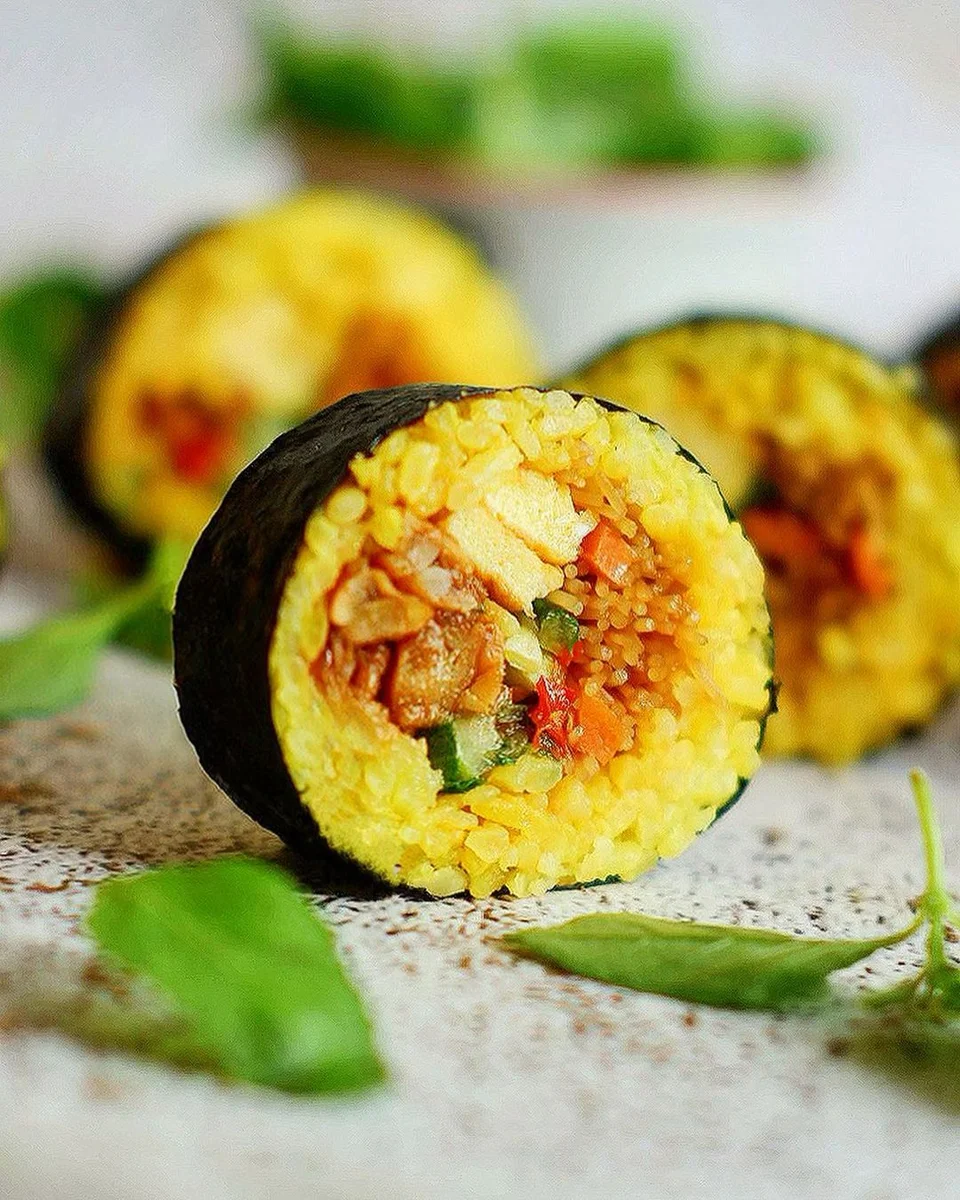
These seaweed rolls bring together turmeric rice, sweet-sour tempeh, rice vermicelli and chilli in a crisp-edged nori wrapper. They make a colourful meal to assemble and slice for sharing, though the supplied ingredient list omits several components mentioned in the method.
Ingredients
- 10 sheets or moreseaweed sheets, for the main wrapper
- 500 gtempeh, cut into long, thin strips
- a thumb-sized piecegalangal, bruised
- 1 tbspsweet soy sauce
- 8 smallshallots, minced
- 5 clovesgarlic, minced
- 4 tbsptamarind liquid
- 2–3 tbsppalm sugar
- 2 tbspoil
- 50 mlwater
- 1 tspwhite sugar
- ½–1 tspsalt
- as neededoil, for deep-frying
Instructions
- 1
Make turmeric rice
Mix a few tablespoons of water with grated turmeric, then squeeze the turmeric juice into a bowl. Add the juice and all the rice ingredients to a rice cooker, mix well and cook.
- 2
Fry the tempeh
Deep-fry the tempeh strips until golden, then drain them.
- 3
Cook the tempeh sauce
Heat oil in a pan and sauté the garlic and shallots until golden. Add the galangal and stir. Add the remaining ingredients except the fried tempeh and cook, stirring, until slightly thickened. Add the tempeh and stir to coat.
- 4
Soak vermicelli
Soak the rice vermicelli in hot water for 2–3 minutes, until softened but still springy.
- 5
Fry the vermicelli
Heat oil in a wok or pan and sauté the garlic and shallots until golden. Stir in the cabbage and carrots until slightly wilted. Add the cooked vermicelli and the remaining ingredients. Lower the heat and stir to combine.
- 6
Make the chilli
Heat oil in a pan and sauté the garlic, chilli and shallot. Add the smashed tomato and stir for 2–3 minutes. Stir in the remaining ingredients and cook for another minute or two.
- 7
Fill the seaweed
Place a seaweed sheet shiny-side down on a bamboo mat. Spread rice evenly over it, leaving about 5 cm uncovered at the top. Arrange the tempeh, rice vermicelli, chilli and additional stuffing along the centre of the rice.
- 8
Roll the seaweed
Use both hands to roll the mat, seaweed and rice over the fillings until one edge reaches the opposite edge. Hold the mat with both hands and press firmly as you continue rolling, pushing the mat out as you go. Repeat with the remaining sheets and fillings.
- 9
Slice and serve
Cut the rolls into 6 mm bite-sized pieces, transfer to a serving plate and sprinkle with toasted sesame seeds. Serve.
What are seaweed rice rolls?
These are nori-wrapped rolls built around rice and a savoury filling, with tempeh, vermicelli and chilli adding contrasting flavours and textures. The combination draws on Indonesian-style ingredients such as tempeh, galangal, tamarind and palm sugar, arranged in a format familiar from seaweed-wrapped rolls.
Turmeric gives the rice its colour, while the tempeh sauce adds sweet, tangy depth. The method also describes vermicelli, vegetables and a separate chilli mixture, but those components are not detailed in the supplied ingredient list.
Nutrition and macros by portion
The nutrition label shows one serving as written: 650 calories, 18g protein, 96g carbs, 20g fat.
| Portion | Adjustment | kcal | Protein | Carbs | Fat |
|---|---|---|---|---|---|
| Lighter | Use less frying oil | 455 kcal | 13g | 67g | 14g |
| This serving | As written | 650 kcal | 18g | 96g | 20g |
| Hungry | Add an extra roll | 975 kcal | 27g | 144g | 30g |
Rice and vermicelli provide most of the carbohydrates, while tempeh contributes protein and some fat. Frying oil, the sauce and any sesame topping add further fat; serve a moderate portion with extra vegetables for a more balanced plate. The supplied ingredient list is incomplete, so these macro sources are more certain than any precise nutrition estimate.
Check the ingredient list
Missing components: the method calls for rice, grated turmeric, rice vermicelli, cabbage, carrots, chilli, tomato, sesame seeds and additional seasonings, but gives no quantities for them. Confirm the full ingredient list before cooking so you can prepare the rice, vermicelli and fillings as intended.
Tempeh: cut it into long, thin strips so it fits neatly into the rolls. Galangal: bruising the piece helps release its aroma into the sauce.
Build the tempeh flavour
Golden tempeh: deep-frying gives the strips a browned surface before they are coated in sauce. Drain them well so excess oil does not dilute the glaze.
Sweet-sour sauce: sauté the aromatics until golden, then simmer the sauce ingredients until they thicken slightly. Stir in the tempeh at the end, coating it without breaking up the strips.
Keep the fillings manageable
Springy noodles: soak the rice vermicelli for 2–3 minutes, stopping when it is soft but still has some bounce. The method then combines it with sautéed cabbage and carrots over low heat.
Even layers: let warm fillings cool enough to handle before rolling, and use a modest line of filling down the centre. Too much filling makes it harder to close the seaweed neatly.
Roll firmly
Shiny side down: place the seaweed on the bamboo mat with the shiny side facing the mat. Leave about 5 cm bare at the far edge so the roll has room to close.
Tight pressure: use the mat to guide the rice and seaweed over the filling, pressing as you roll. Keep the roll even rather than squeezing so hard that the filling pushes out.
Slice and serve
Sharp knife: cut the finished rolls into pieces about 6 mm thick, as the method specifies. Wipe the blade between cuts if rice or filling begins to cling.
Serving ideas: offer the rolls as a shared platter or pair them with a simple vegetable side. The chilli filling brings heat, so a mild side can help balance the plate.
Recipe notes & tips
- Drain the fried tempeh thoroughly before adding it to the sauce.
- Keep the vermicelli slightly springy rather than soaking it until completely soft.
- Let hot fillings cool briefly before assembling the rolls.
- Spread the rice in an even layer and leave the stated 5 cm strip uncovered.
- Use a sharp knife and steady pressure to cut neat pieces.
Variations
- More vegetables: add extra finely sliced cabbage and carrot to the vermicelli filling.
- Milder chilli: reduce the chilli in the separate mixture to suit your taste.
- Extra tang: adjust the tamarind in the tempeh sauce, keeping its sweet-sour balance.
- Crispier tempeh: fry the strips until evenly golden before coating them.
- Sesame finish: sprinkle toasted sesame seeds over the sliced rolls as directed.
Common mistakes to avoid
- Overfilling: too much filling can split the wrapper; use a narrow line down the centre.
- Soft noodles: soaking vermicelli too long makes it difficult to handle; stop at 2–3 minutes when springy.
- Loose rolling: a slack roll can fall apart when sliced; press the mat firmly as you roll.
- Wet tempeh: excess frying oil thins the sauce; drain the strips before coating.
- Missing ingredients: the method refers to several unlisted items; check the complete recipe before starting.
How to store
Store leftover rolls in an airtight container in the fridge and eat within 2 days. The seaweed softens as it sits; for the best texture, assemble close to serving and avoid reheating the finished rolls.
Frequently asked questions
How much rice and turmeric do I need?
The method mentions rice and grated turmeric but the supplied ingredient list gives neither quantity. Check the complete recipe details before cooking rather than guessing.
Can I prepare the fillings ahead?
You can cook the tempeh and other fillings ahead, then cool and refrigerate them separately. Assemble the rolls nearer to serving so the seaweed stays firmer.
How do I know when the tempeh is ready?
Fry the strips until golden, then drain them. They are added to the sauce afterwards, where they should be coated in the slightly thickened mixture.
Why is my roll difficult to close?
The filling may be too bulky or the rice layer too thick. Keep the filling in a narrow line and leave about 5 cm of seaweed uncovered at the top.
Can I make these without a bamboo mat?
A clean tea towel can help guide the roll, though it may be harder to press it evenly. Roll slowly and keep the filling compact.
What are the additional stuffing ingredients?
The method mentions additional stuffing but does not specify what it is, and several other ingredients are also missing from the supplied list. Confirm the original full ingredient details before making the recipe.
Cook it from the original
This recipe comes from fooooods.com. Their page has the author’s own photos, notes and tips — the best place to cook it from.
Open the recipe on fooooods.com