
Pesto Caprese Pasta Salad
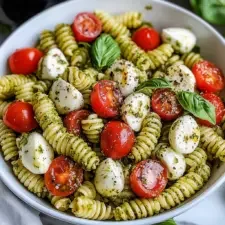
This pasta salad brings together the familiar Caprese combination of tomatoes, mozzarella and basil with a freshly blended pesto. It is a colourful, make-ahead-friendly choice for picnics, potlucks or a simple summer meal.
Ingredients
- 340 g (12 oz)short pasta, such as penne, fusilli or farfalle
- 225 g (1½ cups)cherry tomatoes, halved
- 225 g (8 oz)fresh mozzarella balls (bocconcini) or diced mozzarella
- 10 g (¼ cup)fresh basil leaves, torn
- 25 g (1 cup)fresh basil leaves
- 33 g (⅓ cup)grated Parmesan cheese
- 80 ml (⅓ cup)extra virgin olive oil
- 18 g (2 tablespoons)pine nuts
- 1 clovegarlic
- ½ teaspoonsalt
- ¼ teaspoonblack pepper
- Juice of ½ a lemon (optional)lemon juice
Instructions
- 1
Cook the pasta
Cook the pasta according to the packet instructions until al dente. Drain it and rinse under cold water.
- 2
Blend the pesto
Put the basil, Parmesan, pine nuts, garlic, salt, pepper and lemon juice, if using, in a food processor or blender. Blend until coarsely combined, then slowly drizzle in the olive oil while blending until smooth.
- 3
Toss the salad
In a large bowl, combine the cooked pasta, cherry tomatoes, mozzarella and torn basil leaves. Pour over the pesto and toss gently until everything is coated.
- 4
Serve or chill
Serve straight away, or chill for 30 minutes to let the flavours develop.
What is Caprese pasta salad?
Caprese takes its name from the Italian island of Capri and traditionally pairs tomatoes, mozzarella and basil. This pasta salad adapts those familiar ingredients into a more substantial dish, dressed with basil pesto.
The combination works because the pasta catches the savoury, herb-rich dressing, while juicy tomatoes and soft mozzarella bring freshness and creaminess.
Nutrition and macros by portion
The nutrition label shows one serving as written: 380 calories, 10g protein, 36g carbs, 22g fat.
| Portion | Adjustment | kcal | Protein | Carbs | Fat |
|---|---|---|---|---|---|
| Lighter | Use less pesto | 266 kcal | 7g | 25g | 15g |
| This serving | As written | 380 kcal | 10g | 36g | 22g |
| Hungry | Serve a larger portion | 570 kcal | 15g | 54g | 33g |
The pasta is the main source of carbohydrates, while the olive oil and mozzarella contribute much of the fat; the cheeses also provide protein. Serve it with a generous green salad or extra vegetables to add freshness to the plate.
Choosing the ingredients
Pasta shape: Short shapes such as fusilli, penne or farfalle are easy to serve and hold the pesto well. Cook them just to al dente so they keep their shape when tossed.
Tomatoes and mozzarella: Halved cherry tomatoes are easy to mix through, and bocconcini can be left whole or cut in half. If using a larger piece of mozzarella, dice it into bite-sized pieces.
Making the pesto
Basil and Parmesan: Blend the basil with Parmesan, pine nuts, garlic and the seasonings first. A coarse initial blend helps the leaves and nuts break down before the oil goes in.
Olive oil: Add it gradually while blending to make a smooth dressing. Lemon juice is optional; it adds a bright note to the pesto.
Getting the pasta texture right
Al dente: Follow the packet timing and check the pasta near the end; it should be tender but still have a little bite. Rinsing it under cold water stops the cooking and cools it for the salad.
Gentle tossing: Fold the pesto through rather than stirring roughly, so the mozzarella stays in pieces and the tomatoes do not get crushed.
Serving and timing
Serve immediately for a freshly dressed salad, or chill it for 30 minutes as directed to give the flavours time to mingle. The total preparation and cooking time is about 30 minutes.
This dish suits picnics, potlucks and light summer meals. For a more substantial spread, serve it alongside grilled vegetables or a green salad.
Balancing the plate
Pasta provides most of the carbohydrates, while olive oil and mozzarella contribute much of the fat. The mozzarella and Parmesan also provide protein.
Pair a serving with extra salad leaves or other vegetables if you would like more fresh produce alongside it.
Recipe notes & tips
- Salt the pasta water to season the pasta as it cooks.
- Rinse the pasta under cold water after draining, as directed, to cool it for the salad.
- Add the olive oil to the pesto gradually while the blender is running.
- Cut larger mozzarella pieces into bite-sized cubes for easier mixing.
- Toss gently so the tomatoes and mozzarella keep their shape.
Variations
- Try another pasta shape: Use any short pasta that can catch the pesto.
- Make it lemonier: Include the optional lemon juice in the pesto.
- Use diced mozzarella: Cut a larger piece into bite-sized cubes instead of using bocconcini.
- Add extra basil: Tear more leaves over the salad just before serving.
- Change the nuts: Replace the pine nuts with another nut if you prefer a different pesto flavour.
Common mistakes to avoid
- Overcooking the pasta: Cook it only until al dente so it holds together in the salad.
- Skipping the cold rinse: Rinse after draining to stop the pasta cooking and cool it down.
- Adding oil all at once: Drizzle it in gradually while blending for a smooth pesto.
- Tossing too vigorously: Fold the salad gently to avoid crushing the tomatoes and mozzarella.
- Chilling for too long without checking: The recipe calls for 30 minutes of chilling to let the flavours develop.
How to store
Refrigerate leftovers in a covered container and eat within 2 days. Serve cold, or let the salad stand briefly at room temperature before eating; if the pesto has thickened, toss gently to redistribute it.
Frequently asked questions
Can I make this pasta salad ahead?
Yes. You can make it ahead and chill it for 30 minutes to let the flavours develop. Keep it covered in the refrigerator until serving.
Which pasta shapes work best?
Penne, fusilli and farfalle are all listed options. Any short pasta shape is suitable.
Do I have to use lemon juice?
No. The lemon juice is optional, so you can leave it out of the pesto.
Should I rinse the pasta after cooking?
Yes. The method calls for rinsing it under cold water after draining, which cools it for the salad.
Can I use diced mozzarella instead of bocconcini?
Yes. Fresh mozzarella balls or diced mozzarella both work; cut larger pieces into bite-sized cubes.
Cook it from the original
This recipe comes from bazarecipe.com. Their page has the author’s own photos, notes and tips — the best place to cook it from.
Open the recipe on bazarecipe.com