
Mosaic Sushi
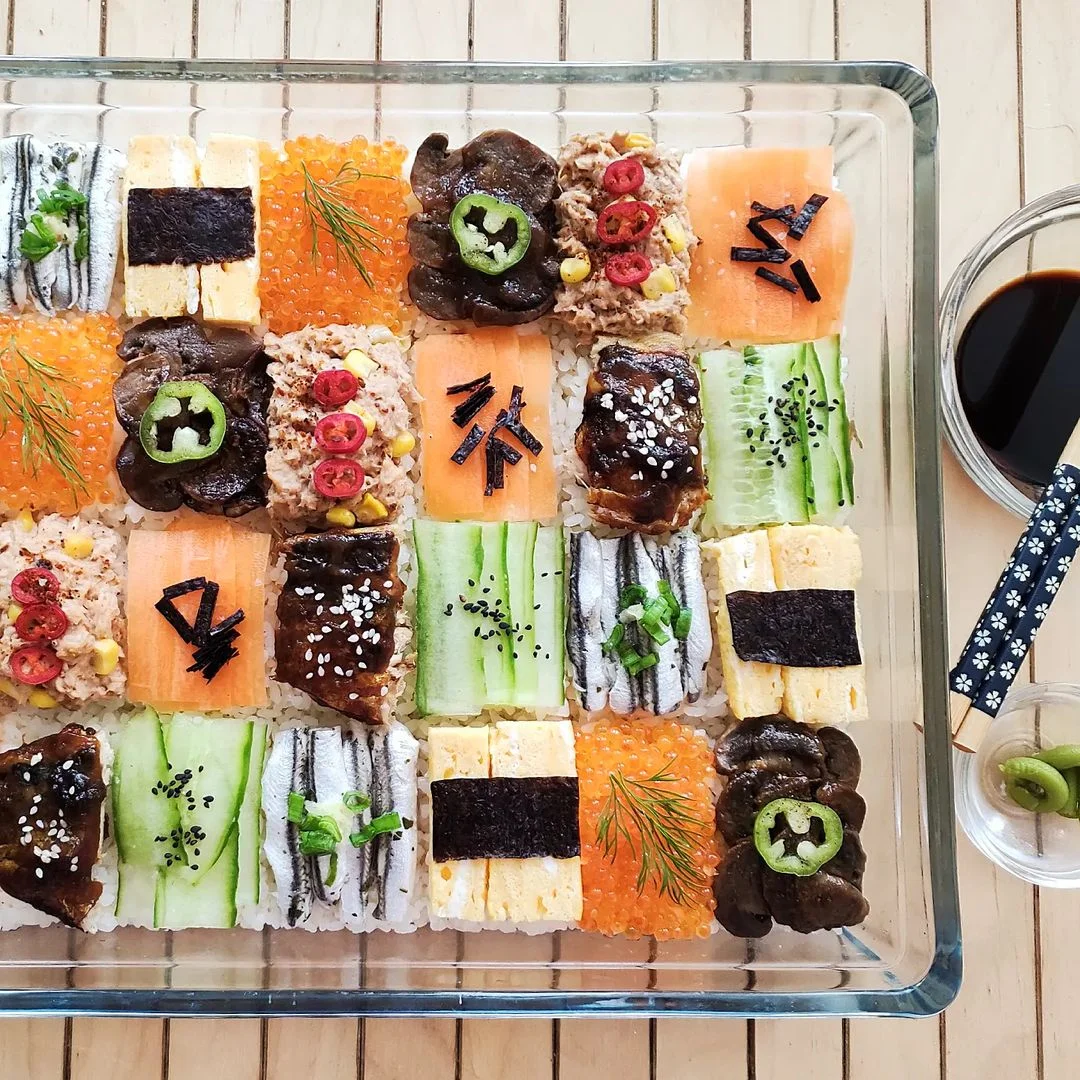
Mosaic sushi turns seasoned short-grain rice into a neat canvas for colourful toppings arranged in straight lines. It is a flexible centrepiece for a shared meal, with each piece easy to customise.
Ingredients
- 600 g (3½ cups)cooked short-grain rice
- 60 ml (4 tbsp)rice vinegar
- 12.5 g (1 tbsp)sugar
- 5 g (1 tsp)salt
- to tasteikura (salmon roe)
- to tastegrilled mackerel and mushrooms, coated in teriyaki sauce
- to tastespicy tuna mayo
- to tastedeboned anchovies
- to tastecarrot and cucumber, peeled into ribbons
- to tastetamagoyaki (rolled omelette)
- to tastesashimi of choice (sushi-grade)
- to tastechopped spring onion and dill
- to tastenori, cut to the desired shape and size
- to tastetoasted white and black sesame seeds
- to tastered and green chillies, thinly sliced
- to tasteshichimi togarashi or furikake
Instructions
- 1
Make the sushi vinegar
Put the rice vinegar, sugar and salt in a small saucepan. Bring to the boil over a medium heat, whisking until the sugar has fully dissolved, then set aside to cool.
- 2
Season the rice
Let the cooked rice cool slightly, then drizzle over the sushi vinegar. Use a rice paddle to fold it in with gentle slicing motions at a 45-degree angle, separating any lumps as you go.
- 3
Press and cut
Line the bottom of your chosen container with parchment paper and pack the sushi rice tightly into it. With a damp dough scraper, cut the compressed rice inside the container into squares 3–4 cm wide, keeping the scraper moist.
- 4
Arrange the toppings
Cut the toppings slightly larger than the rice squares so they cover them well. Arrange each topping neatly over the rice, keeping the lines straight.
What is mosaic sushi?
Mosaic sushi is a decorative way to serve seasoned sushi rice topped with a selection of fish, vegetables and garnishes. It draws on the Japanese tradition of combining vinegared rice with carefully prepared toppings, while its tidy grid gives the platter a distinctive look.
This version presses the rice into a container before cutting it into small squares. The compact base helps the pieces hold their shape, and the variety of toppings makes it easy to offer contrasting colours and flavours.
Nutrition and macros by portion
The nutrition label shows one serving as written: 230 calories, 4g protein, 51g carbs, 1g fat.
| Portion | Adjustment | kcal | Protein | Carbs | Fat |
|---|---|---|---|---|---|
| Lighter | Choose leaner toppings | 161 kcal | 3g | 36g | 0g |
| This serving | As written | 230 kcal | 4g | 51g | 1g |
| Hungry | Add more rice squares | 345 kcal | 6g | 77g | 1g |
Most of the base recipe’s carbohydrates come from the rice and the small amount of sugar in the seasoning; the base itself is low in fat and protein. Fish, egg, mayonnaise and roe add protein and fat, with the amounts depending on which toppings you choose. For a more balanced plate, pair a few pieces with extra vegetables.
Seasoning the rice
Sushi vinegar: dissolving the sugar and salt in the vinegar first helps distribute the seasoning evenly. Allow the mixture to cool before adding it to the rice.
Gentle mixing: use a slicing and folding motion rather than stirring or crushing the grains. This seasons the rice while helping it retain its shape.
Choosing the toppings
Fish and seafood: ikura, mackerel, anchovies, spicy tuna mayo and sushi-grade sashimi offer different levels of richness and saltiness. Choose toppings that can be prepared and handled safely.
Vegetables and egg: carrot and cucumber ribbons add a fresh, crisp contrast, while tamagoyaki brings a soft, savoury topping. Keeping the pieces slightly larger than the rice squares helps cover each one.
Getting neat squares
Pack firmly: press the rice evenly into the parchment-lined container so the layer is compact. An even surface makes it easier to cut pieces of a consistent size.
Damp scraper: wet the dough scraper before cutting and keep it moist as you work. This helps it pass through the sticky rice without dragging it out of shape.
Arranging the mosaic
Straight lines: place the toppings in orderly rows, matching each topping to a line or group of rice squares. Slightly oversized pieces help conceal the edges of the rice beneath.
Finishing touches: scatter chopped spring onion and dill, sesame seeds, sliced chillies, nori or shichimi togarashi or furikake over the arranged toppings. Use these sparingly where the toppings are already salty or strongly flavoured.
Serving and pairing
Serve the mosaic soon after assembling it, while the rice is still pleasantly soft and the toppings look fresh. A sharp knife or scraper can help separate the squares cleanly for serving.
Offer it with a simple salad, lightly dressed vegetables or miso soup. These sides complement the rich toppings without competing with the rice and its careful arrangement.
Recipe notes & tips
- Have the toppings prepared before you start assembling the mosaic.
- Let the rice cool slightly before seasoning it, rather than using it piping hot.
- Use parchment paper that covers the base of the container for easier lifting and handling.
- Keep the dough scraper damp as you cut to limit sticking.
- Cut the toppings just larger than the rice squares for fuller coverage.
- Use sushi-grade fish for sashimi and keep it chilled until serving.
Variations
- More vegetables: add other thinly sliced vegetables that can lie flat over the rice.
- Smoky topping: use grilled mackerel and mushrooms coated in teriyaki sauce.
- Spicy finish: add spicy tuna mayo or thinly sliced chillies to selected squares.
- Herb garnish: finish with chopped spring onion and dill for a fresh, aromatic note.
- Crisp sesame: scatter toasted white and black sesame seeds over the assembled pieces.
- Nori topping: cut nori into small shapes and place them over the squares just before serving.
Common mistakes to avoid
- Boiling the seasoning too long: take the pan off the heat once the sugar has dissolved.
- Mashing the rice: fold with gentle slicing motions so the grains do not turn pasty.
- Packing loosely: press the rice firmly and evenly so the cut pieces hold together.
- Using a dry scraper: moisten it as you cut to reduce sticking and ragged edges.
- Cutting toppings too small: make them slightly larger than the rice squares for good coverage.
- Leaving fish warm: keep sushi-grade sashimi chilled until it is needed.
How to store
For the best texture, assemble and serve the mosaic soon after preparing it. Refrigerate leftovers promptly in a covered container and eat within a day; rice can firm up when chilled, so bring it briefly towards room temperature before serving. Keep raw fish chilled and follow its safe storage guidance.
Frequently asked questions
Can I make the sushi rice ahead?
You can cook the rice and prepare the vinegar in advance, then season the rice when it is ready. The assembled dish is best served soon after the toppings are arranged.
Do I need a special container?
No. Use a container with a flat base that lets you press the rice into an even layer. Line it with parchment paper to make handling easier.
How wide should I cut the squares?
The method specifies squares 3–4 cm wide. Keeping them similar in size helps the mosaic look orderly and makes the toppings easier to arrange.
Can I use toppings other than raw fish?
Yes. The suggested options include grilled mackerel and mushrooms, tamagoyaki, vegetables, anchovies and spicy tuna mayo. Choose toppings that sit neatly on the rice.
How do I stop the rice sticking to the scraper?
Keep the scraper damp as you work. Cut in steady strokes and re-moisten it if rice begins to cling.
Can I serve the mosaic without sashimi?
Yes. Sashimi is one suggested topping, not a requirement. Use the cooked, egg, vegetable or other toppings you prefer.
Cook it from the original
This recipe comes from fooooods.com. Their page has the author’s own photos, notes and tips — the best place to cook it from.
Open the recipe on fooooods.com