
Rice soup with garden vegetables
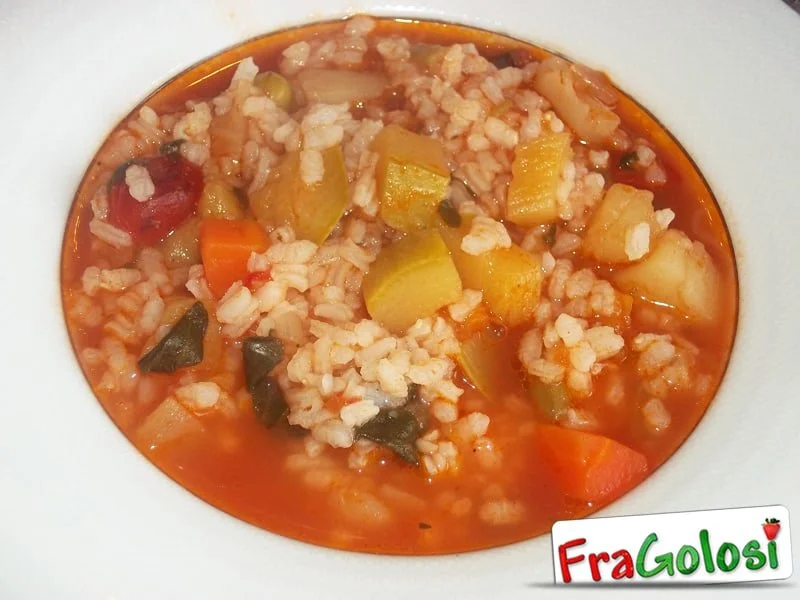
This Italian rice soup brings rice together with a generous mix of garden vegetables, beans and tomato in a warming, brothy bowl. Its long, gentle simmer lets the vegetables soften and flavour the broth before the rice is cooked in the pot.
Ingredients
- 250 gshort-grain rice
- 3 mediumpotatoes
- 2carrots
- 2courgettes
- 1leek
- 150 gshelled peas
- 150 gpre-cooked beans
- 100 ggreen beans
- 3tomatoes
- 150 mlpassata
- 1onion
- 1 clovegarlic
- 3 sprigsparsley
- a few leavesbasil
- 1 stickcelery
- 1 bunchchard
- 1/2 headsavoy cabbage
- 30 gbutter
- to tasteextra-virgin olive oil
- to tastesalt
Instructions
- 1
Trim the chard
Remove any damaged or wilted outer leaves from the chard, and cut away the ends of the stalks.
- 2
Wash the leaves
Separate the leaves and remove any tough stalks. Wash the leaves and stalks carefully.
- 3
Slice the chard
Peel the fibres from the stalks as you would with celery, then cut them into strips. Shred the leaves into strips as well.
- 4
Prepare cabbage
Wash the savoy cabbage, separate its leaves and remove the tougher central ribs. Cut the leaves into pieces.
- 5
Chop vegetables
Clean the potatoes, courgettes, green beans, carrots, onion and celery; wash them and cut them into pieces. Trim the leek by removing its green part, root and tougher outer leaves.
- 6
Soften the leek
Slice the leek thinly and put it in a saucepan with the garlic and butter. Cook over a low heat for 7–8 minutes, adding a little water until tender.
- 7
Add vegetables
Add the vegetables, peas, beans, chopped tomatoes and passata. Season with salt, then add the parsley and basil, finely chopped by hand.
- 8
Simmer the soup
Add enough cold water to just cover the ingredients and bring to the boil. Cover the pan and simmer over a low heat for about 45 minutes.
- 9
Cook the rice
During cooking, add 1–2 small ladlefuls of hot water if needed. When the vegetables are nearly cooked, add the rice and cook it with them, stirring frequently.
- 10
Season and serve
Adjust the soup's salt and pepper, drizzle with raw olive oil and ladle into bowls. Serve piping hot.
What is rice soup with garden vegetables?
This Italian-style minestra is a hearty soup in which rice cooks alongside a variety of vegetables, rather than being served separately. Minestra is a broad Italian term for a soup, and versions vary with the ingredients available.
Here, tomato, beans, leafy greens and a mix of fresh vegetables make a substantial broth. The rice is added near the end so it cooks in the seasoned liquid without having to simmer for the full length of time.
Nutrition and macros by portion
The nutrition label shows one serving as written: 310 calories, 9g protein, 57g carbs, 6g fat.
| Portion | Adjustment | kcal | Protein | Carbs | Fat |
|---|---|---|---|---|---|
| Lighter | Use less butter and oil | 217 kcal | 6g | 40g | 4g |
| This serving | As written | 310 kcal | 9g | 57g | 6g |
| Hungry | Serve a larger bowl | 465 kcal | 14g | 86g | 9g |
The rice and potatoes provide much of the carbohydrate, while the butter and olive oil contribute most of the fat. Beans and peas add some protein, alongside smaller amounts from the rice and vegetables. For a balanced plate, pair a bowl with a simple side salad or another portion of vegetables.
A varied vegetable base
Leafy greens: Chard and savoy cabbage bring different textures to the pot. Remove the chard’s tough fibres and the cabbage’s firm central ribs so the pieces soften more evenly.
Beans and peas: These add extra substance alongside the potatoes and rice. The recipe uses pre-cooked beans, so they go into the pot with the other vegetables rather than needing a separate cooking stage.
Build flavour gently
Leek and garlic: Cooking them slowly in butter for 7–8 minutes softens their flavour before the larger quantity of vegetables goes in. Keep the heat low and add a little water if the pan starts to dry out.
Tomato and herbs: Chopped fresh tomatoes and passata season the cooking liquid, while parsley and basil add freshness. Stir them through the vegetables before adding water.
Mind the broth level
Cover the vegetables just with cold water before bringing the pot to the boil. A low, covered simmer for about 45 minutes gives the varied vegetables time to cook together.
Top up with 1–2 small ladlefuls of hot water during cooking if needed. The rice will absorb some liquid, so check the consistency as it cooks.
Add rice near the end
Wait until the vegetables are nearly cooked before adding the rice. Stir frequently as it cooks with the vegetables, and begin checking its texture towards the end of its cooking time.
The recipe does not give a separate rice-cooking time, so use the packet guidance as a reference and taste a grain for doneness. The finished soup should be hot, with tender rice and vegetables.
Serve it hot
Finish each pot with a drizzle of extra-virgin olive oil and serve the soup hot in bowls. A spoonful of grated cheese or a slice of crusty bread can accompany it, if desired.
Because the rice continues to take up liquid as it stands, serve soon after cooking for a looser soup. Keep extra hot water available to adjust the consistency in the pan.
Recipe notes & tips
- Cut the vegetables into broadly similar-sized pieces so they soften more evenly.
- Remove the tough fibres from the chard stalks before slicing them.
- Keep the leek and garlic over a low heat and add a splash of water if they begin to stick.
- Add hot water in small amounts during the simmer so the soup does not become thinner than you want.
- Stir frequently after adding the rice to help prevent it catching on the bottom of the pan.
- Taste the rice and vegetables before serving, then adjust the seasoning.
Variations
- Use vegetable stock: Replace the water with stock for a more savoury broth.
- Change the beans: Use another cooked bean in place of the pre-cooked beans.
- Add leafy greens: Use extra chard or cabbage if you have more to hand.
- Finish with cheese: Offer grated hard cheese at the table for a savoury topping.
- Serve with bread: Add crusty bread on the side for a more substantial meal.
Common mistakes to avoid
- Rushing the leek: A high heat can brown it before it softens; cook it gently and add a little water.
- Leaving tough chard fibres: These can stay stringy in the finished soup; peel them away before slicing.
- Adding rice too early: It may overcook during the long vegetable simmer; wait until the vegetables are nearly done.
- Using too much water: The broth can become thin; begin with enough to just cover the vegetables and top up as needed.
- Skipping the stirring: Rice can catch on the pan base; stir it frequently once it has been added.
- Serving it after it has thickened: Rice continues to absorb liquid as it stands; loosen the soup with hot water if needed.
How to store
Cool leftovers promptly, then refrigerate in a covered container and use within 2 days. Reheat gently in a saucepan until piping hot, adding water as needed because the rice will continue to absorb broth.
Frequently asked questions
Which rice should I use?
The recipe specifies riso originario, a short-grain rice. If you cannot find it, choose another short-grain rice and follow the packet guidance for cooking.
Can I use frozen peas?
Yes. Add them with the other vegetables as directed; there is no need to thaw them first.
How do I know when the soup is ready?
The vegetables should be tender and the rice cooked through. Taste both before finishing with olive oil and adjusting the seasoning.
Can I make the soup ahead?
You can prepare the vegetable soup ahead, but the rice will soften and absorb more liquid as it stands. For the best texture, cook the rice close to serving time.
Why has the soup become thick?
Rice takes up liquid during cooking and storage. Stir in hot water a little at a time until the soup reaches the consistency you prefer.
Can I leave out the butter?
Yes. You can soften the leek and garlic with olive oil instead, following the same low-heat method.
Cook it from the original
This recipe comes from fragolosi.it. Their page has the author’s own photos, notes and tips — the best place to cook it from.
Open the recipe on fragolosi.it