
Creamy Butternut Squash Risotto That Feels Like Fall in a Bowl
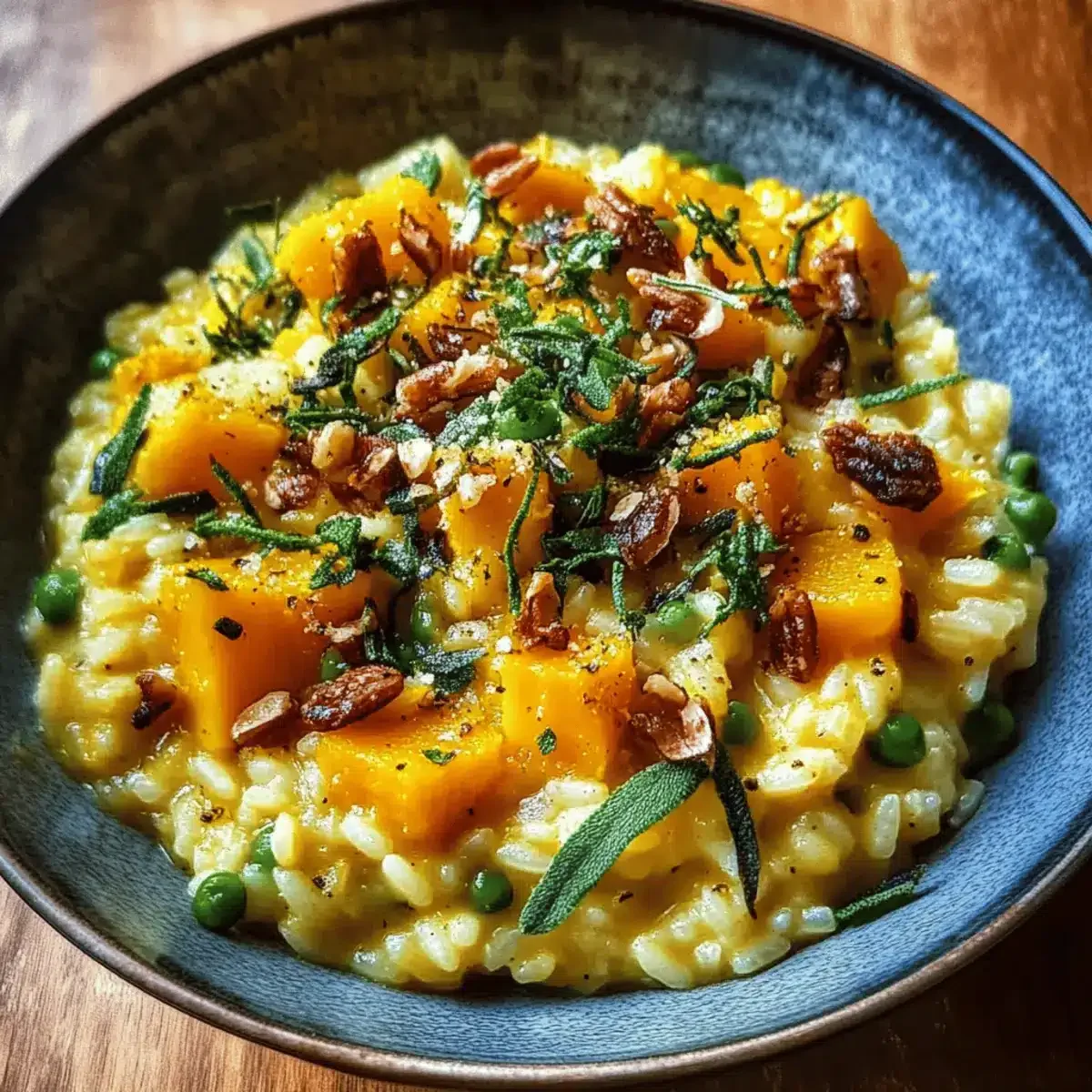
This Italian-inspired risotto pairs creamy Arborio rice with sweet, roasted butternut squash, Parmesan and fresh sage. It makes a comforting autumn meal, with the squash roasting while you prepare the risotto base.
Ingredients
- 1 mediumbutternut squash, firm
- 30 mlolive oil
- 1 teaspoonsalt
- 1 teaspoonblack pepper
- 300 gArborio rice
- 960 mlvegetable stock
- 120 mldry white wine
- 1 mediumyellow onion
- 2 clovesgarlic, minced
- 50 gParmesan, freshly grated
- 1 tablespoonbutter
- 10 gfresh sage, chopped
- 1 teaspoonsalt, to taste
- 1 teaspoonblack pepper, to taste
Instructions
- 1
Roast the squash
Heat the oven to 200°C and line a baking tray with baking paper. Cut the squash into 2.5 cm cubes, then toss with the olive oil, salt and pepper until coated.
- 2
Check the squash
Roast for 25–30 minutes, turning the cubes halfway through. They are ready when the edges are golden and a fork goes in easily; remove from the oven and set aside.
- 3
Soften the onion
Melt a tablespoon of butter in a large frying pan over medium heat. Add the diced onion and minced garlic and cook, stirring, for about 5 minutes, until softened and translucent.
- 4
Toast the rice
Stir in the Arborio rice until each grain is glossy. Toast for 1–2 minutes, until the grains lightly crackle and give off a nutty aroma.
- 5
Add the wine
Pour in the dry white wine and stir constantly until it has been absorbed by the rice.
- 6
Cook the risotto
Add 60 ml of warm vegetable stock and stir until it is nearly absorbed. Repeat, keeping the risotto at a gentle simmer, until the rice is al dente and creamy; allow 18–20 minutes in total.
- 7
Fold in squash
Gently fold the roasted squash into the risotto and cook for 2 more minutes.
- 8
Finish and serve
Take the pan off the heat and stir in the grated Parmesan and a pat of butter until creamy, silky and glossy. Finish with chopped sage, a little black pepper and another dusting of Parmesan.
What is butternut squash risotto?
Risotto is an Italian rice dish made by gradually adding liquid to short-grain rice as it cooks. This version brings in roasted butternut squash, a familiar autumn pairing with Parmesan and sage.
Roasting gives the squash golden edges and concentrates its sweetness, while Arborio rice releases starch as it is stirred with stock. Together they make a creamy dish without needing cream.
Nutrition and macros by portion
The nutrition label shows one serving as written: 420 calories, 10g protein, 64g carbs, 15g fat.
| Portion | Adjustment | kcal | Protein | Carbs | Fat |
|---|---|---|---|---|---|
| Lighter | Less butter and Parmesan | 294 kcal | 7g | 45g | 11g |
| This serving | As written | 420 kcal | 10g | 64g | 15g |
| Hungry | Larger risotto portion | 630 kcal | 15g | 96g | 23g |
The rice provides most of the carbohydrates, while olive oil, butter and Parmesan contribute much of the fat. Parmesan also adds some protein, alongside the smaller amount in the rice. Pair a serving with green vegetables or a salad to round out the plate.
Why Arborio rice matters
Rice choice: Arborio is a short-grain rice commonly used for risotto. Its starch helps create the characteristic creamy texture while the centre of each grain can remain pleasantly firm.
Toasting: Stir the rice until the grains look glossy before adding liquid. This brief step also brings out the lightly nutty aroma noted in the method.
Roast the squash until tender
Even pieces: Cut the squash into roughly 2.5 cm cubes so they roast at a similar rate. Turn them halfway through the 25–30 minutes for even browning.
Doneness: Look for golden edges and a cube that yields easily to a fork. Keep the pieces intact when folding them into the risotto.
Build the risotto gradually
Warm stock: Keep the vegetable stock warm and add it in small amounts, stirring until each addition is nearly absorbed before adding more. The recipe specifies 60 ml at a time.
Gentle simmer: Avoid letting the pan boil hard. Stir regularly and begin checking the rice near the end of the stated 18–20 minutes; it should be al dente and creamy.
Finish for a silky texture
Off the heat: Fold in the squash first, then remove the pan from the heat before adding Parmesan and butter. Stir briskly so they melt into the rice and give it a glossy finish.
Fresh sage: Add the chopped sage at the end, along with black pepper and Parmesan. Its aromatic flavour complements the squash without cooking away in the pan.
Serve it while creamy
Timing: Risotto is best served as soon as it is finished, while its texture is loose and creamy. Have the garnish ready before stirring in the final cheese and butter.
On the side: Serve it as a main course or alongside a crisp green salad or simply cooked greens for contrast.
Recipe notes & tips
- Warm the vegetable stock before adding it so the risotto keeps a gentle simmer.
- Cut the squash into evenly sized cubes to help it roast uniformly.
- Stir the rice as each small addition of stock is absorbed.
- Start checking the rice for an al dente centre as it approaches 18 minutes.
- Fold the squash in gently to keep the roasted cubes from breaking up.
- Serve promptly after adding the Parmesan and butter for the creamiest texture.
Variations
- Add chilli: Stir a little chilli into the onion and garlic for gentle heat.
- Use thyme: Swap the sage garnish for fresh thyme leaves.
- Try another squash: Use peeled pumpkin in place of the butternut squash.
- Make it vegetarian: Check that the Parmesan is made with vegetarian rennet.
- Add greens: Fold in a handful of spinach at the end until just wilted.
Common mistakes to avoid
- Large squash pieces: They may take longer to soften; cut them into even 2.5 cm cubes.
- Cold stock: It can interrupt the gentle simmer; warm the stock before adding it.
- Too much stock at once: The rice may cook unevenly; add it in small amounts and stir.
- Hard boiling: The rice can lose its even texture; keep the pan at a gentle simmer.
- Overcooked rice: It loses its al dente centre; start checking it near the end of the cooking time.
- Rough folding: The squash can break apart; stir it into the risotto gently.
How to store
Refrigerate leftovers in a covered container for up to 3 days. Reheat gently in a saucepan with a splash of water or stock, stirring until hot; the rice will be thicker than when freshly made.
Frequently asked questions
Can I make the risotto without wine?
The wine adds brightness, but you can leave it out and use vegetable stock instead. Continue adding the stock gradually as directed.
How do I know when the rice is done?
It should be creamy but still have a slight firmness in the centre. Begin checking around 18 minutes, as the exact time can vary.
Can I prepare the squash ahead?
Yes. Roast it ahead and refrigerate it in a covered container, then fold it into the risotto for the final 2 minutes of cooking.
Can I use a different type of rice?
Arborio is the rice specified for this recipe and helps create a creamy result. Another short-grain risotto rice can be used, though cooking time and liquid absorption may differ.
Why is my risotto too thick?
It can thicken as it sits. Stir in a little warm stock or water until it reaches the consistency you like.
Can I freeze leftovers?
You can freeze risotto in a sealed container, though the rice may become softer after thawing. Thaw it in the fridge and reheat gently with a splash of stock or water.
Cook it from the original
This recipe comes from betterhomerecipes.com. Their page has the author’s own photos, notes and tips — the best place to cook it from.
Open the recipe on betterhomerecipes.com