
Fish Katsu Thai Green Curry
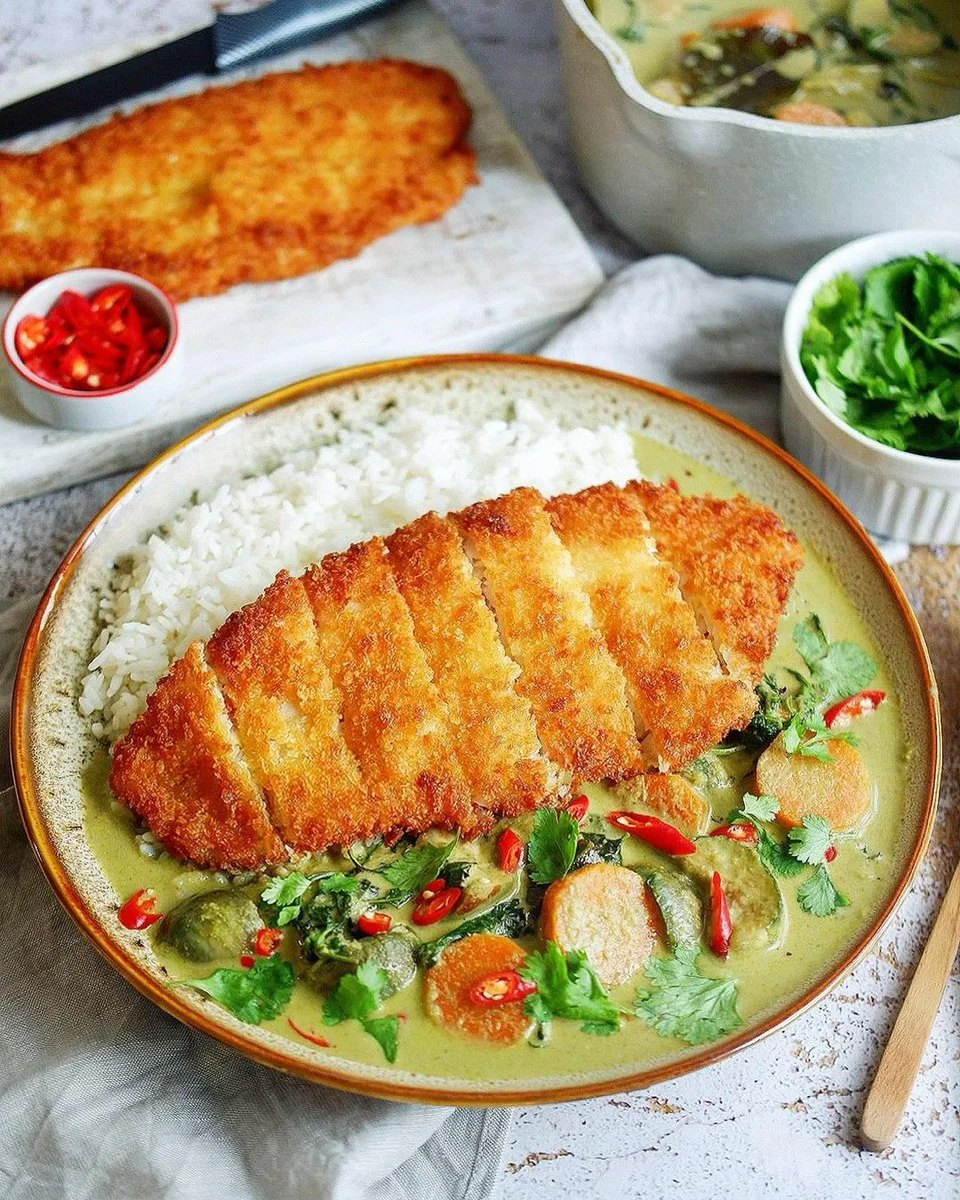
Fish katsu Thai green curry pairs crisp, panko-coated fish with a fragrant coconut curry packed with vegetables and herbs. Make the curry ahead if you like, then fry the fish just before serving so it stays crunchy.
Ingredients
- 4 fillets (150–200 g each)dory
- 60 g (½ cup)plain flour
- 120 g (2 cups)panko breadcrumbs
- 2, beateneggs
- to tastesalt
- to tastewhite or black pepper
- as neededoil, for shallow-frying
- 200 ginstant coconut cream
- 420 ml (1¾ cups)chicken broth
- 4, quarteredThai aubergines
- 2 large, choppedcarrots
- 1 bunchbasil leaves
- 10kaffir lime leaves
- 2, bruisedlemongrass stalks
- 1–2 tbspfish sauce
- 1½ tbspsugar
- 3 tbspoil
- 100 ggreen long chillies
- 6 clovesgarlic
- 10 smallshallots
- 1 thumb-sized piecegalangal
- 5coriander roots
- 1 tbsplime juice
- ½ tspwhite pepper
- 1 tspground coriander
- ¼ tspcumin
- 1 tbspshrimp paste
- 1 tbspoil
- 3 tbspwater
- to tastesliced red chilli
- to tastecoriander leaves
Instructions
- 1
Blend the paste
Put the green chillies, garlic, shallots, galangal, coriander roots, lime juice, white pepper, ground coriander, cumin, shrimp paste, 1 tablespoon of oil and the water in a food processor. Blend until smooth and thick, then set aside.
- 2
Fry the aromatics
Heat 3 tablespoons of oil in a deep pan. Stir-fry the kaffir lime leaves and bruised lemongrass for about 1–2 minutes, until fragrant.
- 3
Cook the paste
Add the blended paste and stir-fry for about 3–5 minutes, until its colour deepens.
- 4
Simmer the curry
Pour in the coconut cream and chicken broth, then bring the mixture to a simmer.
- 5
Cook the carrots
Add the carrots, cover the pan and cook over low heat until they are tender when pierced with a fork.
- 6
Add the aubergines
Add the Thai aubergines and cook uncovered over medium heat for a few minutes, until tender.
- 7
Season the curry
Stir in the fish sauce and sugar. The curry should now have a creamy consistency.
- 8
Wilt the basil
Stir in the basil leaves until they are just wilted, then take the pan off the heat.
- 9
Season the fish
Lightly season the dory fillets with salt and pepper.
- 10
Coat with flour
Dust each fillet lightly and evenly with plain flour.
- 11
Dip in egg
Dip the floured fish into the beaten egg.
- 12
Add the breadcrumbs
Press panko breadcrumbs evenly over both sides of each fillet.
- 13
Fry the fish
Heat oil in a shallow pan until medium-hot. Shallow-fry the coated fillets for 1–2 minutes on each side.
- 14
Drain and cut
Transfer the fish to a wire rack to drain, then cut the katsu into 2.5 cm (1-inch) pieces.
- 15
Serve the curry
Serve the fish katsu with the Thai green curry sauce and hot steamed rice, garnished with sliced red chilli and coriander leaves.
What is fish katsu Thai green curry?
Katsu is a Japanese-style breaded cutlet, while Thai green curry is a coconut-based curry flavoured with green chilli and aromatic herbs. This dish brings the two together, with crisp fish served alongside a fragrant, vegetable-filled curry.
The contrast is what makes this version work: panko gives the fish a crisp coating, while the curry is creamy and aromatic. Keeping the katsu separate until serving helps preserve that contrast.
Nutrition and macros by portion
The nutrition label shows one serving as written: 740 calories, 44g protein, 55g carbs, 37g fat.
| Portion | Adjustment | kcal | Protein | Carbs | Fat |
|---|---|---|---|---|---|
| Lighter | Use less frying oil | 518 kcal | 31g | 39g | 26g |
| This serving | As written | 740 kcal | 44g | 55g | 37g |
| Hungry | Add extra steamed rice | 1110 kcal | 66g | 83g | 56g |
The fish, eggs and shrimp paste contribute protein; the flour, panko, vegetables and sugar provide most of the carbohydrates. Coconut cream and the frying oils account for much of the fat. Serve with a moderate portion of rice and plenty of the curry vegetables for a balanced plate.
Building the curry paste
Fresh aromatics: the green chillies, garlic, shallots, galangal and coriander roots form the base of the paste. Blend them thoroughly with the spices and shrimp paste so they cook evenly.
Fragrant leaves: kaffir lime leaves and bruised lemongrass are fried first, giving the oil time to pick up their aroma before the paste goes in.
Getting the curry texture right
Coconut and broth: bring both to a simmer after frying the paste, rather than letting the mixture boil hard. The recipe’s cue is a creamy consistency after the fish sauce and sugar are added.
Vegetable order: carrots go in first and cook covered until fork-tender; the aubergines follow and cook uncovered for a few minutes. This lets the carrots soften before the more delicate aubergines are added.
Coating the fish evenly
A light flour layer helps the beaten egg cling to the fish. Shake off excess flour so the coating does not become thick or patchy.
Panko: cover both sides evenly, pressing gently so the crumbs adhere. Handle the coated fillets carefully as you transfer them to the pan.
Frying and checking doneness
Medium-hot oil: the method calls for 1–2 minutes per side. Use the colour of the crumb as a guide and avoid letting the coating darken too quickly.
Fish: the recipe does not give an internal temperature or a doneness cue beyond the frying time. If a fillet is particularly thick, check that its centre is cooked through before serving.
Serving the components
Serve the curry with hot steamed rice, as suggested in the method, and add the fish katsu alongside or on top just before eating. Keeping the fish out of the sauce until serving helps it retain its crunch.
Finish with sliced red chilli and coriander leaves. Add chilli to taste, especially if the curry paste is already quite hot.
Recipe notes & tips
- Blend the curry paste until smooth so it cooks evenly in the pan.
- Bruise the lemongrass before cooking to help release its aroma.
- Keep the fish fillets in a single layer while coating them for more even coverage.
- Let fried fish drain on a wire rack rather than stacking the pieces.
- Add the basil at the end and take the curry off the heat as soon as the leaves wilt.
Variations
- Adjust the heat: use less green chilli in the paste for a milder curry.
- Use another fish: choose a firm white fish fillet of similar thickness.
- Add vegetables: include another quick-cooking vegetable alongside the aubergines.
- Make it gluten-free: use suitable gluten-free flour and breadcrumbs.
- Finish with lime: serve with extra lime wedges for a brighter, tangier flavour.
Common mistakes to avoid
- Rushing the paste: give it the full 3–5 minutes to fry until its colour deepens.
- Overcooking the basil: stir it in at the end and remove the curry from the heat once it wilts.
- Crowding the pan: fry the coated fillets in batches if needed so they have room to cook.
- Skipping the wire rack: drain the katsu on a rack so the underside does not sit in oil.
- Saucing too early: add the katsu at the table or just before serving to keep its crust crisp.
How to store
Refrigerate leftover curry and fish separately in covered containers for up to 2 days. Reheat the curry gently in a pan; warm the katsu in an oven until hot, as microwaving can soften its coating.
Frequently asked questions
Can I make the curry ahead?
Yes. Make the curry ahead and refrigerate it, then reheat it gently and stir in the basil near the end. Fry the fish shortly before serving.
Can I use a different fish?
Yes, use another white fish fillet with a similar thickness. Adjust the frying time if the fillets are noticeably thinner or thicker.
How do I keep the fish katsu crisp?
Drain it on a wire rack and keep it separate from the curry until serving. Avoid covering it while hot, as trapped steam can soften the crumb.
Can I make the curry less spicy?
Use less green chilli in the paste, then taste the curry before serving. Add the sliced red chilli only as a garnish if you want more heat at the table.
What should I serve with it?
The method suggests hot steamed rice. Serve the curry and katsu together, with coriander leaves and sliced red chilli to finish.
Cook it from the original
This recipe comes from fooooods.com. Their page has the author’s own photos, notes and tips — the best place to cook it from.
Open the recipe on fooooods.com