
Gochujang Chicken Wings
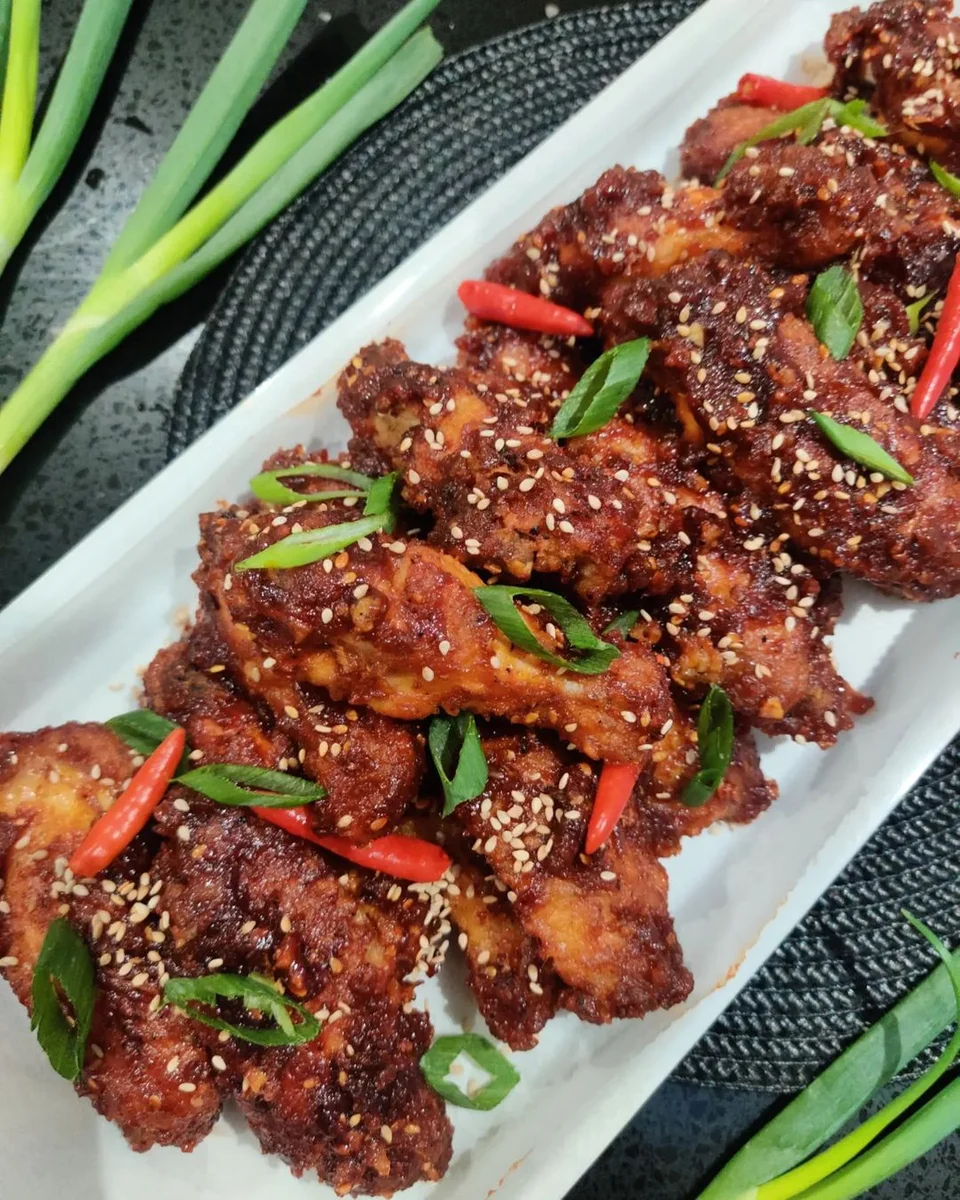
These gochujang chicken wings are oven-baked until crisp, then tossed in a savoury, sweet and spicy sauce. They make a bold sharing dish, with a final garnish of sesame seeds, spring onion and red chillies.
Ingredients
- 1 kgchicken wings, separated into drumettes and wingettes
- 3 heaped tbspplain flour
- 2 tsppaprika
- 2 tspgarlic powder
- 2 tspblack pepper
- 2 tspsalt
- 2 tbspolive oil
- 2 tbspolive oil
- 4 tbspgochujang sauce
- 3garlic cloves, chopped
- 1 tbspchopped ginger
- 2 tspsesame seeds
- 2 tbsplight soy sauce
- 2 tbspdark soy sauce
- 2 tbspsugar
- 2 tspgarlic powder
- 1 tspblack pepper
- to tastewater
- to tastesesame seeds, spring onion and red chillies, for garnish
Instructions
- 1
Coat the wings
Heat the oven to 200°C. In a large bowl, mix the plain flour, dry seasonings and 2 tbsp olive oil. Coat the wings, arrange them on a large baking tray and bake for 45 minutes, or until crisp to the touch.
- 2
Fry the aromatics
Heat the other 2 tbsp olive oil in a wide pan. Toast the sesame seeds, then add the garlic and ginger and fry until aromatic.
- 3
Make the sauce
Add the remaining sauce ingredients and cook for around 10 minutes, until the sauce is thick. If it becomes too thick, loosen it with boiling water.
- 4
Toss the wings
Add the baked wings to the pan and toss over a high heat until each piece is coated. Leave them in the pan a little longer if you want some charring.
- 5
Garnish and serve
Take the wings out of the pan and finish with more sesame seeds, chopped spring onion and chillies before serving.
What are gochujang chicken wings?
Gochujang is a Korean fermented chilli paste with a savoury depth and gentle sweetness. These wings take inspiration from that flavour profile, coating oven-baked chicken in a glossy sauce built with gochujang, soy, sugar, garlic and ginger.
The method combines a crisp baked coating with a quick pan sauce. Tossing the wings only after baking helps the sauce cling while keeping the skin from sitting in liquid throughout cooking.
Nutrition and macros by portion
The nutrition label shows one serving as written: 625 calories, 45g protein, 30g carbs, 40g fat.
| Portion | Adjustment | kcal | Protein | Carbs | Fat |
|---|---|---|---|---|---|
| Lighter | Use less sauce | 438 kcal | 31g | 21g | 28g |
| This serving | As written | 625 kcal | 45g | 30g | 40g |
| Hungry | Serve with extra rice | 938 kcal | 68g | 45g | 60g |
The chicken provides most of the protein, while the flour and sugar contribute carbohydrates. The wings and olive oil supply much of the fat, and the soy sauces, salt and gochujang make the dish relatively sodium-rich. Balance a serving with rice or another grain and a generous portion of vegetables.
The coating and the wings
Flour and seasonings: the flour, paprika, garlic powder, pepper and salt form a light coating that browns in the oven. Mix them evenly with the oil so the wings pick up the seasoning across their surfaces.
Wing pieces: separating the wings into drumettes and wingettes gives you smaller pieces that are easy to coat and turn. Spread them out on the tray so hot air can circulate.
Building the sauce
Aromatics: toasting the sesame seeds first, then frying the garlic and ginger, gives the sauce a fragrant base. Keep them moving and take care not to let the garlic burn.
Soy and gochujang: light and dark soy sauces bring saltiness and depth, while gochujang supplies chilli heat and fermented savouriness. Sugar rounds out the sharp, salty flavours as the sauce thickens.
Getting crisp, tender wings
Oven cue: bake at 200°C for 45 minutes, checking that the wings feel crisp on the outside. If the pieces are unusually large or your oven cooks unevenly, use the crispness cue in the method rather than relying only on the clock.
Sauce cue: simmer the sauce until thick enough to coat a spoon and cling to the wings. Add boiling water a little at a time if it tightens too much.
Timing the final toss
Finish the sauce while the wings bake if you can, then toss them through it just before serving. This keeps the wings from softening while they wait.
For a little char, leave the coated wings in the hot pan briefly, tossing them so they colour evenly. Watch closely, as the sugar in the sauce can catch quickly.
What to serve alongside
Fresh sides: serve the wings with sliced spring onion and chillies, as suggested, plus a crisp cucumber salad or crunchy vegetables to contrast with the sticky coating.
A fuller meal: steamed rice makes a simple base for the sauce, while greens such as broccoli or pak choi round out the plate. Keep extra sauce in the pan for spooning over the rice.
Recipe notes & tips
- Pat the wings dry before coating so the flour mixture adheres more evenly.
- Arrange the wings in a single layer on the baking tray rather than stacking them.
- Taste the sauce before adding any extra salt, as both soy sauces are salty.
- Add boiling water gradually to thin the sauce without making it watery.
- Toss the wings in batches if the pan is crowded, so each piece gets coated.
- Keep the spring onion and chillies fresh by adding them just before serving.
Variations
- Adjust the heat: use fewer chillies as a garnish for a milder finish.
- Add extra ginger: increase the chopped ginger for a sharper aromatic note.
- Use honey: replace some of the sugar with honey for a different sweetness.
- Add citrus: finish with a squeeze of lime for a bright contrast.
- Serve with greens: add steamed broccoli or pak choi alongside the wings.
Common mistakes to avoid
- Crowding the tray: the wings may steam rather than crisp; spread them out across the tray.
- Burning the garlic: it can turn bitter; fry it only until fragrant and keep it moving.
- Over-thickening the sauce: it may not coat evenly; loosen it with a little boiling water.
- Saucing too early: the wings can lose their crispness; toss them just before serving.
- Leaving the pan unattended: the sugary sauce can catch; watch closely during the final char.
How to store
Refrigerate leftover wings in a covered container within 2 hours and eat within 3 days. Reheat until piping hot in an oven or air fryer to help restore some crispness; the microwave will soften the coating.
Frequently asked questions
Can I make the wings ahead?
Bake the wings and prepare the sauce separately, then chill them in covered containers. Reheat the wings until hot and toss them with the warmed sauce just before serving.
How can I tell when the wings are done?
The recipe gives a guide of 45 minutes at 200°C and says to look for wings that are crisp to the touch. For added reassurance, check that the thickest parts are cooked through before serving.
Can I make the sauce less spicy?
Use less gochujang sauce, then taste and adjust as it cooks. You can also leave the red chillies off the garnish.
What if the sauce gets too thick?
Stir in boiling water a little at a time until it loosens enough to coat the wings.
Can I use whole chicken wings?
Yes, but separate them into drumettes and wingettes as specified so the pieces are easier to coat and serve. The cooking time may need checking if the pieces are larger.
What goes well with these wings?
Steamed rice and a fresh or lightly cooked vegetable side work well alongside the rich, spicy coating.
Cook it from the original
This recipe comes from fooooods.com. Their page has the author’s own photos, notes and tips — the best place to cook it from.
Open the recipe on fooooods.com