
Basil tagliatelle
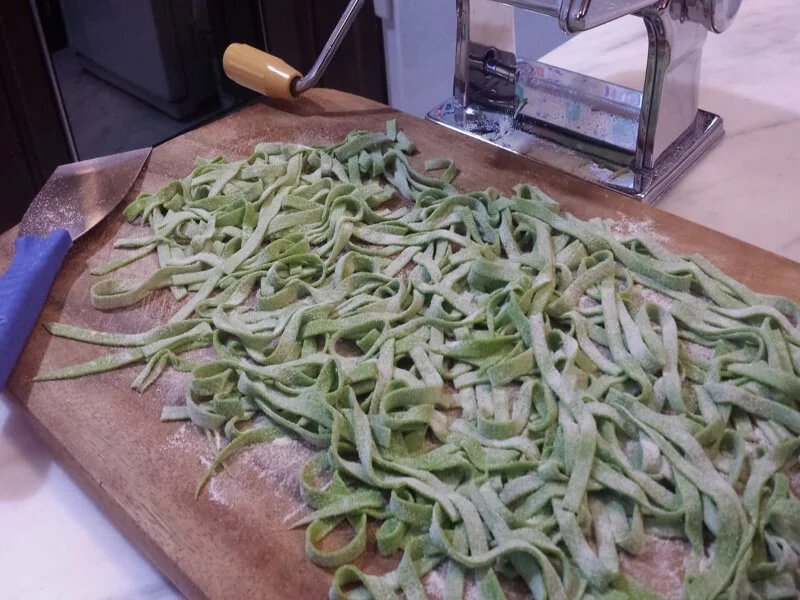
Fresh tagliatelle coloured and flavoured with basil, blended into the eggs and cheeses before being worked into a pasta dough. Make it when you want homemade pasta with a vivid green hue and a savoury, herby flavour.
Ingredients
- 500 gplain flour
- 2whole eggs
- 2egg yolks
- 50 gfresh basil
- 2 tablespoonsgrated Parmesan
- 2 tablespoonsgrated Pecorino
- 1 tablespoonextra-virgin olive oil
- a pinchsalt
Instructions
- 1
Blend the basil
Wash and dry the basil. Blend it with the eggs, olive oil, both cheeses and salt.
- 2
Make a well
Sift the flour onto a work surface and shape it into a mound with a well in the middle.
- 3
Combine the mixture
Pour the basil mixture into the well. Use a fork to draw in the flour gradually.
- 4
Knead the dough
Knead the mixture by hand for about 15 minutes, until the dough is smooth.
- 5
Rest the dough
Shape the dough into a ball, wrap it in cling film and leave it to rest for 1 hour.
- 6
Roll the dough
After resting, roll the dough from the centre outwards with a rolling pin until it is about 2 mm thick.
- 7
Dry and roll
Leave the sheet to dry for at least 30 minutes, then roll it into a long cylinder.
- 8
Cut the pasta
Use a sharp knife to cut the cylinder into ribbons 6–8 mm wide.
- 9
Separate and dry
Spread the tagliatelle out on a floured work surface and leave it to dry for at least 30 minutes.
- 10
Boil the tagliatelle
Cook the pasta in boiling water, then continue with the preparation of your chosen recipe.
What is basil tagliatelle?
Tagliatelle are long, flat ribbons of pasta associated with the Emilia-Romagna region of Italy. This version brings fresh basil into the dough itself rather than relying on a sauce for its green colour and herbal flavour.
Blending the basil with eggs, oil and grated cheeses makes a paste that is easier to incorporate evenly. The result is a distinctive fresh pasta that can be paired with a range of sauces.
Nutrition and macros by portion
The nutrition label shows one serving as written: 400 calories, 14g protein, 65g carbs, 6g fat.
| Portion | Adjustment | kcal | Protein | Carbs | Fat |
|---|---|---|---|---|---|
| Lighter | Serve a smaller portion | 280 kcal | 10g | 46g | 4g |
| This serving | As written | 400 kcal | 14g | 65g | 6g |
| Hungry | Serve a larger portion | 600 kcal | 21g | 98g | 9g |
Most of the carbohydrates come from the flour, while the eggs and cheeses contribute protein and the oil, egg yolks and cheeses provide much of the fat. Pair a serving with vegetables and a sauce that suits your meal to round out the plate.
Building the dough
Basil mixture: blend the leaves until finely chopped, so they are distributed through the dough rather than forming large patches.
Flour well: add the liquid mixture gradually and draw in flour from the sides with a fork. This gives you more control as the ingredients come together.
Kneading and resting
Kneading: work the dough for about 15 minutes, until its surface feels smooth. If it feels sticky, the method gives no extra flour quantity, so dust the work surface lightly as you work.
Resting: wrap the ball well and leave it for 1 hour. This pause lets the dough relax before rolling.
Rolling and cutting
Thin sheet: roll from the centre towards the edges until the pasta is about 2 mm thick. Aim for an even sheet so the ribbons cook at a similar rate.
Drying: leave the sheet for at least 30 minutes before rolling it into a cylinder, then dry the cut ribbons for at least another 30 minutes. A lightly floured surface helps keep the strands from sticking together.
How to tell when it is ready
Dough: it should be smooth after kneading and flexible enough to roll without tearing. If it springs back strongly, allow it to rest before continuing.
Pasta: the recipe does not give a boiling time, so check the ribbons as they cook and stop when they are tender with a slight bite. The exact time will depend on how dry and thick they are.
Serving ideas
The recipe leaves the sauce to your choice. A simple sauce lets the basil remain noticeable, while a more substantial accompaniment can turn the pasta into a fuller meal.
Serve with vegetables or a green salad alongside. Cook only the amount you need if you want the remaining ribbons to stay dry for storage.
Recipe notes & tips
- Dry the basil thoroughly after washing so excess water does not make the dough wet.
- Sift the flour before shaping it into a well to help avoid lumps as you combine the dough.
- Keep the dough covered while you work so its surface does not dry out prematurely.
- Use a sharp knife to cut clean, even ribbons.
- Dust the work surface with flour before spreading out the cut tagliatelle.
Variations
- More basil: increase the fresh basil for a stronger herbal note, adjusting the dough texture as needed.
- Cheese balance: use more Parmesan and less Pecorino for a milder, less sharp flavour.
- Herb blend: replace part of the basil with fresh parsley for a different green-herb profile.
- Sauce pairing: toss the cooked ribbons with a simple tomato sauce for a contrasting flavour.
- Vegetable pairing: serve with sautéed seasonal vegetables for a meat-free meal.
Common mistakes to avoid
- Wet basil: dry the leaves well after washing so extra moisture does not soften the dough.
- Adding flour too quickly: incorporate it gradually with a fork so the liquid mixture stays contained in the well.
- Under-kneading: keep working the dough for about 15 minutes, until it feels smooth.
- Skipping the rest: leave the wrapped dough for the full 1 hour so it is easier to roll.
- Cutting too soon: let the sheet dry for at least 30 minutes before rolling it into a cylinder.
- Crowded ribbons: spread the cut pasta out on a floured surface and dry it for at least 30 minutes to reduce sticking.
How to store
Keep dried tagliatelle in an airtight container in a cool, dry place and use it within a few days. Fresh pasta can be refrigerated in a covered container and cooked promptly; cook any leftovers thoroughly when reheating with sauce.
Frequently asked questions
Can I make the dough without a food processor?
Yes. Finely chop the basil, then whisk or mash it together with the eggs, oil, cheeses and salt before adding it to the flour well.
Can I use a pasta machine?
Yes. After the dough has rested, divide it into manageable pieces and roll them through the machine to a sheet about 2 mm thick, then cut into ribbons.
How long should I boil the tagliatelle?
The recipe does not specify a cooking time. Check the pasta while it boils and drain it when tender but still slightly firm.
Can I cook the pasta straight after cutting it?
Yes, but this method calls for drying the ribbons for at least 30 minutes first. Drying helps them hold their shape and makes them easier to handle.
What sauce works well with basil tagliatelle?
Choose a sauce that complements rather than overwhelms the basil, such as a simple tomato sauce or a light, buttery coating.
Cook it from the original
This recipe comes from fragolosi.it. Their page has the author’s own photos, notes and tips — the best place to cook it from.
Open the recipe on fragolosi.it