
Chickpea Veggie Lo Mein
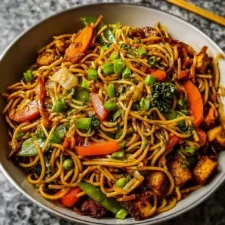
Chickpea veggie lo mein brings chewy noodles, crisp-tender vegetables and chickpeas together in a glossy, savoury-sweet sauce. It makes a colourful one-pan meal, with the noodles cooked separately before a quick stir-fry brings everything together.
Ingredients
- 340 g (12 ounces)lo mein noodles
- 15 ml (1 tablespoon)sesame oil
- 15 ml (1 tablespoon)avocado oil or another high-heat oil
- 1 large headbroccoli, cut into bite-sized florets
- 1 largecarrot, peeled and julienned or thinly sliced
- 1red pepper, cored, deseeded and thinly sliced
- 227 g (8 ounces)cremini mushrooms, cleaned and sliced
- 1 can (425 g / 15 ounces), drained weight not specifiedchickpeas, rinsed and thoroughly drained
- 4 clovesgarlic, finely minced
- 15 ml (1 tablespoon)fresh ginger, peeled and grated
- 4spring onions, thinly sliced, with white and green parts separated
- 80 ml (⅓ cup)low-sodium soy sauce or tamari
- 30 ml (2 tablespoons)maple syrup
- 30 ml (2 tablespoons)toasted sesame oil
- 15 ml (1 tablespoon)rice vinegar
- 5 ml (1 teaspoon), optionalSriracha or chilli garlic sauce
- 15 ml (1 tablespoon)cornflour
Instructions
- 1
Cook the noodles
Bring a large pan of salted water to a rolling boil. Cook the noodles according to the packet instructions, usually for 3–5 minutes, until al dente. Drain well, return them to the empty pan and toss with 15 ml (1 tablespoon) sesame oil. Set aside.
- 2
Mix the sauce
In a small bowl or jug, whisk together the soy sauce or tamari, maple syrup, toasted sesame oil, rice vinegar, optional Sriracha and cornflour until smooth, with no lumps. Set the sauce beside the hob.
- 3
Cook broccoli and carrot
Heat a large wok or heavy-based frying pan over medium-high heat. Add the avocado oil, followed by the broccoli and carrot. Stir-fry for 3–4 minutes, until they are starting to become crisp-tender.
- 4
Add vegetables and aromatics
Add the red pepper and mushrooms, then stir-fry for another 2–3 minutes. Make a small space in the centre of the pan and add the garlic, ginger and white parts of the spring onions. Cook for 30–60 seconds, until fragrant, taking care not to burn the garlic.
- 5
Heat the chickpeas
Add the rinsed, drained chickpeas and stir to combine. Cook for about 1–2 minutes, until heated through.
- 6
Thicken the sauce
Quickly whisk the sauce again, then pour it over the vegetables and chickpeas. Stir continuously as it bubbles and thickens, about 1 minute.
- 7
Toss with noodles
Add the cooked noodles to the pan. Use tongs to toss them with the sauce, vegetables and chickpeas for 1–2 minutes, until evenly coated and heated through.
- 8
Garnish and serve
Take the wok or pan off the heat. Scatter over the reserved green parts of the spring onions and serve straight away.
What is chickpea veggie lo mein?
Lo mein is a Chinese-American noodle dish whose name refers to noodles tossed with other ingredients and sauce. This version pairs chewy noodles with stir-fried vegetables and chickpeas for a hearty meat-free take.
The method keeps the noodles and vegetables from becoming a single soft mass: cook the noodles separately, give the vegetables a quick stir-fry, then toss them together with a sauce that thickens in the pan.
Nutrition and macros by portion
The nutrition label shows one serving as written: 500 calories, 0g protein, 0g carbs, 0g fat.
| Portion | Adjustment | kcal | Protein | Carbs | Fat |
|---|---|---|---|---|---|
| Lighter | Use less oil | 350 kcal | 0g | 0g | 0g |
| This serving | As written | 500 kcal | 0g | 0g | 0g |
| Hungry | Add more noodles | 750 kcal | 0g | 0g | 0g |
The noodles and chickpeas provide most of the carbohydrate, while the oils contribute most of the fat; chickpeas also add some plant protein. For a more balanced plate, serve a portion with extra greens or another non-starchy vegetable.
Choose the noodles and chickpeas
Noodles: Lo mein noodles have a pleasantly chewy bite, but thick spaghetti or ramen noodles can stand in if needed. Cook them just to al dente, since they will spend another minute or two in the hot pan.
Chickpeas: Rinse and drain them thoroughly so excess canning liquid does not dilute the sauce. They need only a short spell in the pan to warm through and take on the aromatic flavours.
Prepare everything before stir-frying
Prep first: Slice the vegetables, mince the garlic, grate the ginger and separate the spring onion greens from the whites before turning on the heat. Stir-frying moves quickly, so having these ready makes it easier to avoid overcooking the aromatics.
Sauce: Whisk the cornflour fully into the liquid ingredients before it reaches the pan. Give the mixture another quick whisk just before pouring, as the cornflour can settle.
Keep the vegetables crisp-tender
Start with the firmest vegetables: Broccoli and carrot get 3–4 minutes first, giving them a head start without losing all their bite. Cut the florets and carrot pieces to a similar thickness so they cook at a similar pace.
Add the softer vegetables later: The pepper and mushrooms need only another 2–3 minutes. The pepper should stay crisp, while the mushrooms should have released some moisture and begun to brown.
Let the sauce turn glossy
A hot pan helps the sauce bubble and thicken quickly once it meets the vegetables. Stir continuously for about 1 minute, until it clings to the ingredients rather than pooling at the bottom.
Finish with the noodles: Toss for 1–2 minutes, just long enough to coat and heat them through. If they seem stuck together after draining, loosen them gently with the tongs as you toss.
Serve it while hot
The reserved green spring onion tops add a fresh, lightly sharp finish, so scatter them over the pan just before serving. For a more substantial meal, serve the noodles alongside a simple soup or extra stir-fried greens.
Set out extra Sriracha or chilli garlic sauce at the table for anyone who wants more heat. Add it gradually, since the sauce already has a savoury-sweet balance.
Recipe notes & tips
- Have all the vegetables and aromatics chopped before you heat the wok.
- Cook the noodles only until al dente so they keep their bite in the final toss.
- Use a large wok or frying pan to give the vegetables room to stir-fry.
- Whisk the sauce again immediately before pouring it into the pan.
- Keep the garlic moving in the pan and add the sauce promptly to avoid burning it.
- Serve as soon as the noodles are hot and coated.
Variations
- Use tamari: Swap it for the soy sauce if you want a gluten-free option, and check that the noodles are gluten-free too.
- Change the noodles: Use thick spaghetti or ramen noodles if lo mein noodles are unavailable.
- Adjust the heat: Leave out the Sriracha for a mild sauce or add more to taste.
- Switch the sweetener: Replace the maple syrup with honey or agave nectar.
- Add extra greens: Stir in another quick-cooking green vegetable during the final toss.
Common mistakes to avoid
- Overcooking the noodles: Stop at al dente, as they continue to cook when tossed in the pan.
- Crowding the pan: The vegetables can steam instead of stir-fry; use a large wok or pan.
- Adding the sauce without whisking: Cornflour can settle, so whisk it smooth again before pouring.
- Leaving the garlic too long: It can burn quickly; cook it for just 30–60 seconds until fragrant.
- Overcooking the vegetables: Keep the pepper crisp and the broccoli and carrot slightly firm.
- Skipping the noodle oil: Tossing drained noodles with the measured sesame oil helps prevent them clumping.
How to store
Keep leftovers in an airtight container in the fridge for up to 3 days. Reheat in a frying pan over medium heat, stirring until hot; add a small splash of water if the noodles seem dry.
Frequently asked questions
Can I use another kind of noodle?
Yes. Thick spaghetti or ramen noodles are suggested alternatives if lo mein noodles are unavailable. Follow the packet cooking time and aim for an al dente texture.
Can I make this gluten-free?
Use tamari instead of soy sauce and choose noodles labelled gluten-free. Check the labels on the other packaged ingredients as well.
How can I keep the noodles from sticking?
Drain them thoroughly and toss them straight away with the 15 ml (1 tablespoon) sesame oil. Add them to the pan once the sauce and vegetables are ready.
Can I make it less spicy?
Yes. The Sriracha or chilli garlic sauce is optional, so leave it out for a milder dish.
Why whisk cornflour into the sauce first?
Mixing it into the liquid before it goes into the hot pan helps it distribute evenly and thicken the sauce smoothly. Whisk once more just before pouring in case it has settled.
Can I prepare anything ahead?
You can slice the vegetables and mix the sauce ahead, keeping them covered and chilled. For the best texture, cook and combine the noodles close to serving time.
Cook it from the original
This recipe comes from betterhomerecipes.com. Their page has the author’s own photos, notes and tips — the best place to cook it from.
Open the recipe on betterhomerecipes.com