
Spaghetti
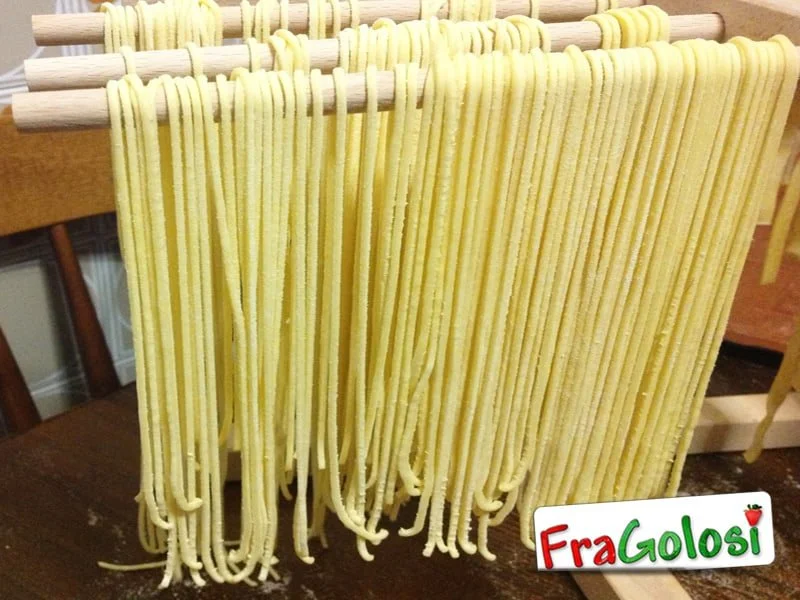
This homemade spaghetti uses durum wheat flour, warm water and salt to make a firm, egg-free pasta dough. Knead it, roll it thin with a pasta machine and cut it into strands for a fresh pasta supper.
Ingredients
- 400 gdurum wheat flour
- 200 gwarm water
- 6 gsalt
Instructions
- 1
Make a well
Pile the flour on a work surface and make a well in the centre. Add the salt, then gradually pour in the water, using a fork to draw in the flour.
- 2
Bring together
Start kneading by hand, gathering in all the flour until it forms a dough.
- 3
Knead the dough
Knead vigorously for about 10 minutes, stretching and folding the dough over itself several times, until it is firm and elastic.
- 4
Rest the dough
Wrap the dough in cling film and leave it to rest at room temperature for at least 30 minutes. This lets the gluten relax, making the dough easier to roll out.
- 5
Divide the dough
A longer rest makes the dough easier to roll. Divide it into four pieces of about 150 g each, wrap three pieces separately in cling film, and place the remaining piece on a floured work surface.
- 6
Flatten a piece
On the floured work surface, flatten the piece of dough with the palm of your hand until it is about 2 cm thick. Set up the pasta machine with its rollers at the widest setting.
- 7
Roll the sheets
Pass the dough through the machine, dusting it with flour each time, and gradually reduce the roller thickness until it reaches the penultimate setting.
- 8
Repeat and trim
Roll out the other three pieces in the same way. Once all the dough is rolled, trim the sheets to a consistent size and length.
- 9
Cut the spaghetti
Fit the spaghetti-cutting attachment to the machine. Feed the sheets through the cutting rollers one at a time to make the spaghetti.
- 10
Dry the strands
Twirl the spaghetti into nests and set them on a flour-dusted tray, or hang them on a pasta drying rack. Leave the fresh spaghetti to dry for at least 1 hour.
What is homemade spaghetti?
Spaghetti is a long, round pasta associated with Italian cooking. This version is made with durum wheat flour and water rather than eggs, giving it a simple, sturdy dough.
The recipe keeps the ingredient list short and relies on kneading and resting to make the dough workable. A pasta machine helps roll it evenly before the spaghetti cutter forms the strands.
Nutrition and macros by portion
The nutrition label shows one serving as written: 240 calories, 8g protein, 48g carbs, 1g fat.
| Portion | Adjustment | kcal | Protein | Carbs | Fat |
|---|---|---|---|---|---|
| Lighter | Smaller pasta portion | 168 kcal | 6g | 34g | 1g |
| This serving | As written | 240 kcal | 8g | 48g | 1g |
| Hungry | Larger pasta portion | 360 kcal | 12g | 72g | 2g |
The flour supplies most of each serving’s carbohydrates and protein, while the water contributes no energy and the salt contributes sodium. Serve a portion with vegetables and a protein-rich topping such as beans or cheese to make a more balanced plate.
Choose the flour
Durum flour: it gives this egg-free dough its structure and a slightly firm bite. Add the water gradually, since flour can absorb it differently depending on its grind and conditions.
Build an even dough
Start at the centre: mixing the salt and water into the flour well helps bring the ingredients together before kneading. Use the fork to draw in flour little by little, then switch to your hands when the mixture is too firm to stir.
Knead thoroughly: about 10 minutes of stretching and folding develops the dough into a compact, elastic mass. Gather up any loose flour as you work.
Rest before rolling
Room-temperature rest: wrap the dough and leave it for at least 30 minutes, as directed. The rest gives the dough time to relax, so it is less likely to resist or spring back as you roll it.
Keep covered: wrap the three waiting portions separately while you work with the first. This helps prevent their surfaces from drying out.
Roll to the right thickness
Start wide: flatten each portion to about 2 cm before feeding it through the pasta machine at its widest setting. Reduce the setting gradually rather than trying to make the sheet thin in one pass.
Stop at the penultimate notch: that is the thickness specified in this recipe. Dust the sheet with flour as needed so it passes through the rollers without sticking.
Cut and dry the strands
Even sheets: trim the rolled dough to a consistent length before cutting, so the strands are more uniform. Feed one sheet at a time through the spaghetti attachment.
Loose nests: gather the cut strands gently into nests and place them on a floured tray or pasta rack. The recipe calls for at least 1 hour of drying before cooking.
Serving and cooking
This recipe makes fresh pasta but does not include a sauce or a cooking time. Pair the spaghetti with a sauce of your choice, and cook it in plenty of boiling water until it reaches the texture you prefer.
Fresh pasta cooks more quickly than dried pasta, so check the strands early and taste one to judge doneness. Drain once they are tender with a little firmness at the centre.
Recipe notes & tips
- Add the water gradually so you can incorporate the flour evenly.
- Knead for the full 10 minutes to help the dough become elastic.
- Keep the waiting portions wrapped while rolling the first piece.
- Dust the dough lightly as you pass it through the rollers to limit sticking.
- Trim the sheets to a similar length before cutting for more even strands.
- Use a floured tray or pasta rack so the fresh strands do not clump as they dry.
Variations
- Add herbs: knead finely chopped herbs into the dough for an aromatic variation.
- Use a different shape: roll the dough and cut it into ribbons if you do not have a spaghetti attachment.
- Serve with tomato sauce: toss the cooked strands with a simple tomato sauce.
- Try a butter dressing: coat the cooked pasta with butter and grated cheese.
- Add vegetables: serve the spaghetti with sautéed seasonal vegetables.
Common mistakes to avoid
- Adding water all at once: pour it in gradually so the flour incorporates without uneven wet patches.
- Skipping the rest: leave the wrapped dough for at least 30 minutes so it is easier to roll.
- Rolling too quickly: reduce the machine setting step by step to avoid forcing the dough through.
- Letting spare dough dry out: keep the portions you are not rolling covered in cling film.
- Over-flouring the sheets: dust only as needed so the dough does not become dry or stiff.
- Packing strands together: arrange the nests on a floured tray or use a drying rack.
How to store
Keep freshly made spaghetti in a covered container in the fridge and use it within 1–2 days. For longer storage, freeze it in loose portions; cook from frozen, checking for doneness as it cooks. Do not store it at room temperature unless it has been dried completely and is suitable for pantry storage.
Frequently asked questions
Can I make the dough without a pasta machine?
Yes. Roll it out with a rolling pin on a lightly floured surface, aiming for an even sheet, then cut it into thin strands by hand.
Why does the dough need to rest?
Resting relaxes the gluten developed during kneading. That makes the dough easier to roll and less likely to spring back.
How thin should I roll the sheets?
Use the penultimate setting on the pasta machine, as the recipe specifies. If your machine has different settings, roll the dough gradually until it is thin and even enough for the spaghetti cutter.
How long should fresh spaghetti cook?
The recipe does not give a cooking time, and thickness and drying can affect it. Check the strands early in boiling water and taste one to see when it is done.
Can I leave the spaghetti to dry for longer?
Yes, but the recipe only specifies a minimum of 1 hour and does not give a time for drying it completely. For longer storage, freeze the strands unless you have dried them thoroughly.
Cook it from the original
This recipe comes from fragolosi.it. Their page has the author’s own photos, notes and tips — the best place to cook it from.
Open the recipe on fragolosi.it