
Bangladeshi Style Mutton Curry
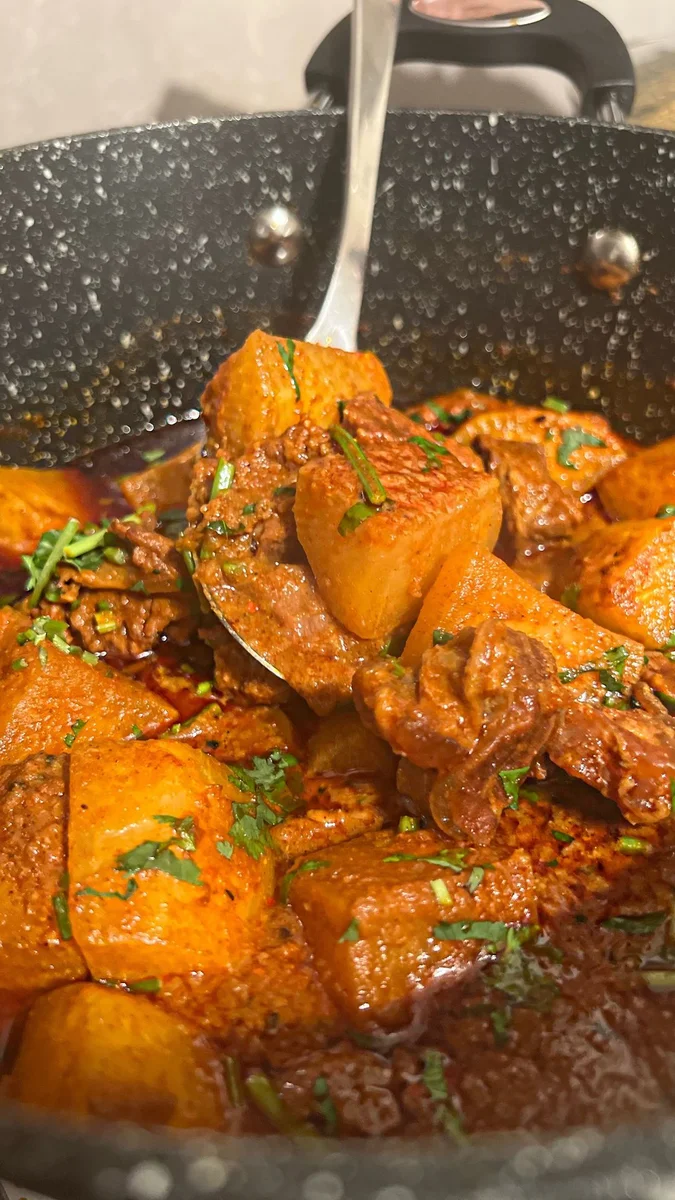
This Bangladeshi-style mutton curry cooks meat with onions and warm spices, then adds mooli or another vegetable. It makes a generous, deeply flavoured meal to serve with rice or flatbread.
Ingredients
- 2 tbspoil
- 1 tsp (optional)panch phoron
- to tastesalt
- 1 tspcrushed or grated ginger and garlic, or paste
- 3 mediumonions, cut into chunks
- 1 tsphomemade garam masala
- 1/2 tspturmeric
- 2 kgmutton
- 1 tbspKashmiri chilli powder
- 2 tspcurry powder
- 1/2 tspground cumin
- 1 whole mediummooli (daikon), cut into chunks, or another vegetable of your choice
- to garnishcoriander
Instructions
- 1
Heat the oil
Heat the oil in a pan.
- 2
Fry the aromatics
Add the panch phoron and salt, and cook for a minute. Add the ginger and garlic.
- 3
Add meat and onions
Add the onion, turmeric, garam masala and mutton. Stir briefly, then cover the pan.
- 4
Cook the mutton
Cook over medium heat, stirring occasionally. The liquid released by the meat will gradually cook the onions down.
- 5
Add the remaining spices
When the onion has broken down and the meat is cooked, stir in the remaining spices. Gradually add half a teacup of hot water.
- 6
Add the mooli
After 10 minutes, once the spices have infused the meat, add the mooli or chosen vegetable. Cook for a further 15 minutes, adjusting the time to suit the vegetable.
- 7
Finish the curry
Add the desired amount of water, stir, and let the curry cook before taking it off the heat.
- 8
Garnish and serve
Finish with coriander.
What is Bangladeshi-style mutton curry?
Mutton curry is a familiar home-cooked dish across South Asia, with many regional and household variations. This version builds flavour by cooking the meat with onions and spices before adding a vegetable and loosening the curry with water.
Mooli adds a mild, slightly peppery note and becomes tender as it cooks. The onion cooking down with the meat gives the curry its base without requiring a separate sauce.
Nutrition and macros by portion
The nutrition label shows one serving as written: 1280 calories, 105g protein, 21g carbs, 86g fat.
| Portion | Adjustment | kcal | Protein | Carbs | Fat |
|---|---|---|---|---|---|
| Lighter | Use leaner mutton | 896 kcal | 74g | 15g | 60g |
| This serving | As written | 1280 kcal | 105g | 21g | 86g |
| Hungry | Serve with extra rice | 1920 kcal | 158g | 32g | 129g |
Mutton supplies most of the protein and fat, while the onions and mooli contribute carbohydrates and fibre; the oil adds further fat. The estimate will vary with the cut of meat and how much salt and water you use, so balance the curry with rice or bread in a portion that suits your meal.
The spice base
Panch phoron: this optional whole-spice blend goes into the hot oil first, where it can release its aroma. Keep an eye on it so the spices do not burn.
Ground spices: turmeric and garam masala join the meat and onions early, while the chilli, curry powder and cumin are added later. That later addition gives the spices time to cook into the meat before the vegetable goes in.
Let the onions cook down
The method relies on moisture released by the mutton to soften the onions under the lid. Stir occasionally and keep the heat at medium so the mixture cooks steadily rather than catching on the bottom.
Once the onions have mostly dissolved, the curry will look thicker and more unified. If the pan begins to look dry before the meat is cooked, lower the heat and check it more frequently.
Check the mutton and mooli
Mutton: the recipe gives no fixed cooking time for the initial covered stage, so use tenderness as your guide. The meat should be cooked through and tender before you move on to the later spices.
Mooli: cut it into chunks of similar size so the pieces cook at roughly the same rate. The suggested 15 minutes is a guide; cook for longer or less time depending on the vegetable and the texture you prefer.
Control the curry consistency
Hot water: the method first adds half a teacup after the later spices, then calls for more water at the end. Add it gradually so you can stop when the curry reaches the thickness you want.
Final simmer: give the curry time to cook after the last water is added. A short simmer helps the sauce come together, while occasional stirring helps prevent sticking.
What to serve with it
Rice is a straightforward partner for the curry and its sauce. Plain flatbread also works well for scooping up the meat and vegetables.
For a more balanced plate, serve a moderate amount of curry with a generous side of vegetables. The recipe already includes mooli, so you can also add a fresh vegetable side if you want more variety.
Recipe notes & tips
- Cut the onion into chunks of similar size so it softens evenly.
- Stir the spice mixture thoroughly after adding the later seasonings so it coats the meat.
- Add the hot water gradually to keep control of the sauce thickness.
- Cut the mooli into even chunks for more consistent cooking.
- Taste the curry near the end and adjust the salt to your preference.
Variations
- Choose another vegetable: swap the mooli for a vegetable you like and adjust its cooking time.
- Make it milder: use less Kashmiri chilli powder to reduce the chilli flavour.
- Use a different oil: choose a neutral cooking oil you already have.
- Serve with flatbread: use bread instead of rice to scoop up the curry.
- Adjust the sauce: add more hot water at the end for a thinner curry.
Common mistakes to avoid
- Burning the whole spices: keep the pan moving and add the ginger and garlic after about a minute.
- Letting the onions catch: cook covered over medium heat and stir occasionally.
- Adding all the water at once: pour it in gradually so the curry does not become too thin.
- Using uneven vegetable chunks: cut them to a similar size so they cook more evenly.
- Rushing the final stage: let the curry cook after adding water before taking it off the heat.
How to store
Refrigerate leftovers in a covered container and use within 3 days. Reheat in a pan over a gentle heat until piping hot, adding a little water if the sauce has thickened; stir occasionally.
Frequently asked questions
Can I use a vegetable other than mooli?
Yes. The recipe allows for another vegetable of your choice. Add it after the spices have infused the meat and adjust the cooking time to suit it.
Is panch phoron essential?
No, it is listed as optional. You can leave it out and continue with the rest of the method.
How much water should I add?
The method specifies half a teacup of hot water after the later spices, then more as desired at the end. Add it gradually until the sauce reaches your preferred consistency.
How do I know when the mutton is cooked?
The recipe does not give a set time for the first cooking stage. Check that the meat is cooked through and tender before adding the later spices.
What can I serve with this curry?
Serve it with rice or flatbread. A vegetable side can add more variety to the meal.
Cook it from the original
This recipe comes from fooooods.com. Their page has the author’s own photos, notes and tips — the best place to cook it from.
Open the recipe on fooooods.com