
Christmas star biscuits
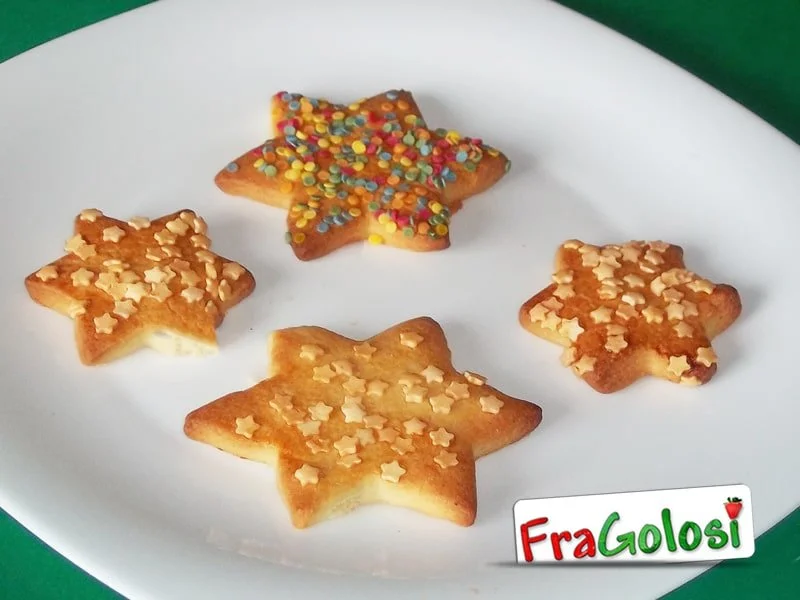
These Italian Christmas star biscuits are buttery, lemon-scented shortcrust biscuits finished with sugar decorations. Cut them into festive shapes for a simple seasonal bake to share with family or serve alongside coffee.
Ingredients
- 500 gplain flour
- 200 gsugar
- 200 gbutter
- 4egg yolks
- 1 sachetvanillin
- 1unwaxed lemon
- 1 small bottlerum (optional)
- 1 pinchsalt
- to tastesugar stars and/or sugar sprinkles
Instructions
- 1
Mix the yolks
Put the sugar, vanillin, egg yolks and salt in a food processor. Run it until the mixture is smooth.
- 2
Add the flour
Stop the processor and add the flour, rum and finely grated lemon zest. Process again until the dough pulls away from the sides and forms a ball.
- 3
Chill the dough
Turn the pastry out onto a floured work surface and knead it briefly by hand. Shape it into a ball, wrap it in cling film and chill for at least 1 hour.
- 4
Roll the pastry
After chilling, knead the pastry briefly for 1 minute, then roll it out to about 1 cm thick.
- 5
Prepare the cutters
Get out Christmas star-shaped cutters, using two sizes if you like, ready to cut the biscuits.
- 6
Cut star shapes
Press a star cutter into the pastry to make a biscuit shape.
- 7
Reuse the scraps
Repeat with the remaining pastry, gathering and reusing the offcuts.
- 8
Decorate the biscuits
Arrange the biscuits with space between them on a baking tray lined with baking paper. Sprinkle with the sugar decorations.
- 9
Bake and cool
Bake in an oven preheated to 180°C for about 15–20 minutes, removing the biscuits when they are slightly puffed. Leave them to cool, then lift them from the tray with a spatula.
- 10
Leave to dry
Before serving, place the Christmas star biscuits on a tray lined with baking paper and leave them to dry.
What are Christmas star biscuits?
These are Italian-style shortcrust biscuits, shaped as stars for the Christmas season and flavoured with lemon and vanilla. They are a festive take on a familiar butter pastry rather than a single regional speciality.
The recipe's appeal is its simple dough and crisp-edged shapes, with sugar decorations adding a little colour. The listed method does not say when to add the butter, though, so check the note below before mixing.
Nutrition and macros by portion
The nutrition label shows one serving as written: 712 calories, 11g protein, 97g carbs, 30g fat.
| Portion | Adjustment | kcal | Protein | Carbs | Fat |
|---|---|---|---|---|---|
| Lighter | Smaller biscuit portions | 498 kcal | 7g | 68g | 21g |
| This serving | As written | 712 kcal | 11g | 97g | 30g |
| Hungry | Serve a larger portion | 1068 kcal | 16g | 146g | 45g |
Most of the carbohydrates come from the flour and sugar, while butter supplies most of the fat and the egg yolks contribute some protein and fat. Pair a biscuit or two with fruit and a protein-containing option such as plain yoghurt for a more balanced snack.
The ingredient choices
Flour and egg yolks form the base of the pastry, while sugar sweetens it and vanilla gives it a warm, fragrant note. The recipe also lists butter, but does not include it in the written method; the dough may not come together as intended unless this is resolved.
Lemon zest brings a fresh citrus aroma, and a small bottle of rum is optional. Sugar stars or sprinkles provide the finish, so use enough to decorate without covering the biscuit shapes.
Getting the dough ready
The food processor brings the ingredients together quickly, but stop as soon as the dough forms a ball and pulls away from the bowl. Overworking shortcrust pastry can make the finished biscuits tougher.
Knead briefly by hand on a floured surface, then chill the wrapped dough for at least 1 hour. Resting firms the pastry and makes it easier to roll and cut cleanly.
Rolling and cutting
Roll the pastry to about 1 cm thick, as specified in the method, and press the cutters straight down for clear edges. Two sizes of star cutter can give the tray a varied look.
Gather the offcuts gently and reroll them to use the remaining dough. If the pastry becomes soft or sticky while you work, chill it briefly before cutting more shapes.
Watching the bake
Bake at 180°C for about 15–20 minutes, and look for biscuits that are slightly puffed. Check them towards the end of the time, since thickness and oven behaviour affect how quickly they bake.
Let the biscuits cool before lifting them with a spatula, as warm pastry is delicate. The recipe also calls for a final drying rest on baking paper before serving.
Serving ideas
Serve the stars with coffee, tea or hot chocolate as a small festive treat. Their lemon and vanilla notes also pair well with a bowl of fresh fruit.
For a simple dessert plate, add a few biscuits alongside yoghurt or fruit rather than serving a large stack. Keep them on a flat tray so the sugar decorations stay intact.
Recipe notes & tips
- Check the butter instruction before starting, because butter is listed but not included in the written method.
- Chill the dough for at least 1 hour so it is easier to roll and cut.
- Use a light dusting of flour on the work surface to prevent sticking.
- Leave space between biscuits on the tray so they bake evenly.
- Let the biscuits cool before moving them to avoid breaking their shapes.
- Keep the sugar decorations light enough that the star outlines remain visible.
Variations
- Use orange zest: swap the lemon zest for finely grated orange zest for a softer citrus flavour.
- Skip the rum: leave it out for a simpler vanilla and lemon biscuit.
- Change the shapes: use other festive cutters while keeping the same pastry thickness.
- Add coloured sprinkles: decorate the tops with different sugar sprinkles before baking.
- Mix the decorations: use both sugar stars and small sprinkles for varied finishes.
Common mistakes to avoid
- Missing butter step: butter is in the ingredient list but absent from the method, so clarify its use before making the dough.
- Skipping the chill: warm pastry is harder to handle; refrigerate it for at least 1 hour.
- Overworking the dough: too much kneading can make the biscuits firm; handle it briefly.
- Rolling unevenly: inconsistent thickness leads to uneven baking; aim for about 1 cm throughout.
- Moving them while hot: warm biscuits can break; cool them before lifting with a spatula.
How to store
Once completely cool, keep the biscuits in an airtight container at room temperature and eat within about 1 week. If they soften, briefly warm them in a low oven and cool them again before serving.
Frequently asked questions
When should I add the butter?
The recipe lists 200 g of butter but does not say when to add it. Check the original publisher's instructions before baking rather than proceeding with the method as written.
Can I leave out the rum?
Yes. The ingredient list marks the rum as optional, so you can omit it.
How thick should I roll the pastry?
The method specifies about 1 cm thick. Keeping the thickness even helps the biscuits bake at a similar rate.
How do I know when the biscuits are ready?
The method says to bake them for about 15–20 minutes at 180°C and remove them when slightly puffed. Check them near the end of the baking time.
Can I use the pastry scraps?
Yes. The method instructs you to gather the offcuts and cut more biscuits from them.
Why are the biscuits left to dry after baking?
The recipe asks you to leave them on baking paper before serving. Let them cool first so they are easier to handle.
Cook it from the original
This recipe comes from fragolosi.it. Their page has the author’s own photos, notes and tips — the best place to cook it from.
Open the recipe on fragolosi.it