
Valentine’s Day biscuits
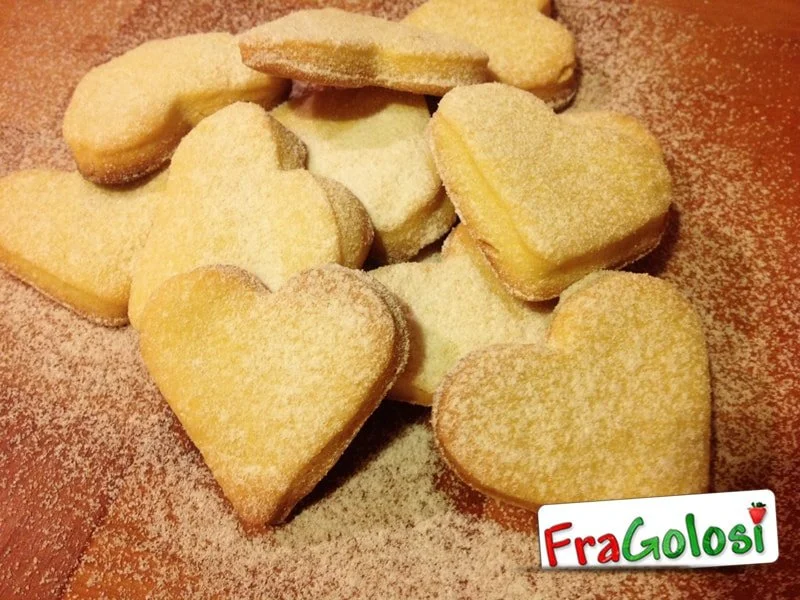
These Italian-style heart-shaped biscuits are tender, lightly scented with lemon and vanilla, and finished with egg yolk and colourful sprinkles. They make a cheerful homemade treat for Valentine’s Day or any occasion that calls for a simple decorated biscuit.
Ingredients
- 500 gplain flour
- 2eggs
- 165 gsugar
- 65 gbutter, at room temperature
- ½ sachetvanillin
- ½ sachetbaking powder
- 10 gbaker’s ammonia
- about 70 mlwarm milk
- zest of ½unwaxed lemon
- as neededmilk
- 2egg yolks
- to tastecoloured sprinkles
Instructions
- 1
Warm the milk
Heap the flour on a work surface and make a well in the centre. Warm the milk gently, then divide it between two glasses, pouring 35 ml into each.
- 2
Dissolve the raising agents
Stir the baker’s ammonia into one glass of milk and the baking powder into the other.
- 3
Add the ingredients
Put the whole eggs, sugar, chopped butter, lemon zest, vanillin and both glasses of milk into the flour well.
- 4
Mix with a fork
Use a fork to combine the ingredients in the centre, gradually drawing in flour from the sides.
- 5
Knead the dough
When the mixture becomes difficult to work with a fork, knead it by hand until you have a soft, even dough that is not sticky.
- 6
Adjust the dough
If the dough sticks to your fingers, work in a little more flour. If it feels hard, add a few spoonfuls of milk.
- 7
Roll the dough
Dust the work surface with flour and roll the dough out to a thickness of 5 mm.
- 8
Cut the hearts
Use heart-shaped cutters in different sizes to cut out the biscuits. Preheat the oven to 180°C. Once all the biscuits are cut, beat 3 egg yolks in a cup.
- 9
Decorate the biscuits
Brush the hearts with the beaten yolk and scatter over the coloured sprinkles. Arrange them on a baking tray lined with baking paper.
- 10
Bake and cool
Leave space between the biscuits because they will rise as they bake. Bake for about 15 minutes, then remove the tray from the oven and leave the biscuits to cool.
What are Valentine’s Day biscuits?
These are Italian home-style biscuits cut into hearts and decorated with a glossy egg-yolk coating and colourful sprinkles. They have a straightforward sweet flavour, with lemon zest and vanillin providing the main aromas.
Heart-shaped biscuits are an easy way to give a familiar bake a celebratory look. Here, the two raising agents help make a batch of tender biscuits, while different-sized cutters create a varied tray.
Nutrition and macros by portion
The nutrition label shows one serving as written: 550 calories, 11g protein, 93g carbs, 14g fat.
| Portion | Adjustment | kcal | Protein | Carbs | Fat |
|---|---|---|---|---|---|
| Lighter | Smaller biscuits | 385 kcal | 8g | 65g | 10g |
| This serving | As written | 550 kcal | 11g | 93g | 14g |
| Hungry | Larger portion | 825 kcal | 17g | 140g | 21g |
Flour and sugar provide most of the carbohydrates, while butter and egg yolks contribute much of the fat; eggs and flour also provide some protein. Pair a biscuit with fruit or yoghurt for a more balanced snack, or serve one after a meal rather than treating the whole batch as a single portion.
What each raising agent does
Baker’s ammonia: dissolve it in one portion of the warm milk as directed. It is a traditional biscuit raising agent, and measuring the milk into separate glasses makes it easier to distribute.
Baking powder: dissolve this in the second portion of milk. Keep both mixtures separate until they are added to the flour well.
Getting the dough right
Soft butter: room-temperature butter is easier to mix evenly with the eggs and sugar. Cut it into pieces so it blends into the dough without leaving large lumps.
Texture: the finished dough should feel soft and uniform rather than sticky. Add flour a little at a time if it clings to your fingers, or a few spoonfuls of milk if it feels too firm.
Rolling and cutting
Even thickness: roll the dough to 5 mm so the biscuits bake at a similar pace. A lightly floured surface helps prevent sticking, but use only enough flour to make rolling manageable.
Cutter sizes: make hearts in a few sizes for variety, and gather and reroll scraps as needed. Keep the cut shapes spaced apart on the tray because the dough rises in the oven.
Colour and doneness
Egg wash: brush the tops with beaten yolk before adding the sprinkles. Apply it gently so the decoration stays on the surface and the edges remain neatly defined.
Oven check: bake at 180°C for about 15 minutes, as directed. Keep an eye on the biscuits towards the end and take them out when baked; leave them to cool on the tray before handling.
A note on the egg yolks
The ingredient list calls for 2 egg yolks, while the method says to beat 3 for brushing. This is a discrepancy in the supplied recipe; check the amount you have available and note that the stated method uses 3 yolks.
The two whole eggs are mixed into the dough. The yolks are used separately for the finish, so keep them apart when preparing the ingredients.
Serving ideas
Serve the biscuits once they have cooled, alongside tea or coffee, or arrange them on a plate as a small edible gift. Their simple flavour also pairs well with fresh fruit.
For a decorative tray, mix the heart sizes and sprinkle colours. A few plain biscuits alongside the decorated ones can make the colours stand out.
Recipe notes & tips
- Use a large work surface so you can make the flour well without spilling the ingredients.
- Warm the milk gently rather than letting it become hot.
- Add any extra flour or milk gradually so the dough does not become dry or sticky.
- Measure the rolled dough thickness at 5 mm for more even baking.
- Leave space between the hearts on the lined tray to allow for rising.
- Let the biscuits cool before moving them, as they are easier to handle once set.
Variations
- Citrus twist: Use finely grated orange zest in place of the lemon zest.
- Different shapes: Cut the dough into stars or rounds instead of hearts.
- Simple finish: Leave some biscuits without sprinkles for a plainer look.
- Chocolate dip: Once cooled, dip one edge of each biscuit in melted chocolate.
- Seasonal colours: Choose sprinkles to suit a birthday, celebration or holiday.
Common mistakes to avoid
- Sticky dough: Work in a little flour at a time until it no longer clings to your fingers.
- Hard dough: Add a few spoonfuls of milk gradually until it softens.
- Uneven biscuits: Roll the dough to a consistent 5 mm thickness.
- Crowded tray: Space the biscuits apart because they rise during baking.
- Loose sprinkles: Brush the tops with yolk first so the decoration can adhere.
- Moving them too soon: Let the biscuits cool before lifting them from the tray.
How to store
Once completely cool, store the biscuits in an airtight container at room temperature and eat within about a week. They are best served as they are; if you want them warm, heat briefly in a low oven and check often so they do not dry out.
Frequently asked questions
Can I make the dough ahead?
The recipe does not give a resting time. If preparing ahead, cover the dough and refrigerate it, then let it soften enough to roll before cutting the shapes.
Why does the recipe use both baking powder and baker’s ammonia?
Both are included in the supplied recipe and are dissolved separately in warm milk before being added to the dough. Keep the two portions distinct as described.
How thick should I roll the dough?
Roll it to 5 mm. Keeping the thickness even helps the biscuits bake consistently.
How do I know when the biscuits are ready?
The recipe gives an approximate baking time of 15 minutes at 180°C. Check towards the end, as oven performance and biscuit size can affect the timing.
How many yolks should I use for brushing?
There is a mismatch in the source instructions: the ingredient list gives 2 yolks, but the method says to beat 3. The method uses 3 yolks for brushing.
Can I use another cutter shape?
Yes. The dough can be cut with other biscuit cutters; the recipe suggests hearts in different sizes, but the shape is for decoration.
Cook it from the original
This recipe comes from fragolosi.it. Their page has the author’s own photos, notes and tips — the best place to cook it from.
Open the recipe on fragolosi.it