
Half-puff pastry
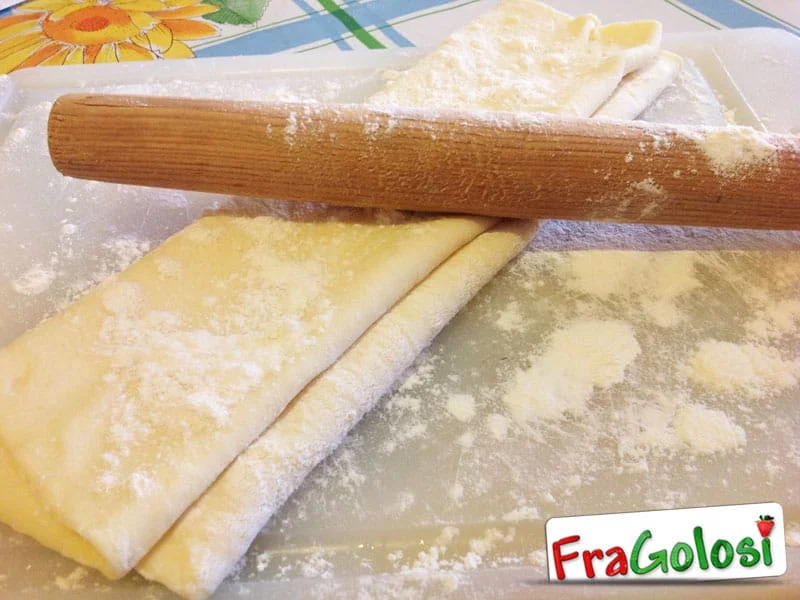
Half-puff pastry is a butter-enriched dough folded into layers for a crisp, flaky finish. This Italian-style version uses a simple flour-and-water dough and a separate butter block, then relies on repeated folds and chilling to build its layers.
Ingredients
- 500 gItalian 00 flour
- About 290–310 mlvery cold water
- 1 teaspoonsalt
- 250 ggood-quality cold butter
- 65 gItalian 00 flour
Instructions
- 1
Make the dough
Sift 500 g flour with the salt and mound it on a work surface, making a well in the middle. Gradually pour in the cold water, adding only as much as the flour absorbs, and knead quickly to make a medium-firm dough. Shape it into a rectangle, wrap it in baking paper and chill in the middle of the fridge for at least 1 hour. Place the butter between two sheets of baking paper.
- 2
Prepare the butter
Tap the butter with a rolling pin until it is thinner and pliable. Work it quickly with the remaining 65 g flour on the baking paper, stopping once the flour is incorporated and the mixture is smooth and manageable. Shape it into a neat square, wrap it in the paper and set it aside somewhere cool.
- 3
Roll the dough
Lightly flour the work surface and roll the rested dough into a neat, thin rectangle, with its long sides at the top and bottom and its short sides to the left and right.
- 4
Enclose the butter
Set the butter square in the centre of the dough and press it gently, keeping it within the dough’s edges. Fold the two uncovered sides of dough over the butter to enclose it. Position the rectangle vertically, with its open edges at the top and bottom and its closed edges at the sides.
- 5
Roll and fold
Lightly flour the surface and roll the dough in one direction, from the bottom towards the top, until it is about 1 cm thick. Keep the rectangle regular and do not roll back and forth.
- 6
Make a three-fold
With the long sides at the top and bottom, fold the rectangle into three equal sections. Turn it so the folded edge is on your right, then roll from the bottom upwards to about 1 cm thick.
- 7
Make a four-fold
Fold the left and right edges in towards the centre, then fold the dough in half like a book. This forms a four-layer fold.
- 8
Repeat the three-fold
Check that the dough is still a regular rectangle and turn it so the folded edge is on your right. Roll it out, fold it into three equal sections again, then position it with the fold on your right and roll it back into a rectangle.
- 9
Repeat the four-fold
Fold the left and right edges towards the centre, then fold the dough in half like a book to make another four-layer fold.
- 10
Chill and use
Press the dough gently to remove air from the folds, wrap it in cling film and refrigerate for 60 minutes so the butter firms up again. Roll it to the thickness needed for your recipe. The pastry can also be frozen for later use.
What is half-puff pastry?
Half-puff pastry, or pasta sfoglia rapida, is a laminated dough made by folding butter into a flour-and-water dough. It is associated with Italian home baking and offers a practical route to flaky pastry without the extended sequence of turns used for classic puff pastry.
This version keeps the dough and butter mixture separate at first, then encloses the butter and alternates three- and four-folds. Those layers give the pastry its lift and crispness when baked.
Nutrition and macros by portion
The nutrition label shows one serving as written: 960 calories, 15g protein, 108g carbs, 51g fat.
| Portion | Adjustment | kcal | Protein | Carbs | Fat |
|---|---|---|---|---|---|
| Lighter | Use a smaller pastry portion | 672 kcal | 11g | 76g | 36g |
| This serving | As written | 960 kcal | 15g | 108g | 51g |
| Hungry | Serve a larger pastry portion | 1440 kcal | 23g | 162g | 77g |
The flour supplies most of the carbohydrate and some protein, while the butter provides most of the fat and saturated fat. Use this pastry as one part of a meal, with a vegetable-rich filling or a salad alongside it.
Choose and handle the butter
Good-quality butter: it is the main source of richness and creates the distinct layers, so choose a firm butter with a pleasant flavour.
Keep it cool: the butter should become pliable when tapped, not greasy or melted. Work quickly while mixing it with the 65 g flour, using the baking paper to reduce handling.
Build the dough gradually
Add the water slowly: flour can absorb different amounts, so begin with less and add only enough to bring the dough together. Aim for a medium-firm consistency rather than a sticky dough.
Rest the dough: the first chill of at least 1 hour makes it easier to roll. The recipe also calls for another 60 minutes in the fridge after folding.
Enclose the butter neatly
Centre the butter: place it on the rolled dough with a border of plain dough around it. Press gently so the butter sits evenly without being pushed out at the sides.
Seal with the flaps: fold the two uncovered sides over the butter. A tidy parcel helps keep the butter enclosed as you roll.
Roll without smearing
One direction: after enclosing the butter, roll from the bottom towards the top rather than working back and forth. Keep the dough as rectangular as you can and aim for about 1 cm thick at the specified rolling stages.
Light flouring: dust the work surface and rolling pin as needed, but brush away excess flour before folding so the layers can sit together.
Understand the folds
Three-fold: divide the rectangle into three equal sections and fold them over one another. Turn the dough so the folded edge is on the right before rolling again.
Four-fold: bring both ends towards the centre, then fold the dough in half like a book. The method alternates these folds to create layers without cutting or mixing the butter into the dough.
When the pastry is ready
Before chilling: the dough should hold its rectangular shape, with the butter enclosed and the folds intact. If the butter starts to feel soft, pause and cool the dough before continuing.
After chilling: the pastry should feel firmer and be ready to roll to the thickness required by the dish you are making. This recipe makes pastry dough; it does not specify a baking temperature or baking time.
Ways to use it
Savoury bakes: use the pastry for tarts, savoury pies or small filled pastries. Pair those with a crisp salad or cooked vegetables for a more rounded plate.
Sweet bakes: it can also be rolled for fruit tarts or other pastries. Choose a filling suited to your recipe, since the dough itself is only lightly seasoned with salt.
Recipe notes & tips
- Measure the water carefully and add it gradually, since the dough should be firm enough to roll.
- Keep the butter between baking paper while flattening it to make a tidy, even square.
- Use only a light dusting of flour on the work surface and rolling pin.
- Keep the dough rectangular at each stage so the folds remain even.
- Chill the pastry for the full 60 minutes after folding to let the butter firm up.
- Roll the finished pastry to suit the recipe you plan to make with it.
Variations
- Use for savoury tarts: roll the pastry to the thickness called for by your tart recipe.
- Make sweet pastries: pair it with fruit or a sweet filling of your choice.
- Cut smaller pieces: use the pastry for individual savoury or sweet bakes.
- Freeze for later: wrap the finished pastry securely before placing it in the freezer.
- Season the filling: add herbs or spices to a savoury filling rather than changing the pastry dough.
Common mistakes to avoid
- Adding all the water at once: add it gradually and stop when the dough comes together.
- Softening the butter too much: work quickly and keep it cool so it stays manageable.
- Rolling back and forth: roll in one direction at the specified stage to help preserve the layers.
- Uneven folds: keep the rectangle regular and fold the sections as evenly as possible.
- Skipping the final chill: refrigerate for 60 minutes so the butter firms before the pastry is rolled for use.
How to store
Wrap the finished pastry well and keep it refrigerated until you are ready to use it. The recipe gives no specific refrigerated storage life; for longer storage, freeze it securely wrapped and thaw it in the fridge before rolling.
Frequently asked questions
Why add the water gradually?
Different flour can take up different amounts of water. Add it little by little and stop once the dough is medium-firm and workable.
How long does the pastry need to rest?
The method calls for at least 1 hour of chilling for the initial dough, followed by a further 60 minutes in the fridge after the folds.
What does a three-fold mean?
Fold the rectangle into three equal sections, one over the other. Turn it so the folded edge is on the right before rolling again.
What does a four-fold mean?
Fold both ends towards the centre, then fold the dough in half like a book. The result is a compact four-layer fold.
Can I freeze this pastry?
Yes. Wrap it securely and freeze it for later use; thaw it in the fridge before rolling.
How thick should I roll it for baking?
The recipe does not give one final thickness for every use. Roll it to the thickness specified by the dish you are preparing.
Cook it from the original
This recipe comes from fragolosi.it. Their page has the author’s own photos, notes and tips — the best place to cook it from.
Open the recipe on fragolosi.it