
One Pot Seafood Pasta
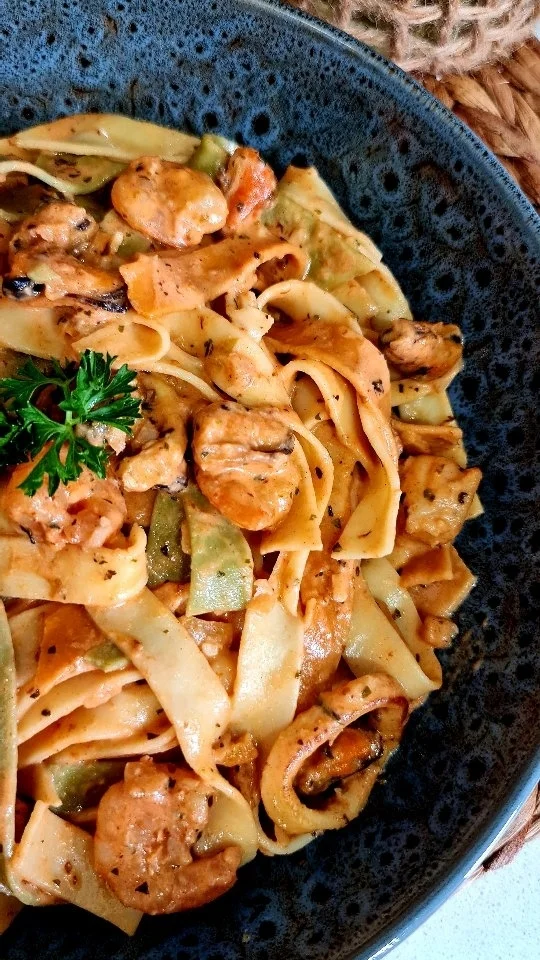
This one-pot-style seafood pasta combines seafood marinara with tomato, herbs, cream and Parmesan for a rich, savoury sauce. It is a practical choice for a comforting meal, with the pasta cooked separately and then tossed through the sauce.
Ingredients
- 1 tbspoil
- 1 smallonion, diced
- 3 clovesgarlic, minced
- 1 cup (about 240 ml)passata
- 1 tspdried basil
- 1 tspdried oregano
- 1 tspdried parsley
- Not specifiedfrozen seafood marinara mix
- 1 tspsugar
- To tastesalt
- To tasteblack pepper
- 1/4 cup (about 25 g)grated Parmesan
- 1 cup (about 240 ml)heavy cream
- Not specifiedpasta
Instructions
- 1
Cook the pasta
Cook the pasta according to the packet instructions, reserving about 60 ml (1/4 cup) of the cooking water. Drain the pasta and set it aside.
- 2
Soften the onion
Heat the oil in a large pan over medium heat. Add the onion and sauté for 2 minutes, until softened, then add the garlic and sauté for 2 minutes.
- 3
Cook the seafood
Add the frozen seafood marinara mix and cook for 4 minutes, stirring occasionally. Add the passata, basil, oregano, parsley, sugar, and pinches of salt and black pepper.
- 4
Simmer the sauce
Turn the heat to low and cook for 8 minutes, stirring occasionally. Stir in the cream and Parmesan, then taste and adjust the seasoning as needed.
- 5
Toss with pasta
Add the pasta and toss to coat it in the sauce. If the sauce is too thick, loosen it with a little of the reserved pasta water.
- 6
Serve straight away
Divide between plates and serve immediately.
What is seafood pasta?
Seafood pasta pairs pasta with a sauce built around seafood, often with tomato, herbs or cream. This version combines passata and dried herbs with cream and Parmesan for a smooth, savoury finish.
The recipe does not specify a particular regional tradition, and its seafood quantity and pasta amount are not given. Its appeal is the contrast between the tomato's tang, the cream's richness and the seafood's briny flavour.
Nutrition and macros by portion
The nutrition label shows one serving as written: 720 calories, 30g protein, 80g carbs, 30g fat.
| Portion | Adjustment | kcal | Protein | Carbs | Fat |
|---|---|---|---|---|---|
| Lighter | Use less cream | 504 kcal | 21g | 56g | 21g |
| This serving | As written | 720 kcal | 30g | 80g | 30g |
| Hungry | Add more pasta | 1080 kcal | 45g | 120g | 45g |
Pasta is the main source of carbohydrate, while the oil, cream and Parmesan contribute much of the fat; the seafood provides protein. The recipe does not give quantities for the pasta or seafood, so the nutrition estimate is especially approximate. Serve with a generous portion of vegetables or salad to balance the creamy pasta.
Building the sauce
Onion and garlic: soften them gently in the oil before adding the seafood, so their flavour forms the base of the sauce.
Herbs and passata: dried basil, oregano and parsley season the tomato, while a little sugar can round out its acidity. Add the salt and pepper sparingly at first, then taste again after the cheese goes in.
Cooking the seafood
Frozen seafood: the recipe adds the mix straight to the pan and cooks it for 4 minutes before the sauce simmers. Seafood mixes vary in size and contents, so check the packet and make sure the seafood is cooked through before serving.
Gentle heat: keep the sauce at a low simmer for the stated 8 minutes. Avoid a vigorous boil once the seafood is in the pan, which can make delicate pieces tough.
Getting the sauce texture right
Cream and Parmesan: stir them into the sauce after its simmer, then taste before adding more seasoning. The cheese adds salt as well as savouriness, so adjust carefully.
Pasta water: reserve about 60 ml before draining. Add it a little at a time only if the finished sauce seems too thick; the starchy water helps it cling to the pasta.
Timing and doneness
Pasta first: cook it according to its packet directions and reserve the water before draining. The recipe does not give a pasta quantity or a total cooking time, so use the packet timing and judge the final amount of sauce against the pasta you have.
Seafood check: follow the seafood mix's packet guidance if it calls for a different cooking time. The stated 4-minute cook and 8-minute simmer are the recipe's timings, but the seafood should be fully cooked before you serve it.
What to serve with it
A crisp green salad or steamed vegetables can bring freshness alongside the creamy sauce. Serve the pasta as soon as it is tossed, while the sauce is glossy and warm.
The dish already includes pasta, cream and Parmesan, so a simple vegetable side is an easy way to add contrast without making the meal more complicated.
Recipe notes & tips
- Check the seafood mix packet for cooking and thawing guidance before you begin.
- Reserve the pasta water before draining, as it is easy to forget once the sauce is ready.
- Start with modest pinches of salt because Parmesan can make the sauce saltier.
- Keep the sauce at a gentle simmer rather than letting it boil hard.
- Add reserved pasta water gradually so the sauce does not become too thin.
- Serve promptly after tossing so the pasta does not absorb too much sauce.
Variations
- Fresh herbs: stir in chopped parsley at the end for a fresher herbal note.
- Chilli: add a pinch of chilli flakes with the dried herbs for gentle heat.
- Extra vegetables: add spinach to the sauce near the end and stir until wilted.
- Lemon finish: add a little lemon zest just before serving to brighten the creamy sauce.
- Different pasta: use another pasta shape, adjusting its cooking time to the packet directions.
Common mistakes to avoid
- Skipping the pasta water: reserve it before draining so you can loosen the sauce if needed.
- Boiling the cream sauce hard: keep the heat low to help the sauce stay smooth.
- Adding too much salt early: season gradually and taste again after stirring in Parmesan.
- Overcooking the seafood: check the mix as it cooks and follow its packet guidance.
- Thinning the sauce too quickly: add pasta water a small splash at a time.
- Guessing the missing quantities: the recipe gives no pasta or seafood amount, so choose quantities suited to your servings and adjust the sauce to coat.
How to store
Refrigerate leftovers promptly in a covered container and use within 1–2 days. Reheat gently in a pan until piping hot, adding a splash of water if the sauce has thickened; avoid repeated reheating.
Frequently asked questions
How much pasta and seafood should I use?
The recipe does not specify either quantity, so it is not possible to give an exact amount without changing the source. Choose amounts for four servings and adjust the sauce so it coats the pasta.
Do I need to thaw the seafood first?
The method adds frozen seafood directly to the pan, but check the seafood mix packet because some products require thawing or have specific cooking instructions.
Can I use fresh seafood instead?
Yes, but different seafood cooks at different speeds. Add each type according to its cooking time and make sure everything is fully cooked before serving.
What pasta shape works best?
Use a shape that holds sauce well, such as penne or fusilli, or use a long pasta if that is what you have. Follow the packet directions and reserve some cooking water.
Can I make the sauce less rich?
Use less cream and loosen the sauce with reserved pasta water as needed. The result will be less creamy than the version described.
Can I make it ahead?
It is best served freshly tossed. If preparing ahead, keep the pasta and sauce separate and combine them when reheating to help prevent the pasta from becoming too soft.
Cook it from the original
This recipe comes from fooooods.com. Their page has the author’s own photos, notes and tips — the best place to cook it from.
Open the recipe on fooooods.com