
Braised Garlic And Lemon Biftek
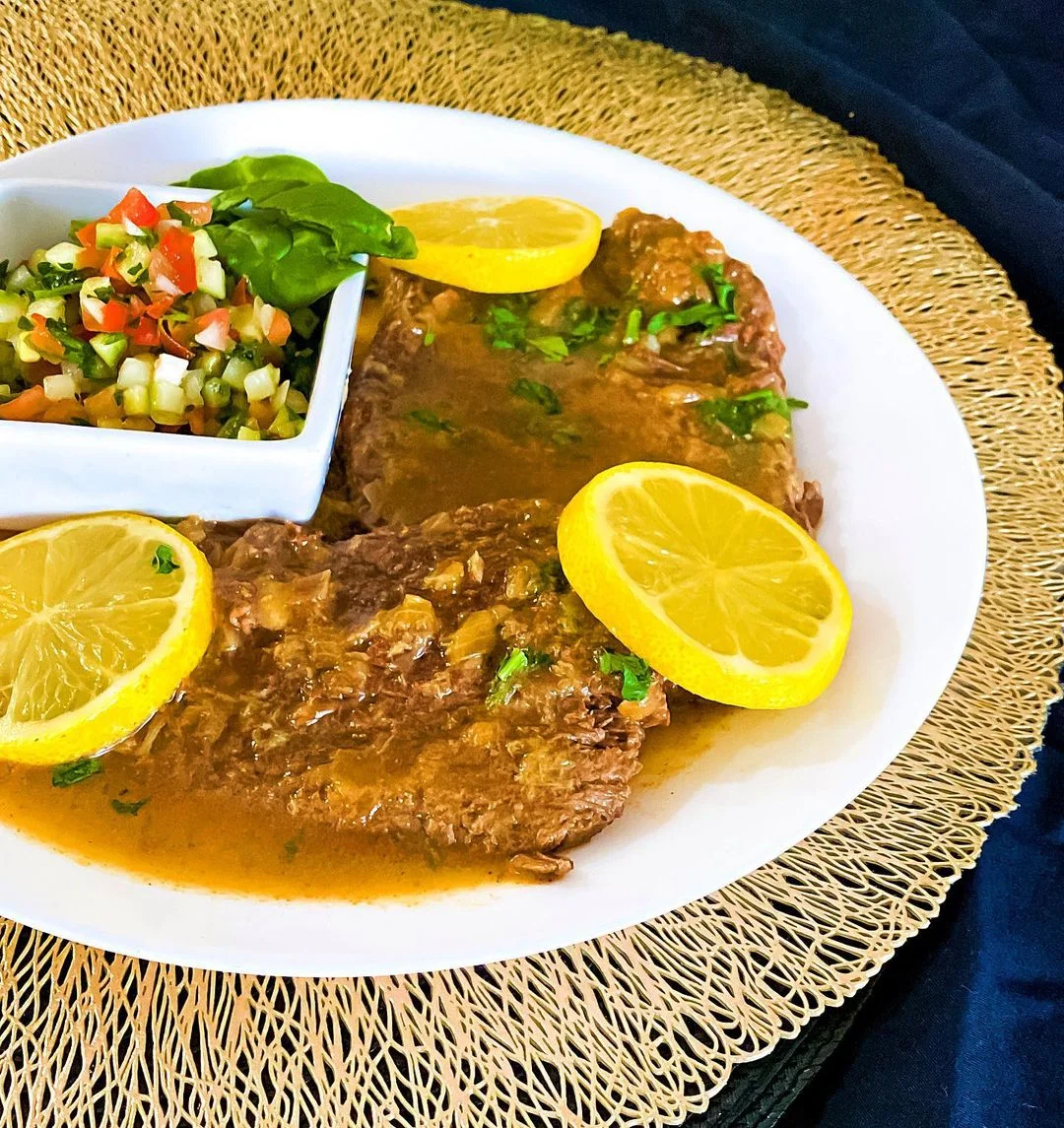
Braised garlic and lemon biftek is seasoned minute steak simmered until very tender in a savoury broth with onion, garlic and lemon. It is a comforting one-pan meal, especially good with mash or roast vegetables to catch the juices.
Ingredients
- 1 kgminute steak
- 10 cloves, crushedgarlic
- 1, dicedonion
- 3–4, juicedlemons
- 1 teaspoonground cinnamon
- 1 teaspoonmixed/Lebanese spice
- ½ teaspooncracked pepper
- 2 tablespoonsoil, for cooking
- 1½–2 cups (360–480 ml)water
- to tastesalt
Instructions
- 1
Season the steaks
Mix the cinnamon, mixed/Lebanese spice and cracked pepper. Rub the mixture over each steak and add salt as needed.
- 2
Heat the oil
Pour the oil into a wide pot or deep pan and heat it.
- 3
Sear the meat
Add the steaks and sear both sides until they have some colour. Remove them to a plate.
- 4
Cook the aromatics
Add the remaining oil to the same pan. Fry the onion until coloured, then add the crushed garlic and cook for about a minute.
- 5
Add water and steak
Return the steaks and any juices on the plate to the pan. Add enough water to just cover the meat.
- 6
Braise until tender
Let the liquid simmer for a couple of minutes, then cover the pan and turn the heat to low. Cook for at least 1 hour.
- 7
Add the lemon
After the first hour, add the lemon juice. Cover the pan again and cook for another 30–45 minutes, or until the steak is very soft and tender.
- 8
Check the texture
Test the steak with a fork. If it does not come apart easily, continue cooking until tender.
- 9
Serve the steak
Turn off the heat and serve the steak with its broth. It goes well with salad, roast vegetables or mash.
What is garlic and lemon biftek?
Biftek is a name for steak used in several food traditions, and this version turns it into a slow-braised dish rather than a quick steak supper. Cinnamon and mixed or Lebanese spice season the meat, while garlic, onion and lemon flavour the cooking liquid.
The long, gentle cook is what makes this version work: the steak has time to soften and take on the flavours of the broth. Serve it with something that can soak up the juices.
Nutrition and macros by portion
The nutrition label shows one serving as written: 560 calories, 70g protein, 11g carbs, 28g fat.
| Portion | Adjustment | kcal | Protein | Carbs | Fat |
|---|---|---|---|---|---|
| Lighter | Serve with extra salad | 392 kcal | 49g | 8g | 20g |
| This serving | As written | 560 kcal | 70g | 11g | 28g |
| Hungry | Add mash or roast vegetables | 840 kcal | 105g | 17g | 42g |
The steak provides most of the protein and also contributes fat; the cooking oil adds further fat. Carbohydrate comes mainly from the onion, garlic and lemon, with a smaller contribution from the spices. Pair a serving with vegetables or salad, and add mash if you want a more filling plate.
Choosing the ingredients
Minute steak: this is usually cut thin, so it sears quickly. The recipe’s extended braise is intended to leave it very tender; check it as it cooks, since cuts and thicknesses can vary.
Mixed spice: the amount is one teaspoon, but the exact blend depends on the product. If using a Lebanese spice mix, check whether it already contains salt before seasoning the steak.
Searing before braising
Colour: sear the steaks on both sides to give the outside some browning, then take them out of the pan. The recipe does not call for cooking them through at this stage.
Aromatics: fry the diced onion until it gains colour, then add the garlic for about a minute. Keep it moving so the garlic does not scorch before the water goes in.
Getting the braise right
Liquid level: add enough water to just cover the steaks, using the stated 360–480 ml as a guide. The exact amount depends on the width of the pan and how closely the meat fits.
Low heat: bring the liquid to a simmer, cover the pan and turn the heat down. It should cook gently rather than boil vigorously.
Adding lemon at the end
Lemon juice goes in after the first hour, followed by another 30–45 minutes of covered cooking. This gives the meat time to soften before the bright citrus flavour is added.
Use the fork test rather than relying on the clock alone. If the steak still resists or does not come apart easily, keep it covered and cook it for longer.
How to serve it
Mash: a soft, mild side works well with the lemony broth and makes the meal more substantial.
Vegetables: serve with roast vegetables or salad for contrasting texture and freshness. Spoon some of the cooking liquid over the steak at the table.
Recipe notes & tips
- Pat the steaks dry before seasoning if they are wet, so they brown more readily.
- Use a pan wide enough to sear the steaks without crowding them.
- Keep the heat low once the pan is covered to maintain a gentle simmer.
- Taste the broth before serving and adjust the salt if needed.
- Keep the steaks with their plate juices when returning them to the pan.
Variations
- More garlic: add extra crushed cloves if you want a stronger garlic flavour.
- Extra lemon: serve with lemon wedges for a brighter finish at the table.
- Different spice blend: use another savoury mixed spice in place of the Lebanese blend.
- Vegetable side: add roast vegetables at serving time for colour and texture.
- Heartier plate: serve the steak and broth over mashed potatoes.
Common mistakes to avoid
- Crowding the pan: the steaks may steam rather than colour; sear them in batches if needed.
- Burning the garlic: add it after the onion and cook for only about a minute.
- Boiling hard: a vigorous boil can make the meat cook unevenly; keep the covered pan at a low simmer.
- Adding lemon too early: follow the recipe and add the juice after the first hour of braising.
- Stopping while the steak is firm: continue cooking until a fork can separate it easily.
How to store
Refrigerate leftovers in an airtight container with the broth for up to 3 days. Reheat gently in a covered pan until piping hot, adding a little water if the liquid has reduced.
Frequently asked questions
Can I use another cut of beef?
Yes, but the cooking time may change depending on the cut and thickness. Keep it covered at a low simmer and use the fork test to judge tenderness.
How much water should I use?
The recipe gives 360–480 ml, but the key cue is to add enough to just cover the steaks. A wider pan may need more liquid.
When is the steak ready?
It should be very tender and come apart easily when tested with a fork. If it still feels firm, continue braising.
Can I prepare it ahead?
Yes. Cool and refrigerate the steak with its broth, then reheat it gently in a covered pan until piping hot.
What should I serve with biftek?
The recipe suggests salad, roast vegetables or mash. Choose mash or another filling side if you want to make more of the broth.
Cook it from the original
This recipe comes from fooooods.com. Their page has the author’s own photos, notes and tips — the best place to cook it from.
Open the recipe on fooooods.com