
Cheese And Zaatar Rolls
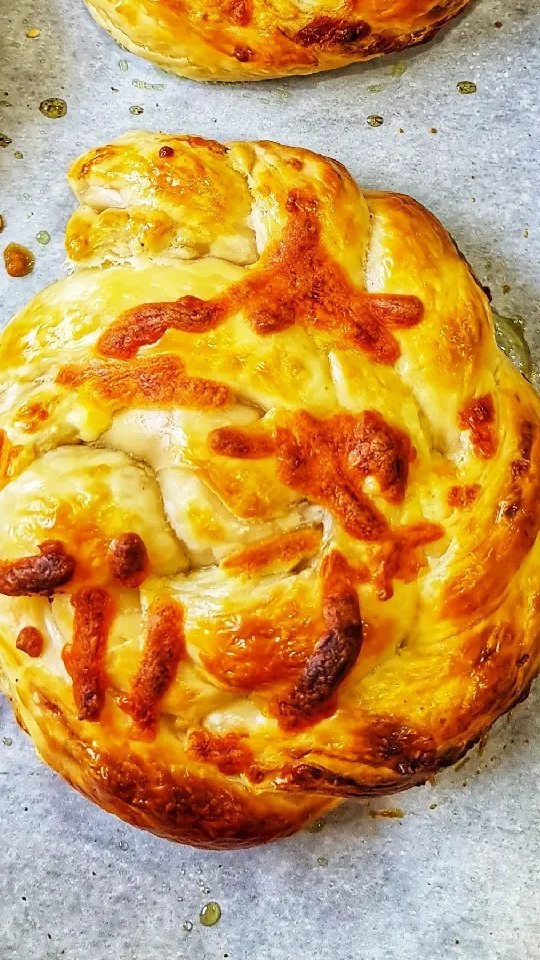
These savoury puff pastry rolls pair aromatic za’atar with a creamy, salty cheese filling. They make a warm shareable snack or a simple centrepiece for a light meal.
Ingredients
- To tastePuff pastry
- To tasteZa’atar or oregano
- To tasteOlive oil
- 1 cup (about 150 g)Feta cheese
- 1 cup (about 100 g)Mozzarella cheese
- 1 block (weight unspecified)Cream cheese
- 1 tablespoonDried oregano
- 1Egg
Instructions
- 1
Mix the fillings
Stir the za’atar and olive oil together until they form an almost paste-like mixture, then set aside. Mix the cheeses together in a separate bowl and set aside.
- 2
Fill the pastry
Roll out the puff pastry and spread it with the za’atar mixture. Begin rolling the dough, then cut down the middle, stopping about 2 inches (5 cm) from the top so that end stays joined.
- 3
Shape the braid
Lay each piece over the other to form a braid, keeping the za’atar-filled side facing upwards. Bring the ends together to make a circle and join the meeting parts.
- 4
Make the cheese roll
Repeat the same shaping steps with the cheese mixture. Brush the pastry with egg wash.
- 5
Bake until golden
Bake at 200°C until the top is golden. Serve hot.
What are cheese and za’atar rolls?
These rolls are flaky pastry shaped around savoury fillings: one scented with za’atar and olive oil, the other filled with a mixture of cheeses. Za’atar is a Middle Eastern herb-and-spice blend, though the recipe also allows oregano as an alternative.
The method brings familiar pastry shaping together with these distinct fillings. Keeping the za’atar side visible as you braid it helps the herb mixture stay part of the finished roll’s flavour and appearance.
The fillings
Za’atar and oil: mix them to an almost paste-like consistency so the seasoning is easy to spread over the pastry. The listed ingredient quantities are not specified, so add the oil gradually until the mixture holds together.
Cheese: feta brings a salty, crumbly quality, while mozzarella and cream cheese make the filling softer and creamier. Mix the cheeses evenly so each part of the roll gets a balanced filling.
Shaping the braid
The cut: stop about 5 cm from the top of the rolled pastry, leaving the pieces attached at one end. That uncut section gives you an anchor for arranging the braid.
The circle: keep the za’atar-filled surfaces facing upwards as you cross the pieces, then bring the ends together. Handle the pastry gently so the filling stays in place.
Getting the finish right
Egg wash: brush it over the exposed pastry before baking to help the surface colour. Avoid brushing a thick layer of filling or pooling egg in the braid’s folds.
Doneness: the recipe gives a visual cue rather than a baking time, so look for a golden top. If the pastry still looks pale, continue baking and check it again shortly.
Timing and temperature
The oven temperature is 200°C, but no total baking time is provided. Start checking the pastry as it bakes and use its golden surface as the stated cue for doneness.
The instructions do not specify whether the oven should be fan-assisted or conventional. If you know your oven tends to brown pastry quickly, keep a close eye on the top.
Serving the rolls
Serve the pastry hot, as directed, while the crust is flaky and the cheese filling is warm. Cut it into portions at the table or serve smaller pieces as part of a snack spread.
A fresh salad or sliced vegetables can add a crisp contrast to the rich pastry. Keep accompaniments simple so the za’atar and cheese flavours remain prominent.
Recipe notes & tips
- Mix the olive oil into the za’atar gradually to avoid making the paste too runny.
- Keep the pastry joined at the top when making the central cut.
- Arrange the za’atar-filled side facing upwards as you form the braid.
- Join the ends carefully to help the circular shape hold together.
- Brush the pastry lightly with egg wash for an even finish.
- Serve the rolls hot, as the recipe recommends.
Variations
- Oregano option: use oregano in place of za’atar if that is what you have.
- Herb accent: add a little extra dried oregano to the cheese mixture for a more pronounced herbal note.
- Separate fillings: shape the za’atar and cheese mixtures as distinct rolls to keep their flavours clear.
- Individual portions: cut the shaped pastry into smaller pieces before baking, keeping an eye on them as they may colour sooner.
- Salad pairing: serve with a crisp green salad to contrast with the buttery pastry.
Common mistakes to avoid
- Runny za’atar mixture: add the oil gradually so the seasoning stays spreadable rather than wet.
- Cutting through the top: stop about 5 cm short so the pastry remains joined for braiding.
- Filling side facing down: keep the za’atar side upwards while crossing the pastry pieces.
- Loose circle: press the meeting ends together gently to help the shape stay closed.
- Skipping the egg wash: brush the pastry before baking for the finish described in the method.
- Relying on a fixed baking time: check for a golden top because the recipe does not give a duration.
How to store
Cool leftovers, cover and refrigerate for up to 3 days. Reheat in an oven until warmed through to help the pastry regain some crispness; it may soften in the fridge.
Frequently asked questions
Can I use oregano instead of za’atar?
Yes. The ingredient list gives za’atar or oregano as options, and dried oregano is also listed separately.
How long should the rolls bake?
The method does not specify a baking time. Bake at 200°C and check for a golden top.
Do I make one roll or two?
The method describes shaping the za’atar filling and then repeating the process with the cheese filling. It does not state how many pastry sheets or finished rolls to use.
What does ‘stop 2 inches from the top’ mean?
When cutting down the rolled pastry, leave about 5 cm uncut at one end. This keeps the pieces attached so they can be braided.
Can I prepare the fillings ahead?
The method says to mix both fillings and set them aside before shaping. For longer preparation, cover and refrigerate them, then use them when ready to assemble.
How should I serve the rolls?
Serve them hot, as directed. A salad or fresh vegetables make a simple accompaniment.
Cook it from the original
This recipe comes from fooooods.com. Their page has the author’s own photos, notes and tips — the best place to cook it from.
Open the recipe on fooooods.com