
Cheese Knafeh
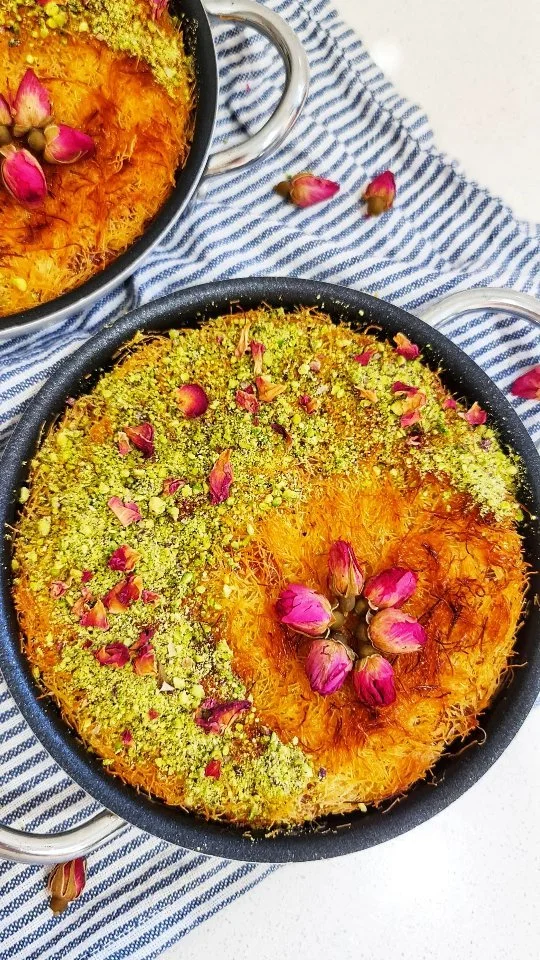
Cheese knafeh layers buttery, finely cut kataifi pastry around sweet cheese, then gets finished with syrup while still hot. It makes a crisp-edged, soft-centred dessert for sharing straight from the oven.
Ingredients
- 1 bag (use half)kataifi pastry
- 120 ml (½ cup)melted ghee or butter
- To tastesweet cheese
- To tasteatar or syrup
- To taste (optional)red food colouring
Instructions
- 1
Loosen pastry
Pull the kataifi dough apart by hand to make a loose pile.
- 2
Cut strands
Chop the strands with a knife, or use a chopper.
- 3
Coat the pastry
Put the pastry in a large bowl. Add the melted butter and rub it through the strands by hand until they are all coated.
- 4
Press into tray
Grease the bottom of a tray with ghee. Spread the buttered pastry evenly in the tray, pressing it firmly across the base and up to the edges.
- 5
Add the cheese
Spread the sweet cheese over the pastry, keeping it away from the edges of the tray.
- 6
Top and bake
Cover the cheese with the remaining pastry. Bake in a preheated oven at 180–200°C for 30–35 minutes, until the cheese has melted and the pastry edges are brown and bubbling.
- 7
Pour over syrup
Take the knafeh out of the oven and pour the atar or syrup over it. Decorate with pistachio and serve hot.
What is cheese knafeh?
Knafeh is a sweet cheese pastry found in several Middle Eastern food traditions, with regional versions using different cheeses, pastry and syrup. This version layers cheese between buttery kataifi strands and is baked until the top and edges turn crisp.
The contrast is the appeal: the pastry browns while the cheese softens, and syrup poured over the hot bake brings sweetness into the layers.
Nutrition and macros by portion
The nutrition label shows one serving as written: 550 calories, 15g protein, 55g carbs, 30g fat.
| Portion | Adjustment | kcal | Protein | Carbs | Fat |
|---|---|---|---|---|---|
| Lighter | Use less syrup | 385 kcal | 11g | 39g | 21g |
| This serving | As written | 550 kcal | 15g | 55g | 30g |
| Hungry | Serve a larger piece | 825 kcal | 23g | 83g | 45g |
Most of the carbohydrates come from the kataifi and syrup, while ghee or butter contributes much of the fat and saturated fat. The cheese provides protein as well as some fat, but its type and quantity are not specified. Serve a moderate piece with fresh fruit alongside for a contrasting finish.
Working with kataifi
Loose strands: pull the pastry apart before chopping so it is easier to spread into an even layer. A knife or chopper can shorten the strands, but avoid compressing them into a paste.
Even coating: rub the melted ghee or butter through the pastry with your hands. This helps the strands brown more evenly in the oven.
Layering the cheese
Clear edges: spread the cheese across the pastry but leave a border around the tray. This keeps the filling from sitting against the sides as the pastry browns.
Covered filling: add the top layer of pastry gently and spread it to cover the cheese. The recipe does not specify a cheese quantity, so use enough to make a layer without packing it tightly.
Baking cues
Oven range: the recipe gives 180–200°C and a baking time of 30–35 minutes. Start checking towards the earlier end of that window, as tray size and oven behaviour can affect browning.
Ready to serve: look for brown, bubbling edges and melted cheese. If the centre still seems firm, give it more time while watching the pastry closely.
Syrup and serving
Hot pastry: pour the atar or syrup over the knafeh as soon as it comes out of the oven, as directed. Add it gradually if you prefer to control how sweet and moist the pastry becomes.
At the table: serve it hot, when the cheese is soft and the pastry still has crisp edges. The method suggests pistachio as a decoration, though no amount is given in the ingredient list.
Choosing the ingredients
Sweet cheese: the recipe does not name a particular cheese or give a quantity. Choose a cheese suitable for a warm dessert filling, and adjust the amount to suit the size of the tray.
Ghee or butter: either is specified for coating the pastry, with extra ghee used to grease the tray. The listed half-cup amount is for the pastry coating; the amount needed for greasing is not stated separately.
Recipe notes & tips
- Use only half the kataifi bag, as indicated in the ingredient note.
- Separate the pastry strands before chopping so they do not clump together.
- Rub the melted fat through the pastry until there are no dry patches.
- Keep the cheese away from the tray edges when spreading it.
- Check for bubbling, browned edges as well as melted cheese before taking the tray out.
- Pour syrup over the knafeh while it is hot, then serve promptly.
Variations
- Butter instead of ghee: use the melted butter option for coating the pastry.
- Ghee instead of butter: use ghee for a richer, buttery pastry layer.
- Adjust the syrup: pour on less or more to suit your preferred sweetness.
- Add pistachio: use it as a topping, as suggested in the method.
- Use the colouring: add the optional red food colouring if you want to colour the pastry.
Common mistakes to avoid
- Clumped pastry: pull the strands apart by hand before chopping.
- Dry strands: rub the melted fat through thoroughly so the pastry is coated.
- Cheese at the edges: leave a clear border when spreading the filling.
- Pale pastry: bake until the edges are brown and bubbling, checking within the 30–35 minute window.
- Too much syrup at once: pour it gradually over the hot knafeh so you can control the finish.
How to store
Refrigerate leftovers in a covered container and eat within 3 days. Reheat in an oven until warmed through; this helps the pastry regain some crispness. The pastry will soften during storage.
Frequently asked questions
How much kataifi should I use?
The ingredient note says to use half of one bag. The bag size is not provided, so measure out half of the package you have.
What temperature should I bake the knafeh at?
Bake it at 180–200°C in a preheated oven. The recipe gives a time of 30–35 minutes.
How do I know when it is ready?
The cheese should be melted and the pastry edges brown and bubbling. Check during the stated baking time so the strands do not overbrown.
When should I add the syrup?
Pour the atar or syrup over the knafeh as soon as it comes out of the oven, then serve it hot.
Can I prepare it ahead?
The method does not give make-ahead instructions. For the crispest texture, bake and syrup the knafeh shortly before serving.
Does the recipe give an amount for the cheese or syrup?
No quantities are listed for either. Add enough cheese to make a filling layer and pour on syrup to your taste.
Cook it from the original
This recipe comes from fooooods.com. Their page has the author’s own photos, notes and tips — the best place to cook it from.
Open the recipe on fooooods.com