
Stick biscuits
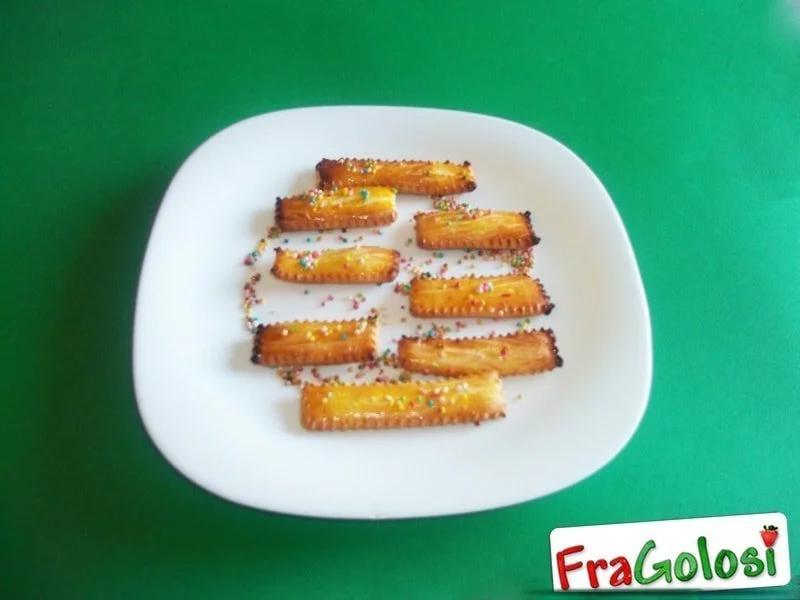
These Italian stick biscuits are shaped by hand from a soft, orange-scented dough made with plain and ground almond flours. They make a colourful teatime bake, with a crisp outside and a tender middle when baked just until golden.
Ingredients
- 300 gItalian 00 flour
- 200 gground almonds
- 2eggs
- 165 gsugar
- 65 gbutter, at room temperature
- 1/2 sachetvanillin
- 1/2 sachetbaking powder
- 10 gbaker's ammonia
- about 70 mlwarm milk
- grated zest of 1/2untreated orange
- 2 tablespoonsorange juice
- as neededmilk
- 1 pinchsalt
- 2egg yolks
- to tastecoloured sprinkles
Instructions
- 1
Prepare the flours
Sift both flours and mound them on a work surface, making a well in the middle. Warm the milk in a small saucepan and divide it between two glasses.
- 2
Mix the leaveners
Dissolve the baker's ammonia in one glass of milk and the baking powder in the other. Lightly beat the whole eggs and pour them into the well in the flour.
- 3
Add the flavourings
Add the sugar, butter cut into pieces, orange zest and juice, vanillin, and both glasses of milk.
- 4
Start the dough
Use a fork to mix the ingredients in the well, gradually drawing in the flour from around the edges.
- 5
Knead until smooth
When mixing with the fork becomes difficult, add the salt and knead by hand. Work the dough into a soft, even ball that is not sticky.
- 6
Adjust the texture
If the dough sticks to your fingers, add a little more flour. If it feels hard, mix in a few tablespoons of milk.
- 7
Shape the biscuits
Dust the work surface with flour and shape the dough into sticks of varying sizes.
- 8
Heat the oven
Preheat the oven to 180°C. Once all the biscuits are shaped, beat 3 egg yolks in a cup.
- 9
Glaze and decorate
Brush the sticks with the beaten yolks and scatter over the coloured sprinkles. Arrange them on a baking tray lined with baking paper.
- 10
Bake and cool
Leave space between the biscuits because they will rise as they bake. Bake for about 15 minutes, then remove the tray from the oven and leave the biscuits to cool.
What are stick biscuits?
These are Italian home-style biscuits shaped into short or long sticks rather than cut from a rolled sheet of dough. Their soft dough combines everyday flour with ground almonds, while orange and vanilla give it a fragrant finish.
The method's well-and-fountain technique is a traditional way to bring flour gradually into the wet ingredients on a work surface. The result is an easy-to-shape dough, finished with an egg-yolk glaze and colourful sprinkles.
Nutrition and macros by portion
The nutrition label shows one serving as written: 913 calories, 24g protein, 112g carbs, 43g fat.
| Portion | Adjustment | kcal | Protein | Carbs | Fat |
|---|---|---|---|---|---|
| Lighter | Smaller, thinner sticks | 639 kcal | 17g | 78g | 30g |
| This serving | As written | 913 kcal | 24g | 112g | 43g |
| Hungry | A larger serving | 1370 kcal | 36g | 168g | 65g |
The flour, sugar and milk provide most of the carbohydrates, while ground almonds and butter contribute much of the fat. Eggs, almonds and flour provide protein. To balance the plate, serve a biscuit with fruit or plain yoghurt.
The flour and dough
Flour blend: the plain 00 flour provides structure, while ground almonds bring a tender, rich crumb. Sifting them together helps distribute the raising agents later in the dough.
Texture check: aim for a soft, even dough that releases from your fingers. Add flour a little at a time if sticky, or a few tablespoons of milk if it feels stiff.
Leavening and flavour
Two raising agents: the recipe dissolves baker's ammonia and baking powder separately in warm milk before adding them. This helps work both through the dough evenly.
Orange and vanilla: grated zest and a small amount of juice give the biscuits a citrus note, balanced by the vanilla. Use an untreated orange so its zest is suitable for baking.
Shaping and spacing
Uneven sticks: the recipe allows for different sizes, so shape them by hand to your preference. Keeping them broadly similar in thickness helps them bake at a similar pace.
Room to rise: leave space between the sticks on the lined tray. They expand in the oven, and crowding can make them bake together.
Bake to the right point
Oven temperature: bake at 180°C for about 15 minutes, as directed. Check towards the end of the cooking time, since smaller sticks may be ready sooner.
Doneness cue: look for biscuits that have risen and taken on a lightly golden colour. Let them cool on the tray after baking so they can firm up.
Serving and enjoying
With a drink: serve the cooled biscuits with tea, coffee or a glass of milk. Their orange and almond flavours also work well alongside fresh fruit.
For a varied plate: pair one or two biscuits with plain yoghurt or fruit rather than serving them alone. The colourful sprinkles make them easy to dress up for a shared tea table.
Recipe notes & tips
- Sift the two flours together before making the well so they are evenly combined.
- Warm the milk gently; it should not be boiling when you use it to dissolve the raising agents.
- Add any extra flour or milk gradually so the dough does not become dry or overly soft.
- Shape the sticks to a similar thickness if you want them to finish baking at the same time.
- Line the tray with baking paper and leave room for the biscuits to expand.
- Watch the biscuits closely near the end of the 15-minute baking time.
Variations
- Lemon zest: use lemon zest instead of orange for a sharper citrus aroma.
- Plain finish: leave off the coloured sprinkles for a simpler look.
- Citrus mix: combine orange and lemon zest while keeping the stated orange juice.
- Shorter sticks: shape smaller pieces for bite-sized biscuits and check them earlier in the bake.
- Almond topping: replace some of the sprinkles with sliced almonds for a nutty finish.
Common mistakes to avoid
- Sticky dough: work in a little more flour at a time until the dough no longer clings to your fingers.
- Hard dough: add milk a few tablespoons at a time until it becomes soft and workable.
- Uneven shaping: keep the sticks a similar thickness so they are less likely to bake unevenly.
- Crowded tray: space the biscuits apart because they rise during baking.
- Overbaking: check around the 15-minute mark and take them out when lightly golden.
- Moving them too soon: leave the biscuits to cool after baking so they can firm up.
How to store
Once completely cool, store the biscuits in an airtight container at room temperature for up to 4 days. If they soften, warm them briefly in a low oven and let them cool before serving.
Frequently asked questions
Can I use regular plain flour instead of 00 flour?
Yes. Plain flour is a practical substitute, though the texture may differ slightly. Keep the same amount and check the dough as you bring it together.
What is baker's ammonia?
It is a raising agent used in baking. The recipe dissolves it in warm milk before adding it to the dough.
How soft should the dough be?
It should feel soft and even without sticking to your fingers. Adjust it gradually with flour if sticky or milk if too firm.
Why do the biscuits need space on the tray?
They rise as they bake and need room to expand without touching. Use more than one tray if needed.
Can I make the dough ahead?
The recipe does not specify a make-ahead rest. For the most reliable result, shape and bake the dough once it is mixed.
How do I know when they are baked?
After about 15 minutes at 180°C, look for risen biscuits with a lightly golden surface. Leave them to cool after removing the tray.
Cook it from the original
This recipe comes from fragolosi.it. Their page has the author’s own photos, notes and tips — the best place to cook it from.
Open the recipe on fragolosi.it