
Aloo Gobi
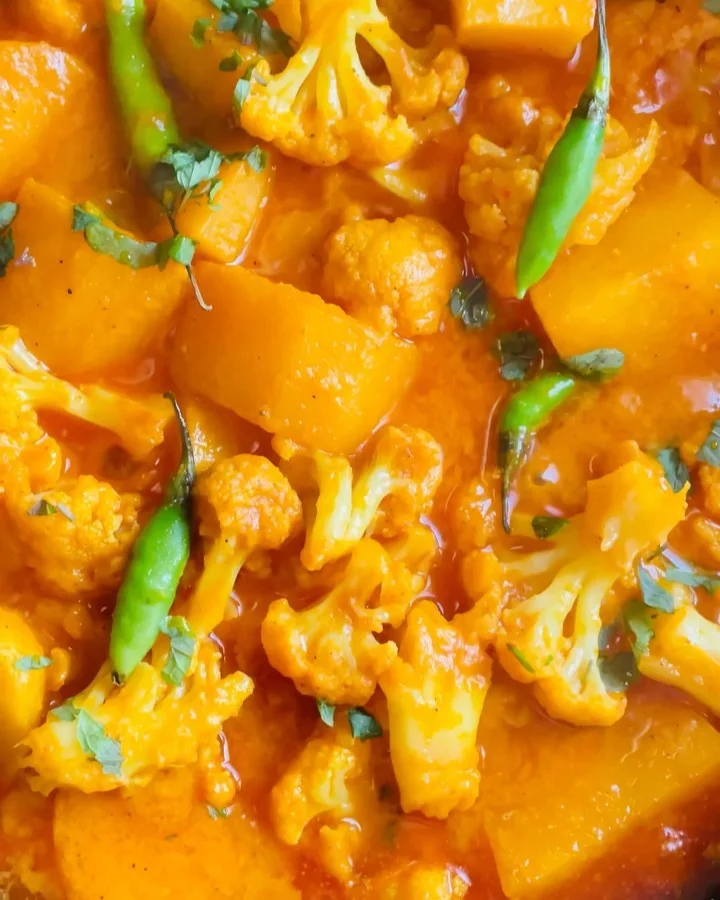
Aloo gobi is a comforting potato and cauliflower curry cooked in a spiced tomato and onion sauce. This version builds flavour by browning the onion first, then simmering the vegetables until tender.
Ingredients
- 2 large, cubedpotatoes
- 300 g (2 cups)cauliflower florets
- 1 large, slicedonion
- 2 largetomatoes
- 1 tablespoonginger-garlic paste
- to tastesalt
- 1 teaspoonred chilli powder
- 1 teaspoonKashmiri red chilli powder
- 1 teaspoonturmeric powder
- 1 teaspoonground cumin
- 1 teaspoonground coriander
- to tastegreen chillies
- as desiredfresh coriander
- 60 ml (¼ cup)oil
- as needed; use 60 ml (¼ cup) for blendingwater
Instructions
- 1
Brown the onion
Heat the oil in a wok and fry the sliced onion until golden brown and crisp.
- 2
Blend the sauce
Transfer the fried onion to a blender with the tomatoes and 60 ml (¼ cup) water. Blend for 3–5 minutes, until a thick paste forms.
- 3
Cook the spices
Using the same wok and the oil left in it, add the blended onion and tomato paste along with all the dried spices. Cook for 5–7 minutes.
- 4
Cook the vegetables
Add the potatoes and cauliflower florets. Cook over a medium heat for 5 minutes, then reduce the heat to low-medium and cook for 10–12 minutes, until the vegetables are soft and tender.
- 5
Garnish and serve
Garnish with green chillies and coriander, then serve.
What is aloo gobi?
Aloo gobi is a South Asian dish whose name refers to its two central ingredients: potato and cauliflower. It is commonly made as a spiced vegetable curry, with versions varying in how much sauce they contain.
Here, browned onion and blended tomatoes form a thick base for the vegetables. Cooking the potatoes and cauliflower in that sauce lets them take on the spices as they soften.
Nutrition and macros by portion
The nutrition label shows one serving as written: 292 calories, 6g protein, 38g carbs, 14g fat.
| Portion | Adjustment | kcal | Protein | Carbs | Fat |
|---|---|---|---|---|---|
| Lighter | Use less oil | 204 kcal | 4g | 26g | 10g |
| This serving | As written | 292 kcal | 6g | 38g | 14g |
| Hungry | Add rice or flatbread | 438 kcal | 9g | 56g | 21g |
Most of the carbohydrates come from the potatoes, with smaller amounts from the vegetables; the oil supplies most of the fat, while the potatoes and cauliflower provide modest amounts of protein. Serve a portion with extra salad or another non-starchy vegetable to round out the plate.
Building the sauce
Golden onion: fry the sliced onion until well browned and crisp, as this gives the blended sauce a deep, savoury flavour.
Tomatoes and water: blend them with the fried onion until the mixture is thick and smooth. The method specifies 60 ml of water for this step.
Getting the vegetables tender
Potatoes: cut them into similarly sized cubes so they cook at a similar rate. The recipe gives a medium-heat start before lowering the heat for the longer cook.
Cauliflower: use florets of a reasonably even size, so they soften along with the potatoes without some pieces becoming tender much earlier than others.
Cooking the spice paste
Spices: stir the dried spices into the blended sauce and cook the mixture for 5–7 minutes before adding the vegetables. This gives the sauce time to cook together and coat the wok.
Heat: keep to the stated medium heat for the first 5 minutes with the vegetables, then lower it to low-medium for 10–12 minutes.
Checking for doneness
The vegetables are ready when a knife or fork meets little resistance in both a potato cube and a cauliflower floret. If they are still firm after the stated cooking time, continue cooking gently until tender.
The method does not give a total cooking time, so use tenderness rather than the clock alone as the final cue.
Serving the curry
Finish with green chillies and fresh coriander, adjusting the amount to suit your preference. Serve it with rice or flatbread for a filling meal.
A cooling accompaniment such as plain yoghurt, or a simple side salad, can balance the spices and add contrast to the warm, soft vegetables.
Recipe notes & tips
- Cut the potatoes into even cubes so they soften at roughly the same pace.
- Blend the onion and tomatoes until the sauce is thick rather than leaving large pieces.
- Stir the sauce while it cooks so it does not catch on the bottom of the wok.
- Keep the heat low-medium during the final cooking stage to give the vegetables time to become tender.
- Taste the curry before serving and adjust the salt and green chillies to your preference.
Variations
- Fresh chilli: add sliced green chillies with the vegetables for more heat.
- Extra coriander: stir some chopped coriander through the curry as well as using it to garnish.
- Less oil: reduce the oil and brown the onion patiently, keeping an eye on it so it does not catch.
- More sauce: add a little water during cooking if you prefer a looser consistency.
- Milder curry: reduce the chilli powders while keeping the other spices as listed.
Common mistakes to avoid
- Uneven potato cubes: large pieces take longer to cook; cut them to a similar size.
- Pale onion: the sauce misses the depth of browned onion; fry it until golden brown and crisp.
- Rushing the sauce: the paste may not cook through evenly; give it the full 5–7 minutes.
- High heat throughout: the bottom can catch before the vegetables soften; lower the heat for the final stage.
- Guessing doneness by time alone: check that both potatoes and cauliflower are soft and tender.
How to store
Cool leftovers and refrigerate them in a covered container for up to 3 days. Reheat gently in a pan or microwave until piping hot, adding a splash of water if the sauce has thickened.
Frequently asked questions
Can I use frozen cauliflower?
Yes, though it may soften faster than fresh florets. Add it with the potatoes and check its tenderness as the curry cooks.
How can I tell when the potatoes are done?
Test a cube with a fork or knife; it should slide in easily. Check a cauliflower floret too, since both vegetables should be tender before serving.
Can I make the curry less spicy?
Use less red chilli powder and fewer green chillies. Keep the cumin, coriander and turmeric for flavour.
What should I serve with aloo gobi?
Rice or flatbread both work well. A simple salad or plain yoghurt makes a fresh, cooling accompaniment.
Why blend the onion and tomatoes?
Blending creates the thick sauce that coats the potatoes and cauliflower. The recipe uses the fried onion for flavour and tomatoes for the base.
Cook it from the original
This recipe comes from fooooods.com. Their page has the author’s own photos, notes and tips — the best place to cook it from.
Open the recipe on fooooods.com