
Spider Deviled Eggs
Ingredients
- 12 Large Eggs: The foundation of our recipe. Using large eggs provides a sturdier egg white cup and a generous amount of yolk for a rich, creamy filling.
- 2/3 cup Mayonnaise: This is the key to a luscious, smooth filling. For the best results, use a high-quality, full-fat mayonnaise to ensure a rich flavor and prevent the filling from becoming watery.
- 2 teaspoons Dijon Mustard: Adds a sharp, tangy complexity that cuts through the richness of the yolks and mayonnaise. It provides a more refined flavor than standard yellow mustard.
- 1 teaspoon White Vinegar: A small amount of acid is crucial for brightening the flavor of the filling and balancing the creaminess. Apple cider vinegar can also be used as a substitute.
- 1/4 teaspoon Salt: Essential for enhancing all the other flavors in the filling. Adjust to your personal taste.
- 1/8 teaspoon Black Pepper: Provides a subtle hint of warmth and spice. Freshly ground black pepper will offer the most potent flavor.
- 1 can (6 ounces) Pitted Black Olives: These are our star players for the decoration. You will need whole, pitted olives to create both the spider bodies and their spindly legs.
- Paprika (optional, for garnish): A light dusting of paprika adds a beautiful pop of color and a touch of smoky flavor, enhancing the overall presentation.
Instructions
- 1
Prepare the Eggs: Gently place your 12 large eggs in a single layer at the bottom of a large saucepan or pot. Do not stack them, as this can lead to uneven cooking and cracking.
- 2
Add Cold Water: Cover the eggs with cold tap water, ensuring the water level is at least one inch above the eggs. Starting with cold water and bringing it to a boil with the eggs inside helps the eggs cook more evenly and significantly reduces the risk of the shells cracking during the cooking process.
- 3
Bring to a Boil: Place the pot on the stove over high heat and bring the water to a full, rolling boil.
- 4
Cook Off the Heat: As soon as the water reaches a rolling boil, turn off the heat completely. Cover the pot with a tight-fitting lid and let the eggs sit in the hot water for 12-14 minutes. This gentle, residual-heat cooking method prevents the yolks from overcooking and developing that unappetizing greenish-gray ring.
- 5
Prepare an Ice Bath: While the eggs are sitting, prepare an ice bath. Fill a large bowl with cold water and a generous amount of ice cubes.
- 6
Shock the Eggs: Once the 12-14 minutes are up, use a slotted spoon to carefully transfer the cooked eggs from the hot water directly into the ice bath. This crucial step does two things: it immediately stops the cooking process, and the rapid temperature change causes the egg white to contract slightly, making the shells much easier to peel. Let the eggs cool in the ice bath for at least 10 minutes.
- 7
Peel the Eggs: Gently tap each cooled egg on a hard surface to crack the shell all over. Then, roll it gently between your palms to further loosen the shell. Start peeling from the wider end of the egg, where the air pocket usually is, preferably under a thin stream of cool running water to help wash away any small shell fragments.
- 8
Slice the Eggs: Using a sharp knife, carefully slice each peeled egg in half lengthwise. Wipe the knife clean between cuts to ensure a neat presentation.
- 9
Separate the Yolks: Gently pop the hard-boiled yolks out of the egg white halves and place them into a medium-sized mixing bowl. Arrange the empty egg white halves neatly on a serving platter or in a deviled egg carrier.
- 10
Mash the Yolks: Using the back of a fork, thoroughly mash the egg yolks until they are broken down into a fine, sandy powder. There should be no large lumps remaining. For an ultra-smooth, velvety texture, you can press the cooked yolks through a fine-mesh sieve.
- 11
Add the Flavor: To the mashed yolks, add the mayonnaise, Dijon mustard, white vinegar, salt, and black pepper.
- 12
Mix Until Smooth: Stir the ingredients together with a spatula or whisk until the mixture is completely combined, smooth, and creamy. Be sure to scrape down the sides of the bowl to incorporate all the ingredients evenly.
- 13
Taste and Adjust: Taste the filling. This is your opportunity to adjust the seasonings to your preference. You might want a little more salt for flavor, more mustard for tang, or a bit more mayonnaise for creaminess.
- 14
Choose Your Filling Method: You have two primary options for filling the egg white cups. The Spoon Method: Use a small spoon to carefully scoop the yolk mixture into each egg white half. This method is quick and easy, but can sometimes look a bit rustic.
- 15
The Piping Method (Recommended): For a cleaner, more elegant look, transfer the yolk filling into a piping bag fitted with a large star tip. If you don’t have a piping bag, a sturdy zip-top plastic bag works wonderfully. Simply fill the bag, push the filling to one corner, and snip off the tip.
- 16
Fill the Egg Whites: Carefully pipe or spoon a generous amount of the yolk mixture into the cavity of each egg white half. Create a smooth, slightly mounded surface, as this will be the “back” of your spider.
- 17
Prepare the Olives: You will need 24 black olive halves for the bodies and 96 thin slices for the legs. For 12 deviled eggs (24 halves), you’ll need to create 24 spiders.
- 18
Create the Spider Bodies: Take 12 of the pitted black olives. Slice each one in half lengthwise. These 24 perfectly rounded halves will serve as the bodies of your spiders.
- 19
Create the Spider Legs: Take the remaining 12 olives. First, slice them in half lengthwise (just as you did for the bodies). Now, take each of those halves and slice them thinly, also lengthwise, to create small, curved, crescent-shaped “legs.” Each olive half should yield about 4 legs, so you will have more than enough.
- 20
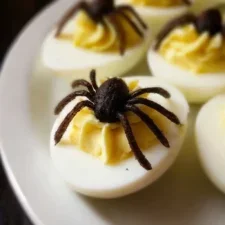
Assemble the Spiders: Now, carefully construct a spider on top of each filled deviled egg. Place one olive half (the body) in the center of the yolk filling.
- 21
Carefully arrange four of the thin olive slices on each side of the body to create the eight legs.
- 22
Gently press the legs into the filling slightly so they are secure. Fan them out to make your spider look like it’s crawling across the egg.
- 23
Final Garnish: Once all your spiders are assembled, you can add a final touch. Lightly sprinkle the entire platter with paprika for a touch of color and flavor.
- 24
Chill and Serve: For the best flavor and texture, cover the deviled eggs and chill them in the refrigerator for at least 30 minutes before serving. This allows the flavors of the filling to meld together.
Cook it from the original
This recipe comes from betterhomerecipes.com. Their page has the author’s own photos, notes and tips — the best place to cook it from.
Open the recipe on betterhomerecipes.com