
Linguine Aglio E Olio
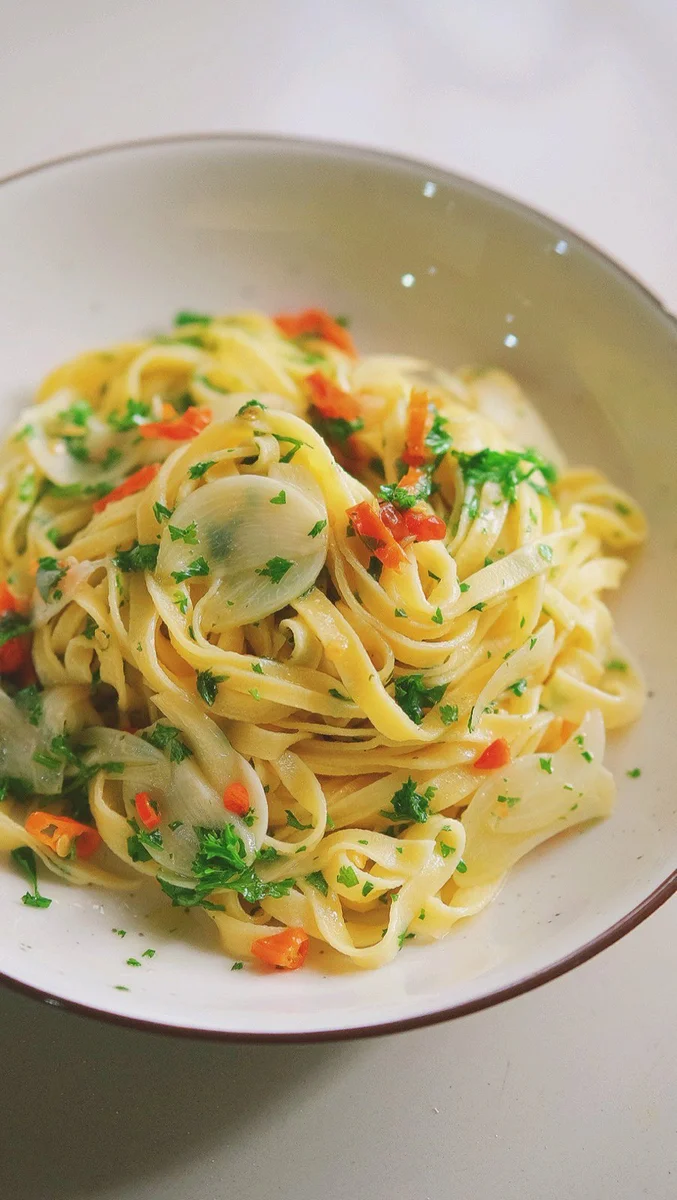
Linguine aglio e olio is pasta tossed with olive oil, garlic and chilli, finished with parsley. This simple version uses a little pasta water to help the oil coat the pasta, making it a quick meal when you want bold flavour from a short ingredient list.
Ingredients
- 250 g fresh pasta or 200 g dried store-bought pastalinguine
- 60 ml (¼ cup)olive oil
- 6garlic cloves, thinly sliced
- 3–5bird’s-eye chillies, thinly sliced (adjust to taste)
- 120 ml (½ cup)pasta water
- to tastesalt
- ½ tspsugar
- a handfulchopped parsley
Instructions
- 1
Cook the pasta
Bring 3 litres of water to the boil. Add 1 tablespoon of salt a minute before adding the pasta. Cook fresh pasta for about 1–3 minutes, until al dente. If using dried shop-bought pasta, cook it according to the packet instructions.
- 2
Warm the oil
Heat the olive oil over a low heat. Add the garlic and chillies and fry until just softened and slightly golden.
- 3
Reduce the water
Add ½ cup of pasta water and simmer until the liquid has reduced by three-quarters.
- 4
Toss the pasta
Add the pasta, salt and sugar. Stir for 1 minute, until the liquid has evaporated, then take the pan off the heat.
- 5
Finish with parsley
Add the parsley and toss to combine. Serve immediately.
What is linguine aglio e olio?
Aglio e olio means garlic and oil in Italian, and the dish is a classic example of how a few pantry staples can make a satisfying pasta meal. Linguine gives the sauce a broad surface to cling to.
This version adds fresh chilli and parsley, with a small amount of sugar. Pasta water is simmered with the oil so the finished coating is less slick and more evenly distributed.
Nutrition and macros by portion
The nutrition label shows one serving as written: 305 calories, 10g protein, 42g carbs, 14g fat.
| Portion | Adjustment | kcal | Protein | Carbs | Fat |
|---|---|---|---|---|---|
| Lighter | Use less olive oil | 214 kcal | 7g | 29g | 10g |
| This serving | As written | 305 kcal | 10g | 42g | 14g |
| Hungry | Larger pasta portion | 458 kcal | 15g | 63g | 21g |
Most of the carbohydrates come from the pasta, while the olive oil supplies most of the fat. The pasta also provides the bulk of the protein; garlic, chilli and parsley contribute smaller amounts. For a more balanced plate, serve it with vegetables or a crisp salad.
Choose the pasta
Fresh or dried: The recipe gives quantities for either 250 g fresh pasta or 200 g dried pasta. Fresh pasta cooks quickly, so keep an eye on it; dried pasta should follow the packet timing.
Save the water: Scoop out ½ cup of cooking water before draining the pasta. Its starch helps the oil and pasta come together.
Keep the garlic gentle
Low heat: Warm the garlic and chilli gently in the oil. The garlic should become soft and only slightly golden; if it darkens quickly, lift the pan from the heat.
Chilli level: Three chillies give a milder result than five, though heat varies between chillies. Slice them thinly so their flavour spreads through the oil.
Watch the reduction
Simmer: After adding the pasta water, let it reduce by three-quarters as directed. Keep the heat steady and watch the pan so the liquid does not disappear entirely.
Finish: Once the pasta is added, stir for 1 minute, until the remaining liquid has evaporated and the pasta is coated. Take the pan off the heat before adding the parsley.
Season and serve
Salt the cooking water with 1 tablespoon of salt, as the method specifies, then taste the finished pasta before adding more salt. The pasta water and seasoning both contribute saltiness.
Serve straight away while the oil is glossy and the pasta is hot. A green salad or steamed vegetables make a fresh accompaniment.
Make the timing work
Prepare the garlic, chillies and parsley before the pasta goes into the water. Fresh pasta cooks in about 1–3 minutes, so having everything ready makes the final toss easier.
Dried pasta takes the time stated on its packet. Start warming the oil while it cooks, and remember to reserve the pasta water before draining.
Recipe notes & tips
- Measure out the pasta water before draining, as it is needed for the sauce.
- Slice the garlic evenly so the pieces soften at a similar rate.
- Keep the oil over a low heat while the garlic and chillies cook.
- Adjust the number of chillies to suit their heat and your preference.
- Add the parsley after taking the pan off the heat to keep its flavour fresh.
Variations
- More herbs: Add extra chopped parsley for a greener finish.
- Milder chilli: Use three chillies, or remove their seeds before slicing.
- Extra vegetables: Serve with steamed greens or toss in cooked vegetables.
- Wholemeal pasta: Use wholemeal linguine, following its packet cooking time.
- Fresh lemon: Finish with a little lemon zest for a bright citrus note.
Common mistakes to avoid
- Burnt garlic: Keep the heat low and remove the pan from the hob if the slices colour too fast.
- No pasta water: Reserve it before draining so you can make the oil easier to toss through the pasta.
- Overcooked fresh pasta: Start checking it after 1 minute and stop when it is al dente.
- Too much chilli: Begin with three chillies and add more only if you want extra heat.
- Dry pasta: Toss it with the oil mixture as soon as it is drained and cooked.
How to store
For the best texture, serve this pasta immediately. Refrigerate leftovers in a covered container for up to 2 days; reheat gently in a pan with a small splash of water, stirring until hot.
Frequently asked questions
Can I use dried pasta?
Yes. Use 200 g dried shop-bought pasta and cook it according to the packet instructions.
How much pasta water should I reserve?
The recipe calls for ½ cup, or about 120 ml. Add it to the oil and simmer until reduced by three-quarters.
How do I stop the garlic burning?
Cook it over a low heat and watch it closely. Take the pan off the heat if the garlic is browning too quickly.
Can I make it less spicy?
Use three chillies instead of five, or remove the seeds before slicing. The heat can still vary between individual chillies.
Why is pasta water added?
It adds moisture to the oil and helps the mixture coat the pasta. Reserve it before draining.
Can I prepare this in advance?
It is best cooked just before serving, since the pasta is tossed with the sauce while hot. You can slice the garlic and chillies and chop the parsley ahead of time.
Cook it from the original
This recipe comes from fooooods.com. Their page has the author’s own photos, notes and tips — the best place to cook it from.
Open the recipe on fooooods.com