
Meethi Paratha
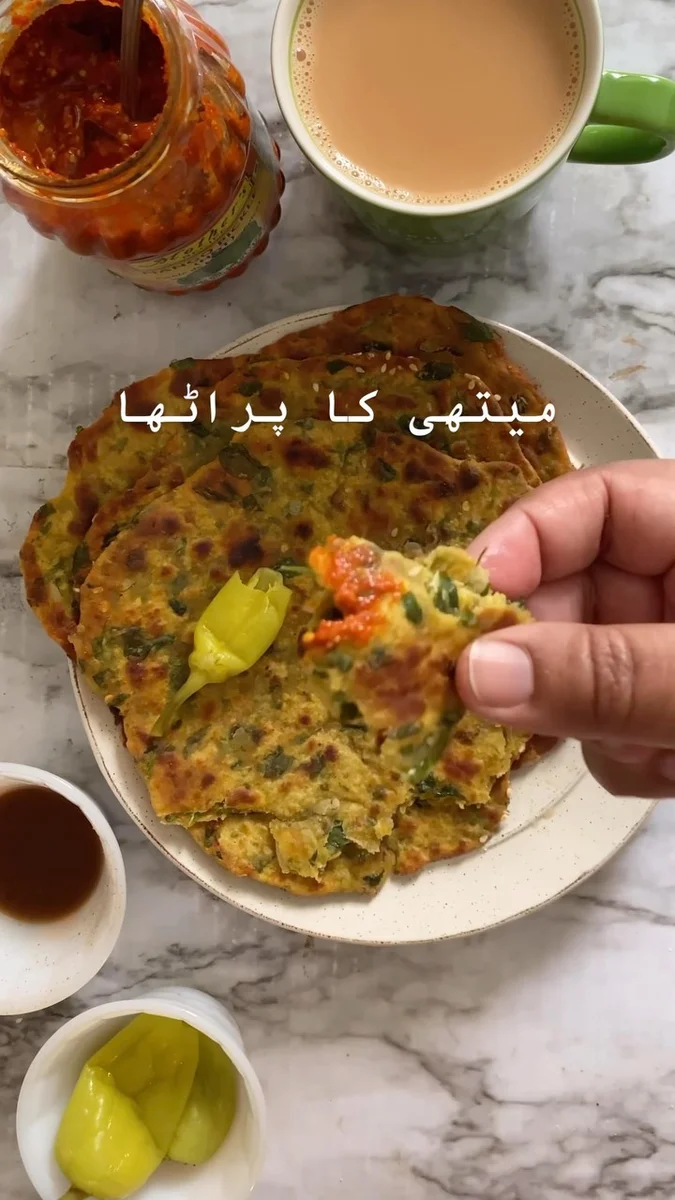
Methi paratha is a savoury flatbread made with wheat flour, gram flour and fresh fenugreek leaves, seasoned with chilli, ginger and spices. It makes a flavourful meal or snack, especially with raita and pickle.
Ingredients
- 250 g (2 cups)wheat flour, plus extra for dusting
- 60 g (½ cup)gram flour
- 1 tspred chilli flakes
- 1 tspsesame seeds
- ½ tspturmeric
- ½ tspcarom seeds
- to tastesalt
- 1green chilli
- 2.5 cm (1 inch)ginger
- 4–5 clovesgarlic
- 25 g (1 cup)fenugreek leaves
- 40 g (¼ cup)onion, chopped
- as requiredwater, for kneading
- 2 tspoil
Instructions
- 1
Prepare the leaves
Clean the fenugreek leaves. Chop them, or leave them whole.
- 2
Chop the aromatics
Roughly chop the green chilli, garlic and ginger.
- 3
Combine the flours
Put the wheat flour and gram flour in a large mixing bowl.
- 4
Season the flour
Add the chilli flakes, turmeric, carom seeds and salt.
- 5
Add the aromatics
Stir in the chopped garlic, green chilli and ginger.
- 6
Add fenugreek
Add the fenugreek leaves to the bowl.
- 7
Mix the ingredients
Mix roughly until the spices are distributed through the flour and leaves.
- 8
Knead the dough
Add water as needed and knead the mixture into a dough.
- 9
Smooth the dough
Continue kneading until it is smooth and soft, like chapati dough.
- 10
Work in the oil
Add 2 tsp oil and knead for a further 5 minutes.
- 11
Add sesame seeds
Mix the sesame seeds into the dough.
- 12
Shape a portion
Pinch off a medium-sized ball of dough, then roll and flatten it.
- 13
Dust with flour
Dust the dough with a little wheat flour.
- 14
Roll the paratha
Roll it out into a thin circle, like a chapati or paratha.
- 15
Cook the first side
Place the rolled paratha on a hot tawa and cook for 1 minute.
- 16
Flip the paratha
When the underside is partly cooked, turn the paratha over.
- 17
Finish cooking
Brush with oil or ghee and press lightly as it cooks.
- 18
Serve warm
Serve the methi paratha with raita and pickle, with a hot cup of tea.
What is methi paratha?
Methi paratha is an Indian flatbread flavoured with methi, the Hindi name for fenugreek. Flatbreads made with fresh herbs and spices are common across South Asian home cooking, with ingredients and names varying by region.
This version combines wheat and gram flour with fresh leaves, aromatics and spices. The gram flour adds a distinct savoury note, while the fenugreek gives the bread its characteristic herbal flavour.
Nutrition and macros by portion
The nutrition label shows one serving as written: 300 calories, 10g protein, 51g carbs, 6g fat.
| Portion | Adjustment | kcal | Protein | Carbs | Fat |
|---|---|---|---|---|---|
| Lighter | Use less cooking oil | 210 kcal | 7g | 36g | 4g |
| This serving | As written | 300 kcal | 10g | 51g | 6g |
| Hungry | Serve an extra paratha | 450 kcal | 15g | 77g | 9g |
Wheat flour and gram flour provide most of the carbohydrates, with some protein also coming from the flours. The oil used in the dough and for cooking supplies much of the fat; serve a paratha with raita and vegetables for a more balanced plate.
The flour and fenugreek
Flour blend: Wheat flour forms the dough, while gram flour adds flavour and changes its texture slightly. Mix them thoroughly with the seasonings before adding water so the spices are spread through the dough.
Fresh leaves: Clean the fenugreek carefully and chop it if you prefer the leaves distributed more evenly. Whole leaves are also suitable, as the method allows either approach.
Kneading a soft dough
Water: Add it gradually rather than all at once, since the leaves and flour can affect how much the dough needs. Aim for a soft, smooth dough similar to chapati dough.
Oil: Knead in the measured 2 tsp oil, then continue for 5 minutes as directed. This helps bring the dough together and makes it easier to roll.
Rolling and cooking
Even circles: Divide the dough into medium-sized portions and flatten each one before rolling. Dust with wheat flour as needed to help prevent sticking.
Hot tawa: Cook each thin round on a hot tawa for 1 minute before turning it. The underside should be partly cooked at that point; brush with oil or ghee and press lightly to finish.
Flavour and texture cues
Spice mix: Chilli flakes, turmeric and carom seeds season the flour, while fresh chilli, ginger and garlic bring a sharper aromatic flavour. Salt is added to taste, so adjust it to suit your preference.
Doneness: Follow the recipe's partly cooked cue before flipping. As the paratha finishes, it should be cooked through and take on lightly browned patches; pressing gently helps it cook evenly.
Serving ideas
Traditional accompaniments: Serve the parathas warm with raita and pickle, as suggested in the method. The cool raita contrasts with the spiced bread, while pickle adds a sharper, tangy note.
For a fuller plate, pair them with a serving of yoghurt or a simple vegetable dish. A hot cup of tea also works well as part of a snack or light meal.
Recipe notes & tips
- Add water a little at a time so the dough does not become too sticky.
- Chop the fenugreek leaves if you want them spread more evenly through each paratha.
- Use a light dusting of wheat flour while rolling to reduce sticking.
- Make sure the tawa is hot before placing the rolled dough on it.
- Press gently after flipping, as directed, rather than crushing the paratha.
Variations
- Milder chilli: Use less green chilli or chilli flakes for a gentler flavour.
- More aromatic ginger: Add extra ginger if you enjoy its warmth.
- Whole fenugreek leaves: Leave the cleaned leaves whole for a more pronounced leafy texture.
- Ghee finish: Brush with ghee instead of oil while cooking, as allowed in the method.
- Smaller parathas: Divide the dough into smaller portions and roll each one thinly.
Common mistakes to avoid
- Adding water too quickly: The dough can turn sticky; add water gradually while kneading.
- Skipping the soft-dough cue: A stiff dough is harder to roll; knead until smooth and soft like chapati dough.
- Using too much dusting flour: Excess flour can collect on the surface; use only enough to prevent sticking.
- Cooking before the tawa is hot: The paratha may cook unevenly; heat the tawa before adding the dough.
- Flipping too soon: Wait until the base is partly cooked before turning the paratha.
How to store
Cool the cooked parathas and refrigerate them in an airtight container for up to 3 days. Reheat on a tawa over medium heat until warmed through, adding a little oil if needed.
Frequently asked questions
Can I leave the fenugreek leaves whole?
Yes. The method allows the leaves to be chopped or kept whole. Chopping them makes them more evenly distributed in the dough.
How much water should I add?
The recipe does not give a fixed amount, so add it gradually while kneading. Stop when the dough is smooth and soft like chapati dough.
What is a tawa?
A tawa is a flat cooking pan commonly used for Indian flatbreads. A flat griddle or frying pan can serve the same purpose.
How do I know when to flip the paratha?
Turn it after the base is partly cooked, as described in the method. Then brush with oil or ghee and press lightly as it finishes cooking.
What can I serve with methi paratha?
The recipe suggests raita and pickle, plus a hot cup of tea. You could also serve it alongside a vegetable dish.
Cook it from the original
This recipe comes from fooooods.com. Their page has the author’s own photos, notes and tips — the best place to cook it from.
Open the recipe on fooooods.com