
Vegetable Pad Thai
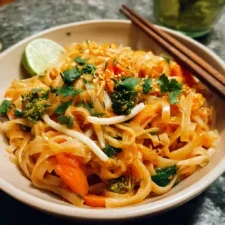
Vegetable Pad Thai brings rice noodles, crisp vegetables and tofu together in a tangy, sweet-savoury tamarind sauce. It cooks quickly, so having everything prepared before you start makes it much easier to get the noodles and vegetables just right.
Ingredients
- 45 ml (3 tbsp)Tamarind concentrate or paste
- 45 ml (3 tbsp)Soy sauce
- 15 ml (1 tbsp)Rice vinegar
- 60 ml (4 tbsp)Light brown sugar or coconut sugar
- 5 ml (1 tsp), optionalSriracha or chilli garlic sauce
- 30 ml (2 tbsp)Water
- 227 g (8 oz)Dried flat rice noodles
- 15 ml (1 tbsp)Avocado oil or another neutral oil suitable for high-heat cooking
- 1 block (397–454 g / 14–16 oz)Extra-firm tofu
- 3 clovesGarlic
- 1 largeShallot
- 2 cups (about 200 g)Fresh bean sprouts
- 1 largeCarrot
- 1Red pepper
- 4, or a small bunchSpring onions or garlic chives
- 70 g (½ cup)Unsalted roasted peanuts
- 1Lime
- A handfulFresh coriander leaves
- To tasteChilli flakes
Instructions
- 1
Get everything ready
Prepare and measure the ingredients before heating the pan. Press the tofu, cut it into bite-sized cubes, mince the garlic, slice the shallot and prepare the vegetables and garnishes.
- 2
Mix the sauce
Whisk the tamarind, soy sauce, rice vinegar, sugar, optional Sriracha and water in a small bowl until the sugar dissolves and the sauce is smooth. It should be a little thinner than maple syrup. Taste and adjust if needed: add a little sugar if it is too sour, or a splash of rice vinegar or lime juice if it is too sweet. Set aside.
- 3
Soak the noodles
Put the dried rice noodles in a large heatproof bowl and cover them with freshly boiled water. Soak for the time stated on the packet, usually 6–10 minutes, until pliable but still slightly firm. Drain straight away, rinse briefly under cold water to stop them cooking and help prevent sticking, then set aside.
- 4
Fry the tofu
Press the tofu for at least 30 minutes to remove excess water. Heat 15 ml (1 tbsp) of oil in a large wok or heavy-based non-stick frying pan over medium-high heat. Add the tofu in a single layer, cooking in batches if needed, and fry for 5–7 minutes, turning occasionally, until golden and crisp on all sides. Transfer to a plate.
- 5
Cook the vegetables
If the wok or pan looks dry, add a little more oil. Stir-fry the garlic and shallot for 30–60 seconds, until fragrant and beginning to soften, taking care not to burn the garlic. Add the carrot and red pepper and stir-fry for 2–3 minutes, until tender-crisp.
- 6
Toss the noodles
Push the vegetables to one side of the wok and add the drained noodles to the other side. Pour the sauce over the noodles and toss gently with tongs for 1–2 minutes, until they absorb the sauce and finish cooking. Mix the noodles with the vegetables.
- 7
Finish and serve
Add the cooked tofu, 1 cup of bean sprouts and the spring onions or garlic chives. Toss for another 1–2 minutes, until heated through and the sprouts are slightly wilted but still crunchy. The sauce should coat the noodles without pooling. Take the wok off the heat, divide between plates and garnish with chopped peanuts, coriander and lime wedges. Serve straight away.
What is vegetable Pad Thai?
Pad Thai is a Thai noodle dish built around rice noodles tossed with a balanced sauce, vegetables and toppings. This vegetable version pairs tofu with crisp vegetables and bean sprouts for a satisfying mix of textures.
Tamarind gives the sauce its characteristic tang, while sugar and soy sauce round out the sour and savoury flavours. Peanuts and lime added at the end bring crunch and freshness.
Nutrition and macros by portion
The nutrition label shows one serving as written: 550 calories, 18g protein, 75g carbs, 20g fat.
| Portion | Adjustment | kcal | Protein | Carbs | Fat |
|---|---|---|---|---|---|
| Lighter | Use fewer peanuts | 385 kcal | 13g | 53g | 14g |
| This serving | As written | 550 kcal | 18g | 75g | 20g |
| Hungry | Add more tofu | 825 kcal | 27g | 113g | 30g |
The rice noodles and sugar provide most of the carbohydrates, while the oil, peanuts and tofu contribute much of the fat; tofu also supplies protein, with smaller amounts from the peanuts and noodles. Pair a serving with extra fresh vegetables or a simple salad for a more vegetable-rich plate.
Why the sauce matters
Tamarind paste: It supplies the sauce’s deep, sour note. Products vary in strength, so taste the mixed sauce and adjust the sugar or acidity a little at a time.
Sugar and soy: Sugar balances the tamarind, while soy sauce adds saltiness and umami. The rice vinegar adds another bright note, so check the balance before it goes into the pan.
Get the noodles right
Soaking: Use the packet timing as a guide; the noodles usually need 6–10 minutes in freshly boiled water. Drain them while they still have a little firmness, as they cook further in the wok.
Rinsing: A brief rinse under cold water stops the cooking and helps keep the drained strands from sticking together. Avoid leaving the noodles in the hot water once they are pliable.
Build colour and texture
Tofu: Pressing it for at least 30 minutes helps it brown rather than steam. Give the cubes space in the pan and cook them in batches if necessary.
Vegetables: The carrot and red pepper need only 2–3 minutes of stir-frying to stay bright and crisp-tender. Bean sprouts go in later so they retain some crunch.
Keep the cooking brisk
Preparation: Slice and measure everything before turning on the heat; once the wok is hot, each stage moves quickly. This also makes it easier to add the sauce and noodles at the right moment.
Noodle finish: Toss the noodles with the sauce for 1–2 minutes, then combine them with the vegetables. Stop when the sauce clings to the strands rather than collecting at the bottom.
Serve with fresh toppings
Peanuts and lime: Chopped peanuts add crunch, and a squeeze of lime lifts the sweet-sour sauce. Offer extra lime wedges at the table.
To complete the plate: Add the reserved bean sprouts and coriander as fresh garnishes, or serve alongside a simple cucumber salad. Chilli flakes let each person add extra heat to taste.
Recipe notes & tips
- Press the tofu for at least 30 minutes so it can brown more effectively.
- Follow the noodle packet’s soaking time and drain the noodles while they are still slightly firm.
- Cook the tofu in batches if the pan is crowded, so it browns instead of steaming.
- Taste the sauce before cooking and adjust its sweetness or acidity to suit the tamarind paste.
- Keep one cup of bean sprouts back for a fresh, crunchy garnish.
- Serve the Pad Thai as soon as it is tossed, while the noodles are hot and the vegetables still have bite.
Variations
- Use tamari: Swap it for the soy sauce if you want a gluten-free alternative.
- Adjust the heat: Add more or less Sriracha to the sauce, or serve chilli flakes at the table.
- Choose garlic chives: Use them in place of spring onions for a more pronounced garlicky flavour.
- Add extra vegetables: Stir-fry thinly sliced cabbage with the carrot and red pepper.
- Change the garnish: Add extra lime and coriander alongside the chopped peanuts.
Common mistakes to avoid
- Over-soaking the noodles: Drain them once pliable but still slightly firm, or they can turn gummy.
- Crowding the tofu: Fry it in batches so the cubes have room to brown.
- Burning the garlic: Stir it with the shallot only until fragrant, about 30–60 seconds.
- Overcooking the vegetables: Keep the carrot and pepper in the pan for just 2–3 minutes so they retain some bite.
- Adding all the sprouts too early: Stir in one cup at the end and save the rest for serving.
- Letting the finished dish sit: Serve promptly so the noodles stay pleasantly coated and the toppings remain fresh.
How to store
Refrigerate leftovers in an airtight container for up to 3 days. Reheat in a frying pan over medium heat, adding a small splash of water if the noodles seem dry; add fresh lime and any reserved toppings just before serving.
Frequently asked questions
Can I use a different type of rice noodle?
Flat rice noodles around 6 mm (¼ inch) wide are the suggested choice. If using another size, check the packet and soak until pliable but still slightly firm.
How do I know when the noodles are ready to drain?
They should bend easily but still have a little bite, since they finish cooking in the wok. The suggested soaking time is usually 6–10 minutes, but follow the packet directions.
Can I make the sauce ahead?
Yes. Mix it in advance and keep it covered in the fridge, then stir it again before using. Taste it before cooking, as tamarind pastes can differ in sourness.
How can I make this Pad Thai gluten-free?
Use tamari in place of soy sauce and check that the other packaged ingredients, including the noodles and chilli sauce, are labelled gluten-free.
Can I leave out the Sriracha?
Yes. It is optional, so omit it for a milder sauce and offer chilli flakes at the table for anyone who wants extra heat.
Why are my noodles sticking together?
They may have been soaked too long or left to sit after draining. Drain them as soon as they are pliable, rinse briefly with cold water and add them to the wok promptly.
Cook it from the original
This recipe comes from betterhomerecipes.com. Their page has the author’s own photos, notes and tips — the best place to cook it from.
Open the recipe on betterhomerecipes.com