
Nasi Liwet Sunda
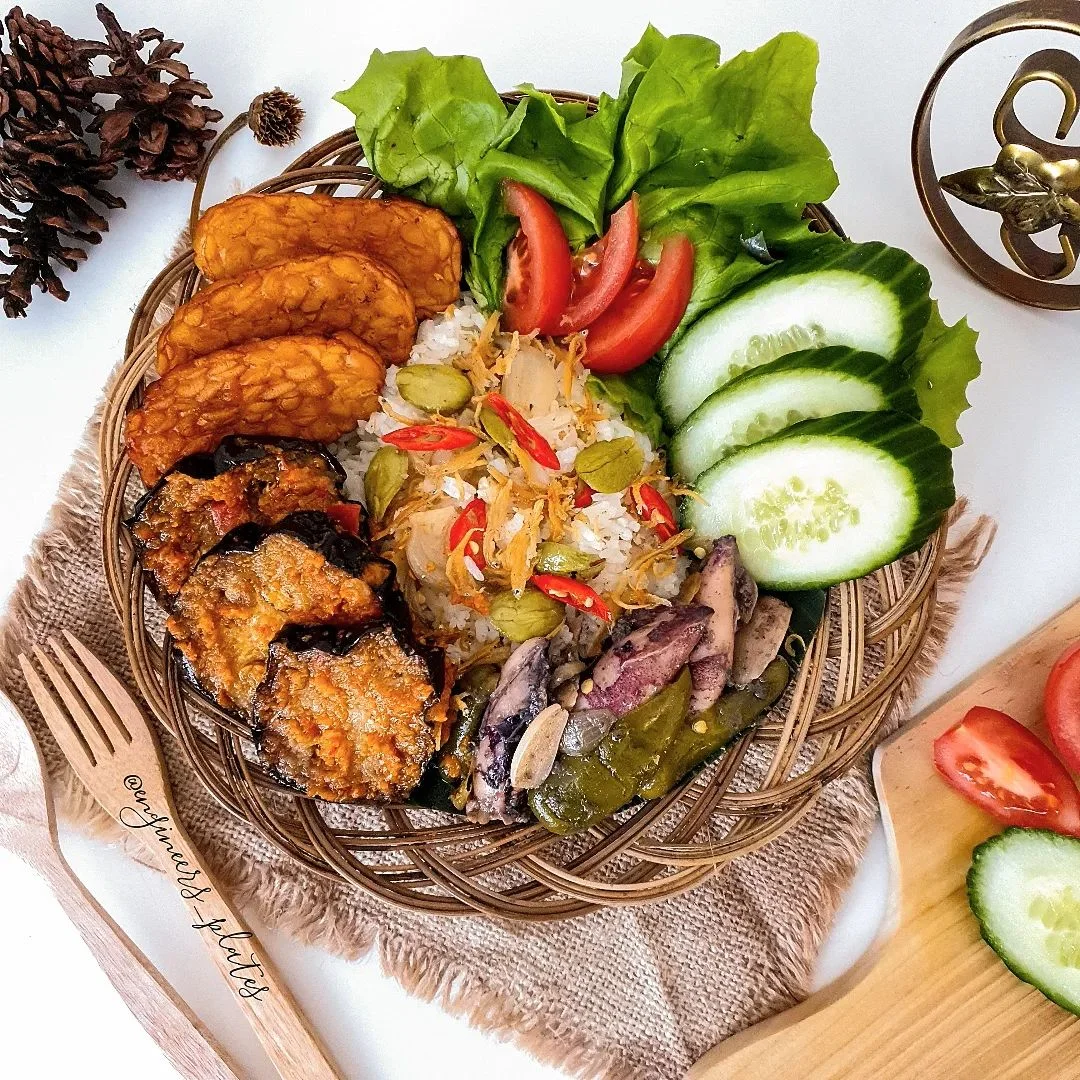
Nasi Liwet Sunda is Indonesian rice cooked with sautéed aromatics, lemongrass and bay leaves, then finished with butter or margarine. It makes a fragrant, savoury rice dish to serve with sambal and other dishes.
Ingredients
- 720 g (4 cups)rice, rinsed
- 12shallots, halved
- to taste (optional)sliced chilli
- to taste (optional)petai (stink beans)
- to tastelemongrass, bruised
- 2bay leaves
- 2 tspsalt
- 1 tbspunsalted butter or margarine
- a good amountwater, for cooking the rice
- as neededcooking oil
Instructions
- 1
Sauté the aromatics
Heat cooking oil and sauté the shallots, chilli and petai if using, lemongrass and bay leaves until wilted. Keep the rice, butter or margarine, salt and water out of the pan.
- 2
Cook the rice
Put the rice, sautéed aromatics, butter or margarine and salt in the rice cooker bowl. Add water and cook in the rice cooker.
- 3
Serve the rice
When the rice is cooked, spoon it onto a plate and serve with sambal.
What is Nasi Liwet Sunda?
Nasi liwet is an Indonesian rice dish, and the Sundanese version is associated with West Java. It is cooked with aromatics so their savoury fragrance infuses the rice.
This version keeps the method simple: sauté the flavourings first, then cook them with the rice in a rice cooker. Chilli and petai are optional, so you can adjust the pungency and heat.
Nutrition and macros by portion
The nutrition label shows one serving as written: 690 calories, 12g protein, 157g carbs, 7g fat.
| Portion | Adjustment | kcal | Protein | Carbs | Fat |
|---|---|---|---|---|---|
| Lighter | Use less added fat | 483 kcal | 8g | 110g | 5g |
| This serving | As written | 690 kcal | 12g | 157g | 7g |
| Hungry | Serve a larger portion | 1035 kcal | 18g | 236g | 11g |
Most of the carbohydrates and energy come from the rice; the butter or margarine and cooking oil contribute most of the fat. The rice provides a modest amount of protein, while the salt is the main source of sodium. Pair a serving with vegetables and a protein-rich side to balance the plate.
Build the aromatic base
Shallots: halving them gives them more surface area to soften in the pan and release their flavour.
Lemongrass and bay: bruising the lemongrass helps it release its aroma. These ingredients are there to perfume the rice as it cooks.
Choose the optional additions
Chilli: add sliced chilli for heat, or leave it out for a milder pot. Sambal at the table lets everyone adjust their own serving.
Petai: these beans have a distinctive pungent flavour. Use them if you enjoy it, or omit them without changing the cooking method.
Get the rice cooker liquid right
Water level: the recipe does not give a precise quantity, so use the amount recommended by your rice cooker for 4 cups of rice. Account for the rice and aromatics sitting in the bowl, and avoid adding extra water beyond the usual level.
Rice preparation: rinse the rice before cooking, as specified in the ingredient list, and drain it well so the cooker’s water measure is more consistent.
Look for fluffy, cooked rice
Doneness: follow the rice cooker’s normal cycle. The rice should be tender and the water absorbed when the cycle finishes.
Finish: spoon the rice gently onto a plate rather than stirring it vigorously, which can break the grains. Remove the lemongrass and bay leaves if you prefer not to serve them.
Serve it with sambal
Sambal is the suggested accompaniment and brings a sharp, spicy contrast to the rich, aromatic rice. Add it at the table so the heat can be adjusted per serving.
For a more complete meal, serve the rice alongside vegetables and a protein dish of your choice; those sides are not included in this recipe.
Recipe notes & tips
- Rinse the rice and drain it well before measuring water in the cooker.
- Bruise the lemongrass before sautéing to help release its aroma.
- Sauté the aromatics until wilted, not browned or crisp.
- Use your rice cooker’s usual water guidance for 4 cups of rice because the recipe does not specify a measured quantity.
- Keep sambal on the side so each person can choose their own heat level.
Variations
- Skip the petai: leave out the beans for a less pungent version.
- Make it mild: omit the sliced chilli and serve sambal separately.
- Use margarine: choose it instead of butter as the recipe allows.
- Add extra sambal: offer it at the table for a spicier serving.
- Serve with vegetables: add a vegetable side alongside the rice.
Common mistakes to avoid
- Guessing the water level: use your rice cooker’s guidance for 4 cups of rice rather than adding an arbitrary amount.
- Skipping the sauté: soften the aromatics first so their flavour can infuse the rice.
- Leaving the lemongrass whole and unbruised: crush it before cooking to help it release its aroma.
- Adding too much chilli: start with a small amount or leave it out, then serve sambal separately.
- Stirring the cooked rice roughly: spoon it out gently to keep the grains intact.
How to store
Refrigerate leftover rice promptly in a covered container and use within 3–4 days. Reheat until steaming hot throughout, adding a splash of water if needed; only reheat once.
Frequently asked questions
Can I make Nasi Liwet Sunda without a rice cooker?
Yes, use a lidded saucepan and cook the rice using your usual stovetop rice method. Keep the water level appropriate for the rice and check it is tender before serving.
How much water should I add?
The recipe does not give an exact amount. Follow the water guidance for 4 cups of rice provided by your rice cooker.
Do I have to use petai?
No, petai is optional. Leave it out if you prefer a less pungent flavour.
Can I leave out the chilli?
Yes. The chilli is optional, and you can serve sambal separately for anyone who wants more heat.
What should I serve with it?
Serve it with sambal, as suggested in the method. Vegetables and a protein-rich dish also make suitable sides.
Cook it from the original
This recipe comes from fooooods.com. Their page has the author’s own photos, notes and tips — the best place to cook it from.
Open the recipe on fooooods.com