
Loaded Jacket Potato
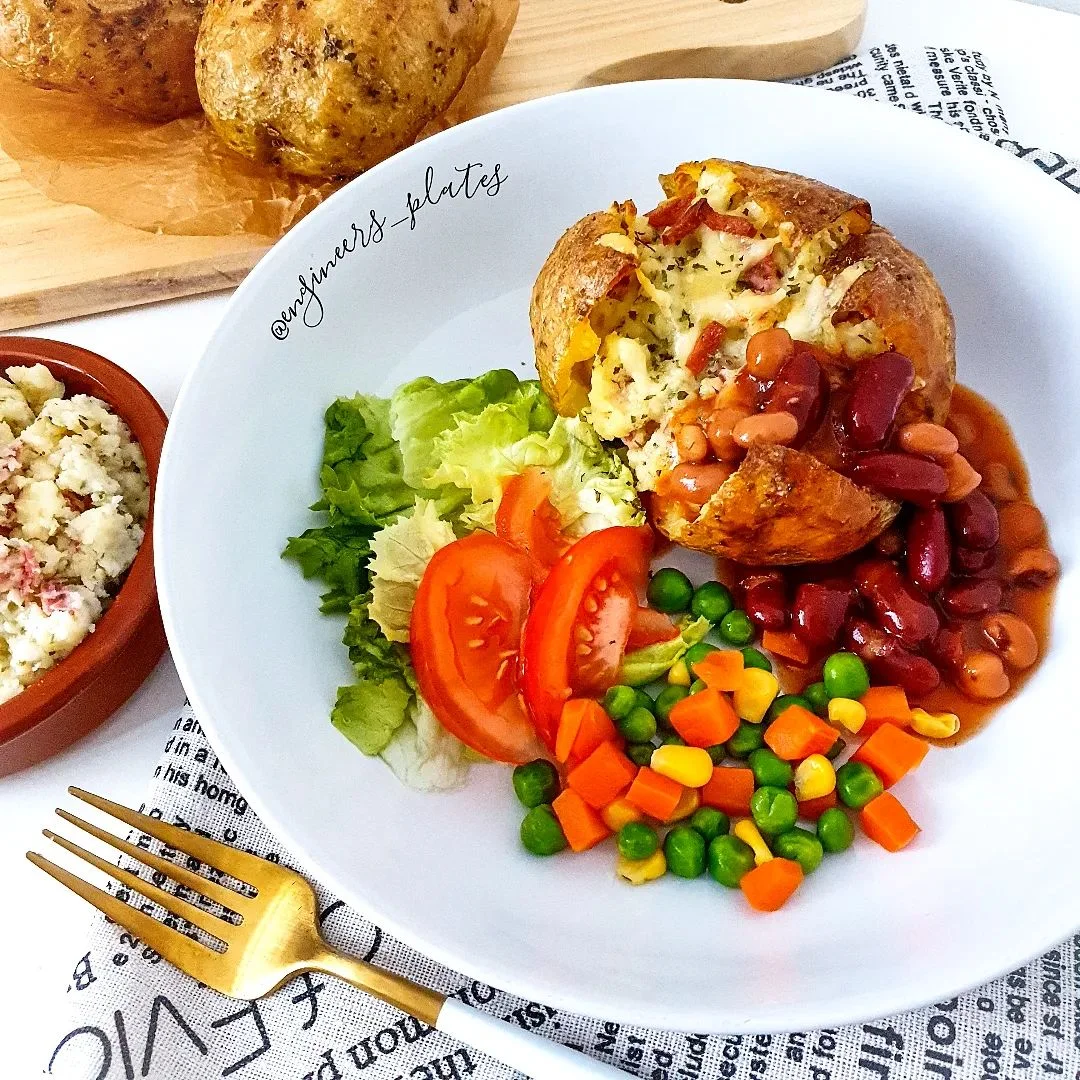
A crisp-skinned jacket potato filled with buttery, creamy potato, chopped sausages and cheddar. The potatoes are started in the microwave, then baked twice for a comforting, generously topped meal.
Ingredients
- to tastePotatoes
- to tasteOlive oil
- to tasteSalt
- to tasteShredded cheddar cheese
- to tasteChopped sausages
- to tasteChopped parsley
- to tasteCream cheese
- to tasteButter
- to tasteMilk
- to tasteSalt
- to tastePepper
Instructions
- 1
Microwave potatoes
Cover the potatoes with a damp kitchen towel and microwave for 10 minutes. Remove them from the microwave.
- 2
Crisp the skins
Place the potatoes on a tray, drizzle with olive oil and season with salt. Bake at 190°C for about 30 minutes, until the skins are crisp, then remove from the oven.
- 3
Scoop out flesh
Cut each potato down the middle and carefully scoop out the baked flesh into a bowl, keeping the skins intact.
- 4
Mix the filling
Mix the potato flesh with the remaining ingredients in a bowl.
- 5
Fill the skins
Spoon the mixture back into the potato skins and scatter shredded cheese over the top.
- 6
Bake until golden
Bake at 180°C for 25 minutes, then remove from the oven and serve.
What is a loaded jacket potato?
A jacket potato is a baked potato served with its skin, a familiar British comfort-food favourite. This version turns the scooped-out potato into a rich filling with sausage, cream cheese, butter and milk.
The skins are baked until crisp before being filled and baked again, giving the soft centre and crunchy exterior contrasting textures.
Nutrition and macros by portion
The nutrition label shows one serving as written: 560 calories, 21g protein, 57g carbs, 28g fat.
| Portion | Adjustment | kcal | Protein | Carbs | Fat |
|---|---|---|---|---|---|
| Lighter | Less butter and cheese | 392 kcal | 15g | 40g | 20g |
| This serving | As written | 560 kcal | 21g | 57g | 28g |
| Hungry | Add another potato | 840 kcal | 32g | 86g | 42g |
Potatoes provide most of the carbohydrates, while cheddar, cream cheese, butter and olive oil contribute much of the fat. Sausages and cheese provide protein, though the amounts are not specified, so the nutrition estimate is approximate; serve with green vegetables or salad to round out the plate.
Why start in the microwave?
Microwaving the potatoes for 10 minutes gets the cooking started before they go into the oven. The damp towel covers them during this first stage.
Potato size affects how quickly they soften, so handle them carefully when they come out; they will be hot.
Getting crisp skins
Oil and salt coat the potatoes before the first oven bake. This stage is intended to dry and crisp the skins before the flesh is removed.
Keep the skins intact while scooping, as they need to hold the filling for the final bake.
Making a creamy filling
Potato flesh forms the base, while cream cheese, butter and milk make the mixture richer and softer. Mix in the chopped sausages and parsley along with the other filling ingredients.
Season with salt and pepper, tasting as you go if the sausage and cheese are already salty.
The second bake
Fill the reserved skins and add shredded cheddar on top before baking at 180°C for 25 minutes. The filling should be hot and the cheese melted.
If the skins are delicate, support them from underneath as you transfer them to the tray.
What to serve alongside
A simple green salad or steamed green vegetables work well alongside the rich potato and cheese filling. Serve the potatoes straight from the oven while the topping is melted.
Because the filling is substantial, a fresh or lightly dressed side keeps the plate from feeling too heavy.
Recipe notes & tips
- Choose potatoes of a similar size so they cook at roughly the same rate.
- Use a damp rather than dripping-wet kitchen towel for the microwave stage.
- Scoop out the flesh gently to avoid splitting the skins.
- Add milk gradually if you want more control over the filling's texture.
- Set the filled skins on a tray before topping them with cheese.
Variations
- Add spring onion: Stir finely sliced spring onion into the filling for a fresh savoury note.
- Use bacon: Swap the chopped sausages for cooked, chopped bacon.
- Add sweetcorn: Mix sweetcorn through the filling for a touch of sweetness.
- Change the cheese: Try mature cheddar or another good-melting cheese on top.
- Add heat: Mix a little chilli into the filling for a spicier version.
Common mistakes to avoid
- Wet skins: Pat the potatoes dry before adding oil so the skins can crisp.
- Broken shells: Scoop out the flesh carefully and leave enough potato inside to support each skin.
- Lumpy filling: Mash and mix the potato flesh thoroughly with the creamy ingredients.
- Over-seasoning: Taste before adding extra salt, as sausages and cheddar can already be salty.
- Cold centre: Make sure the filling is hot and the cheese melted before serving.
How to store
Cool leftovers promptly, cover and refrigerate for up to 3 days. Reheat in an oven at 180°C until piping hot throughout; the skins may soften after storage.
Frequently asked questions
Can I make these without a microwave?
Yes. Bake the potatoes until tender before scooping out the flesh, then continue with the filling and final bake. The first cooking time will vary with potato size.
How do I know when the potatoes are ready?
The first bake should leave the skins crisp. After the final 25-minute bake, the filling should be hot and the cheese melted.
Can I prepare the filling ahead?
You can mix the filling ahead and keep it covered in the fridge. Fill the skins and bake when ready, allowing extra time if the filling is cold.
Can I freeze loaded jacket potatoes?
They can be frozen once cooled and wrapped well, though the texture of the potato and creamy filling may change. Thaw in the fridge before reheating until piping hot.
What can I use instead of sausages?
Cooked bacon or another cooked savoury filling can be used instead. Chop it finely so it mixes evenly through the potato.
Cook it from the original
This recipe comes from fooooods.com. Their page has the author’s own photos, notes and tips — the best place to cook it from.
Open the recipe on fooooods.com