
Pasta Primavera
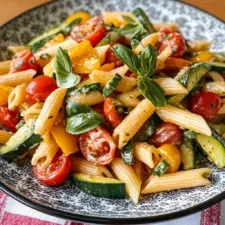
Pasta Primavera pairs penne with a colourful mix of spring vegetables, cherry tomatoes and fresh basil. It is a straightforward dinner that brings plenty of variety to the table in about 35 minutes.
Ingredients
- 454 g (1 pound)penne pasta
- 30 ml (2 tablespoons)olive oil
- 2garlic cloves, minced
- ½ largered onion, thinly sliced
- 1 mediumcarrot, cut into strips
- 1 mediumcourgette, sliced
- 1red pepper, sliced
- 1 bunchasparagus, cut into pieces
- 150 g (1 cup)cherry tomatoes, halved
- To tastefresh basil leaves, chopped
Instructions
- 1
Cook the pasta
Bring a large pot of salted water to the boil. Cook the penne until al dente, then reserve some pasta water before draining.
- 2
Sauté the vegetables
Heat the olive oil in a frying pan over medium heat. Add the garlic, onion, carrot, courgette, pepper and asparagus, and sauté until tender.
- 3
Add the tomatoes
Stir the cherry tomatoes into the pan, then take it off the heat.
- 4
Combine pasta and vegetables
Put the cooked pasta and sautéed vegetables in a large bowl. Add reserved pasta water as needed to reach your preferred consistency.
- 5
Finish with basil
Scatter the chopped fresh basil over the pasta just before serving.
What is Pasta Primavera?
Pasta Primavera is a pasta dish built around a mix of vegetables, often finished with herbs. Despite its Italian-sounding name, it is commonly associated with Italian-American cooking.
This version combines penne with a colourful selection of vegetables. Adding the tomatoes off the heat and loosening the pasta with cooking water helps keep the dish fresh and cohesive.
Nutrition and macros by portion
The nutrition label shows one serving as written: 320 calories, 10g protein, 50g carbs, 10g fat.
| Portion | Adjustment | kcal | Protein | Carbs | Fat |
|---|---|---|---|---|---|
| Lighter | Use less olive oil | 224 kcal | 7g | 35g | 7g |
| This serving | As written | 320 kcal | 10g | 50g | 10g |
| Hungry | Serve a larger portion | 480 kcal | 15g | 75g | 15g |
The penne provides most of the carbohydrates, while olive oil contributes much of the fat; the vegetables add some additional carbohydrates and fibre. Protein comes mainly from the pasta, so serve the dish with chickpeas or grilled chicken if you would like a more protein-focused plate.
Choosing the vegetables
Penne: Its ridges and hollow centre catch small pieces of vegetable and the starchy pasta water. Cook it just to al dente so it holds its shape when combined with the vegetables.
Vegetables: Cut the carrot, courgette, pepper and asparagus into fairly similar, bite-sized pieces so they are easy to eat together. The recipe uses a range of vegetables, so keep the listed preparation in mind as you chop.
Sautéing for tender vegetables
Pan space: Use a frying pan large enough for the vegetables to move around. If they are packed tightly, they can soften in their own moisture rather than sauté evenly.
Doneness: Cook the vegetables until tender, as the method directs, while checking them as they soften. The asparagus and courgette should be easy to bite without turning mushy.
Why reserve pasta water?
Starchy water: Before draining the penne, set aside some of its cooking water. Its starch helps the vegetables and pasta come together without needing an extra sauce.
Add gradually: Pour in a little at a time and toss the mixture between additions. Stop when the pasta looks lightly coated and reaches the consistency you like.
Keeping the tomatoes fresh
Off the heat: Stir in the halved cherry tomatoes after removing the pan from the hob. This warms them through while helping them retain their shape.
Fresh basil: Add the chopped basil at the end, just before serving. Its fresh aroma stands out best when it is not cooked with the vegetables.
Serve it as a complete meal
Pasta Primavera can be served on its own for an easy dinner. A crisp green salad or some crusty bread makes a simple accompaniment.
For a more substantial plate, serve it alongside grilled chicken or chickpeas. Keep any extra seasoning at the table so everyone can adjust their own serving.
Recipe notes & tips
- Salt the pasta water before adding the penne.
- Reserve pasta water before draining the pasta.
- Cut the vegetables into pieces that are easy to eat with the penne.
- Add the reserved water gradually so the pasta does not become too loose.
- Keep the basil aside until just before serving.
Variations
- Add peas: Stir in cooked peas with the cherry tomatoes for another spring vegetable.
- Use another pasta shape: Swap the penne for fusilli or farfalle, cooking it until al dente.
- Add Parmesan: Finish each serving with grated Parmesan for a savoury touch.
- Include mushrooms: Slice and sauté mushrooms with the other vegetables until tender.
- Make it more filling: Toss through cooked chickpeas before serving.
Common mistakes to avoid
- Overcooking the pasta: Cook it only until al dente so it keeps its shape when tossed.
- Crowding the pan: The vegetables may soften unevenly; use a roomy frying pan.
- Adding all the pasta water at once: Pour it in gradually and stop when the consistency is right.
- Cooking the tomatoes for too long: Add them after taking the pan off the heat to help them hold their shape.
- Adding basil too early: Stir it in at the end to preserve its fresh flavour.
How to store
Keep leftovers in an airtight container in the fridge and eat within 3 days. Reheat gently in a pan or microwave, adding a splash of water if the pasta seems dry.
Frequently asked questions
How do I know when the penne is al dente?
It should be cooked through but still offer a slight firmness when bitten. Check it near the end of the packet's suggested cooking time.
Can I prepare the vegetables ahead?
Yes. Cut the vegetables in advance and keep them covered in the fridge, then sauté them shortly before serving.
Can I use dried basil instead of fresh?
Fresh basil is the finishing herb in this recipe. If using dried basil, add a small amount while the vegetables cook rather than using it as a direct garnish.
What can I use instead of penne?
Fusilli or farfalle are suitable alternatives. Cook whichever pasta you choose until al dente.
Why is my pasta dry?
It may need more of the reserved pasta water. Add a small splash and toss until the pasta and vegetables are lightly coated.
Cook it from the original
This recipe comes from bazarecipe.com. Their page has the author’s own photos, notes and tips — the best place to cook it from.
Open the recipe on bazarecipe.com