
Loaded Shahi Zarda Or Meethay Chawal
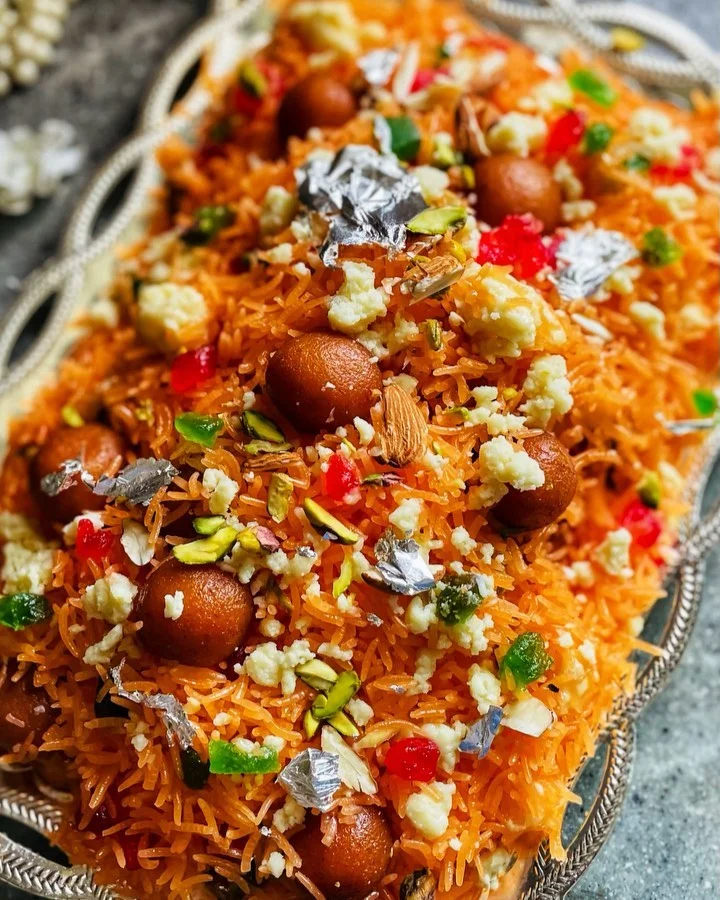
Loaded Shahi Zarda, also called meethay chawal, is sweet, saffron-coloured rice finished with khoya, gulab jamuns and nuts. It makes a richly decorated dessert for a festive meal or special gathering.
Ingredients
- 500 g (2 cups), soaked in water for 2–3 hoursgood-quality basmati rice
- a few strandssaffron
- a pinchorange or yellow food colouring
- a few podscardamom
- 1 tablespoonghee
- ½ cupghee
- 1 cupsugar
- ½ cupkhoya
- 10–12 smallgulab jamuns
- ½ cupashrafian
- ½ cupmixed nuts
Instructions
- 1
Boil the rice
Bring 8–10 cups of water to the boil in a saucepan with the saffron, cardamom pods, orange colouring and 1 tablespoon of oil or ghee. Add the soaked rice and boil until it is almost cooked, then drain it and set it aside.
- 2
Warm the ghee
Heat the remaining ghee in a wok. Add a few cardamom pods and cloves and fry for a few minutes, until fragrant.
- 3
Add the rice
Tip the boiled rice into the wok and spread it over the ghee.
- 4
Dissolve the sugar
Sprinkle the sugar over the rice. Cover and cook over a medium heat for 10–15 minutes, until the sugar has dissolved.
- 5
Steam and garnish
Give the rice dum for 5 minutes. Add the khoya, gulab jamuns, ashrafian and nuts on top.
- 6
Serve hot
Serve the zarda hot.
What is Shahi Zarda?
Zarda, also known as meethay chawal, is a South Asian sweet rice dish often served at celebrations. Its name is associated with the golden colour traditionally given by saffron or colouring.
This loaded version layers the rice with khoya, gulab jamuns, ashrafian and nuts. The contrast between fragrant rice and rich toppings makes it a dessert as well as a centrepiece.
Nutrition and macros by portion
The nutrition label shows one serving as written: 1240 calories, 19g protein, 191g carbs, 43g fat.
| Portion | Adjustment | kcal | Protein | Carbs | Fat |
|---|---|---|---|---|---|
| Lighter | Use less ghee and sugar | 868 kcal | 13g | 134g | 30g |
| This serving | As written | 1240 kcal | 19g | 191g | 43g |
| Hungry | Serve a larger portion | 1860 kcal | 29g | 287g | 65g |
The rice and sugar provide most of the carbohydrates, while the ghee, khoya and nuts contribute much of the fat. Rice, khoya, nuts and the milk-based gulab jamuns also contribute some protein. Balance a serving with fresh fruit or enjoy it after a savoury meal with vegetables and a protein-rich dish.
Choose and soak the rice
Basmati rice: its long grains are suited to a dish where the rice should remain distinct rather than turn creamy. Rinse it before soaking if needed to remove excess surface starch.
Soaking: the recipe calls for 2–3 hours in water. Drain the rice before boiling so the cooking water can be measured and brought to the boil separately.
Boil it just until nearly done
Cooking stage: boil the rice in the flavoured water only until almost cooked, then drain it. It will cook further in the wok, so avoid waiting until the grains are fully soft.
Colour and aroma: saffron, cardamom and a pinch of orange or yellow colouring flavour and tint the water before the rice goes in.
Let the sugar dissolve gently
Covered cooking: cook the rice with the sugar over medium heat for 10–15 minutes, keeping the lid on as directed. The sugar should dissolve before the final steaming stage.
Dum: give the rice a further 5 minutes of covered steaming. This finishes the cooking and lets the flavours settle together.
Finish with the toppings
Khoya and sweets: add the khoya and small gulab jamuns after the dum stage, as the method directs. Placing them on top keeps them visible for serving.
Nuts and ashrafian: scatter these over the finished rice for a varied garnish. The recipe does not specify a particular nut mix or type of ashrafian.
Serve alongside something simple
This is a rich, sweet dish, so serve it in modest portions as part of a festive spread or as dessert after a savoury meal. A lightly flavoured tea can be a simple accompaniment.
For a more balanced plate, pair a smaller portion with fresh fruit or serve it after a meal that includes savoury vegetables and a source of protein.
Recipe notes & tips
- Soak the basmati rice for the full 2–3 hours stated in the recipe.
- Keep an eye on the rice as it boils and drain it while the grains are still almost, but not fully, cooked.
- Use a medium heat and keep the lid on while the sugar dissolves.
- Have the toppings ready before the final 5-minute dum so they can be added promptly.
- Serve soon after adding the toppings, while the dish is hot.
Variations
- Saffron-forward: use the saffron for colour and aroma, omitting the optional food colouring.
- Nut choice: use your preferred combination of mixed nuts within the stated amount.
- Less sweet: reduce the sugar to suit your taste, allowing for a less sweet finish.
- Ghee choice: use ghee for both additions if you prefer not to use oil.
- Topping arrangement: distribute the khoya, gulab jamuns, ashrafian and nuts evenly over the rice for serving.
Common mistakes to avoid
- Overcooked rice: drain it while still almost done, since it cooks further in the wok.
- Skipping the soak: allow the stated 2–3 hours so the rice is ready for the boiling stage.
- High heat under the sugar: keep the flame medium and the lid on for the 10–15-minute cooking period.
- Adding toppings too early: put the khoya, gulab jamuns, ashrafian and nuts on after the 5-minute dum.
- Forgetting to drain: strain away the boiling water before adding the rice to the ghee.
How to store
Cool leftovers promptly and refrigerate in a covered container for up to 3 days. Reheat gently in a covered pan or in the microwave until hot throughout; a small splash of water can help loosen the rice.
Frequently asked questions
Can I use another type of rice?
Basmati is specified and its long grains suit this dish. Another long-grain rice may work, but cooking time and texture can differ.
How do I know when the rice is almost done?
The grains should be tender on the outside but still have a little firmness at the centre. Drain them at that point because they cook further in the wok.
Do I have to use food colouring?
No. The recipe offers orange or yellow colouring as an option, and saffron also contributes colour. Leaving out the colouring will give a less vivid result.
What does dum mean here?
It refers to finishing the rice with a short period of covered steaming. This recipe gives it 5 minutes before adding the toppings.
What is ashrafian?
The ingredient is listed as ashrafian, but the recipe does not describe it further. Check the packaging or ask your supplier if you are unsure which product is intended.
Can I make the rice ahead?
For the best result, serve it hot after the final steaming and topping. You can soak the rice ahead of time, keeping it refrigerated if it will not be cooked straight away.
Cook it from the original
This recipe comes from fooooods.com. Their page has the author’s own photos, notes and tips — the best place to cook it from.
Open the recipe on fooooods.com