
Adas Polo ~ Lentils And Rice Pilaf
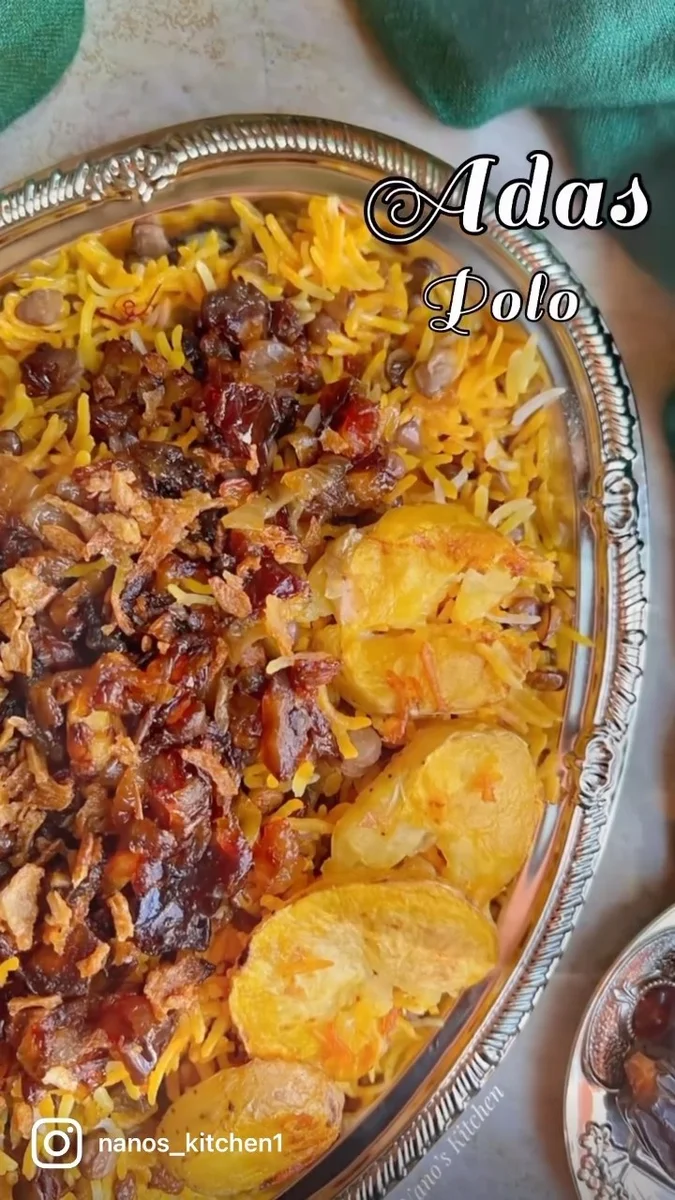
Adas polo is a Persian-style rice pilaf layered with lentils, caramelised onions and dates, with saffron for fragrance. A thin potato layer at the bottom can turn into a crisp, golden tadig as the rice steams.
Ingredients
- 185 g (1 cup)basmati rice
- 100 g (½ cup)green lentils
- 2 largeonions, sliced
- 4–5dates, chopped into tiny cubes
- 1 tspsaffron, dissolved in a few ice cubes
- 710 ml (3 cups)water, for cooking the rice
- 475 ml (2 cups)water, for cooking the lentils
- to tastesalt
- 1 large, thinly sliced (optional)potato
- as neededcooking oil, for frying and caramelising the onions
- as neededbutter
Instructions
- 1
Cook the lentils
Put the lentils and 475 ml water in a saucepan and bring to the boil. Cook for about 25–30 minutes, or until tender, then season with salt to taste and set aside.
- 2
Parboil the rice
Bring 710 ml water to the boil, add salt and then the rice. Cook for about 20 minutes, or until the rice is three-quarters cooked. Drain and set aside.
- 3
Caramelise the onions
Heat some oil in a pan and add the onions. Cook over a medium-high heat, stirring occasionally. Once caramelised, add the dates and some saffron water, then set the mixture aside.
- 4
Layer and steam
Add some butter to the bottom of a preferably non-stick pan. Arrange the potato slices over the base, if using, and let them sear for 1 minute. Layer in the rice, lentils and onions. Make a few holes in the rice and pour saffron water into them. Add some butter, then cover the pan tightly with a cloth beneath the lid to absorb steam. Cook over a low heat for about 30–40 minutes; a longer cooking time makes the bottom crispier.
- 5
Fluff and serve
Fluff the rice with a fork and serve, garnished with the remaining piyaz dagh.
What is adas polo?
Adas polo is a Persian rice dish built by layering rice with lentils and often sweet or savoury additions. The name refers to lentils and rice, while piyaz dagh means fried, caramelised onion.
This version pairs the lentils with dates and saffron, balancing earthy, sweet and aromatic flavours. The optional potato base adds a crisp layer known as tadig.
Nutrition and macros by portion
The nutrition label shows one serving as written: 480 calories, 12g protein, 85g carbs, 11g fat.
| Portion | Adjustment | kcal | Protein | Carbs | Fat |
|---|---|---|---|---|---|
| Lighter | Use less butter and oil | 336 kcal | 8g | 59g | 8g |
| This serving | As written | 480 kcal | 12g | 85g | 11g |
| Hungry | Serve a larger portion | 720 kcal | 18g | 128g | 17g |
Most of the carbohydrates come from the rice, lentils and dates; the lentils also provide the main plant-based protein. Oil and butter contribute most of the fat, while the amount of salt used affects sodium considerably. Pair a serving with salad or another fresh vegetable for a more balanced plate.
Choosing the rice and lentils
Basmati rice: the recipe uses rice that does not need soaking, and cooks it in plenty of water before draining. Stop when the grains are about three-quarters cooked so they can finish steaming in the layered pot.
Green lentils: simmer them separately until tender, then drain if liquid remains. Keeping them separate makes it easier to layer them without overcooking the rice.
Build flavour with onions and dates
Caramelised onions: cook the slices until deeply softened and golden, stirring now and then so they colour evenly. They give the dish its savoury sweetness and are also used as a garnish.
Dates and saffron: chop the dates finely so they distribute through the onion mixture. Dissolving the saffron with ice gives you saffron water to add to the onions and later to the rice.
Layer for a crisp base
Potato base: use a thin layer of potato slices over the buttered pan base if you want a potato tadig. Let the slices sear for 1 minute before adding the other layers.
Rice and lentils: add them in layers with the onion mixture, rather than stirring everything together. This keeps the components distinct while they finish cooking.
Steam gently to finish
Low heat: after layering, poke holes through the rice and add saffron water into them so steam can circulate. Cover tightly, with a cloth under the lid to catch condensation, and cook for about 30–40 minutes.
Doneness: the rice should be tender and fluffy when finished. A longer cooking time can make the base crispier, but keep the heat low to reduce the risk of scorching.
Serving the pilaf
Fluff the rice gently with a fork before serving, then scatter the reserved caramelised onion over the top. Lift the crisp potato base carefully so it can be served alongside the rice.
The dish is substantial on its own; serve it with a crisp salad or plain yoghurt for freshness and contrast.
Recipe notes & tips
- Keep the dates finely chopped so their sweetness is spread through the onion mixture.
- Use a non-stick pan if you want to make it easier to release the potato base.
- Drain the rice thoroughly after parboiling so excess water does not collect in the pan.
- Make several holes through the rice before adding saffron water to help it reach the layers.
- Keep the heat low once the pan is covered, especially if you are cooking for the full 40 minutes.
- Reserve some caramelised onion for the garnish before layering the rest.
Variations
- Skip the potato: leave it out for a softer base without potato tadig.
- Use more saffron: add a little more saffron water if you prefer a stronger aroma.
- Change the dried fruit: replace the dates with chopped raisins for a different sweet note.
- Add warming spice: mix a small pinch of cinnamon into the onion and date mixture.
- Make it dairy-free: use oil in place of the butter.
Common mistakes to avoid
- Overcooking the rice: drain it when it is only three-quarters cooked so it can finish steaming.
- Uneven lentils: simmer them until tender before layering, and check them near the end of the stated cooking time.
- Burnt onions: stir occasionally and adjust the heat if the slices darken too quickly.
- Soggy layers: drain the rice well before assembling the pilaf.
- Scorched base: keep the covered pan over low heat and check that the potato is not cooking too aggressively.
- Loose lid: cover the pan tightly so the rice can steam properly.
How to store
Cool leftovers promptly and refrigerate in a covered container for up to 3 days. Reheat until piping hot in a covered pan with a small splash of water, or in the microwave; the potato base may lose some crispness.
Frequently asked questions
Do I need to soak the basmati rice?
The recipe notes that this basmati does not need soaking. It is parboiled in boiling water and drained before layering.
Can I leave out the potato?
Yes. The potato is optional and is included for a crisp potato base, or tadig.
How do I know when the lentils are cooked?
They should be tender after about 25–30 minutes of simmering. If they are still firm, continue cooking until tender.
Why is the rice cooked in water and then drained?
This method parboils the rice before it is layered with the lentils and onions. It finishes cooking as the covered pot steams.
How can I make the bottom crispier?
Cook the covered pot over low heat for longer, within the recipe’s 30–40-minute range. Keep the heat low to avoid burning the base.
What does piyaz dagh mean?
It means fried, caramelised onion in Farsi. In this recipe, the onion mixture is layered into the pilaf and some is reserved for the garnish.
Cook it from the original
This recipe comes from fooooods.com. Their page has the author’s own photos, notes and tips — the best place to cook it from.
Open the recipe on fooooods.com