
Fresh egg pappardelle
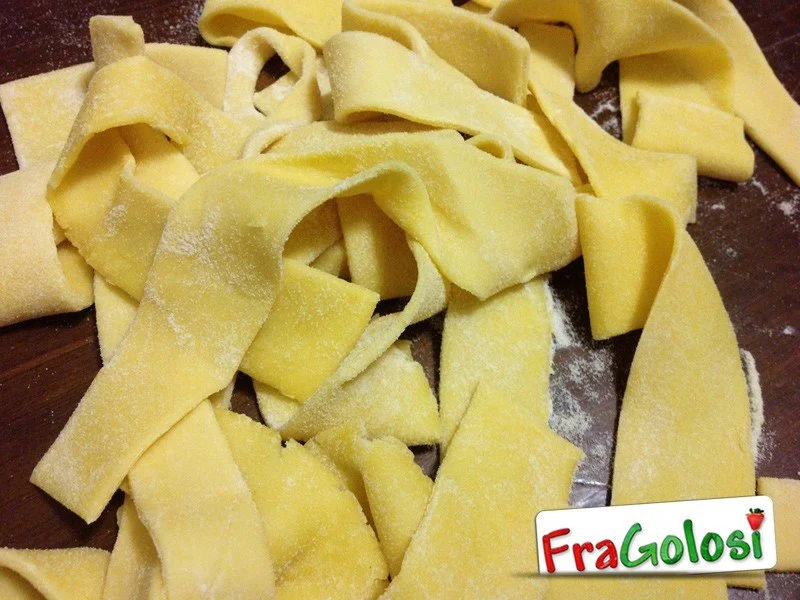
Fresh egg pappardelle is a broad, hand-cut pasta made from flour, eggs and a little oil. Making it at home gives you control over its thickness and a lightly textured surface that holds sauce well.
Ingredients
- 300 gplain flour
- 3eggs
- 1 tablespoonolive oil
- to tastesalt
Instructions
- 1
Make a flour well
Sift the flour onto a work surface and shape it into a mound with a well in the centre.
- 2
Add the eggs
Beat the eggs, then pour them into the well with the salt and 1 tablespoon of oil.
- 3
Start mixing
Use a fork to gradually draw flour into the egg mixture.
- 4
Knead the dough
Work the mixture by hand for about 10 minutes, repeatedly pressing and folding it against the work surface until the dough is firm.
- 5
Rest the dough
Shape the dough into a ball, wrap it in cling film and leave it to rest for about 30 minutes.
- 6
Roll the pasta
Roll the dough with a wooden rolling pin until it is slightly thicker than tagliatelle dough. The wooden pin gives the pasta a rougher surface, which helps sauce cling to it.
- 7
Dry the sheet
Before cutting, leave the pasta sheet on a floured tray so it can dry slightly.
- 8
Cut the ribbons
Scatter plenty of flour over the work surface, roll up the pasta sheet and cut it into strips about 2.5 cm wide.
- 9
Unroll and dry
Unroll the pappardelle and leave it to dry until you are ready to cook it.
What is pappardelle?
Pappardelle is a broad ribbon pasta associated with Tuscany and other parts of central Italy. Its generous width makes it a good match for substantial sauces.
This version uses a simple egg dough and a wooden rolling pin. Rolling by hand leaves a slightly textured surface that helps the sauce cling.
Nutrition and macros by portion
The nutrition label shows one serving as written: 357 calories, 14g protein, 54g carbs, 9g fat.
| Portion | Adjustment | kcal | Protein | Carbs | Fat |
|---|---|---|---|---|---|
| Lighter | Smaller pasta portion | 250 kcal | 9g | 38g | 6g |
| This serving | As written | 357 kcal | 14g | 54g | 9g |
| Hungry | Larger pasta portion | 536 kcal | 20g | 81g | 13g |
Most of the carbohydrates come from the flour, while the eggs contribute protein and some fat; the oil adds further fat. Pair a serving with vegetables and a protein-rich sauce or side for a more balanced plate.
The dough ingredients
Flour: sift it first to break up lumps and make it easier to form a well for the eggs.
Eggs and oil: beaten eggs bring the dough together, while the tablespoon of oil is mixed in with them. Add salt to taste.
Kneading and resting
Kneading: allow about 10 minutes, working and pressing the dough until it feels firm and cohesive. If it looks uneven at first, keep working it before shaping it into a ball.
Resting: wrap the dough and leave it for about 30 minutes. This gives the dough time to relax before rolling.
Rolling to the right thickness
Thickness: roll the sheet slightly thicker than you would for tagliatelle, as specified in the method. A wooden rolling pin helps leave a rougher finish than a very smooth sheet.
Drying: rest the sheet on a floured tray before cutting so it is easier to handle. It should dry slightly, not become brittle.
Cutting wide ribbons
Flour: use plenty on the work surface before rolling up the sheet, so the layers are less likely to stick together.
Width: cut strips about 2.5 cm wide, then unroll them and leave them to dry until cooking time.
Serving and cooking
The recipe gives no cooking time, so check the pasta as it cooks and stop when the ribbons are tender but still hold their shape. Fresh pasta can cook quickly, depending on its thickness and how much it has dried.
Serve with a sauce that suits broad ribbons, such as a slow-cooked meat sauce, mushroom sauce or a simple butter-and-herb dressing.
Recipe notes & tips
- Beat the eggs before adding them to the flour well so they are easier to mix in.
- Keep the flour well high enough to contain the egg mixture as you begin mixing.
- Knead for about 10 minutes, until the dough feels firm.
- Use a wooden rolling pin if you want the slightly rough surface described in the method.
- Flour the sheet and work surface well before rolling and cutting.
- Unroll the ribbons before leaving them to dry so they do not stick together.
Variations
- Wholemeal flour: Replace some of the plain flour with wholemeal flour for a nuttier flavour.
- Herb dough: Finely chop soft herbs and work them into the dough for a fragrant variation.
- Spinach dough: Add well-drained, finely chopped spinach and adjust the flour until the dough is firm.
- Saffron dough: Mix a little saffron infusion into the beaten eggs for colour and aroma.
- Flavoured sauce: Serve the ribbons with mushroom, meat or butter-and-herb sauce.
Common mistakes to avoid
- Adding the eggs too quickly: Draw in the flour gradually with a fork to keep the mixture contained.
- Stopping kneading early: Work the dough for about 10 minutes until it is firm and cohesive.
- Rolling the sheet too thin: Keep it slightly thicker than a tagliatelle sheet.
- Cutting before the sheet dries: Let it rest on a floured tray first so it is easier to handle.
- Skipping flour when rolling: Flour the work surface generously to help prevent the folded sheet from sticking.
- Leaving ribbons in a tight pile: Unroll them after cutting and let them dry until cooking time.
How to store
Keep freshly cut pasta lightly floured and covered in the refrigerator, and cook it within 1–2 days. For longer storage, freeze the separated ribbons; cook them from frozen, checking for doneness as they cook.
Frequently asked questions
Can I make the dough without a wooden rolling pin?
Yes. Use another rolling pin, though the pasta may have a smoother surface than when rolled with wood.
How thick should the pasta sheet be?
The method calls for a sheet slightly thicker than one for tagliatelle. Avoid rolling it paper-thin.
How wide should I cut the pappardelle?
Cut the sheet into ribbons about 2.5 cm wide.
How long should the dough rest?
Wrap it in cling film and leave it for about 30 minutes before rolling.
How long does fresh pappardelle take to cook?
The recipe does not specify a cooking time. Check the ribbons as they cook and drain them when tender but still holding their shape.
Can I prepare the pasta ahead?
Yes. Cut and unroll the ribbons, then dry them until you are ready to cook. For longer storage, freeze them.
Cook it from the original
This recipe comes from fragolosi.it. Their page has the author’s own photos, notes and tips — the best place to cook it from.
Open the recipe on fragolosi.it