
Homemade Pretzel Bagels
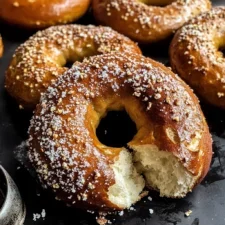
These homemade pretzel bagels combine the chewy shape of a bagel with the browned, savoury crust of a soft pretzel. A quick baking-soda bath gives them their distinctive finish, making them a satisfying choice for breakfast, brunch or a snack.
Ingredients
- 480 ml (2 cups)warm water
- 1 packet (7 g; 2¼ teaspoons)instant yeast
- 15 ml (1 tablespoon)molasses or honey
- 660 g (5½ cups)plain flour
- 1 teaspoonkosher salt
- 85 g (6 tablespoons), at room temperaturesalted butter
- 60 g (¼ cup), for the boiling solutionbicarbonate of soda
- 1egg, beaten for topping
- to tastepretzel salt or flaky sea salt
Instructions
- 1
Mix the dough
In the bowl of a stand mixer fitted with a dough hook, combine the warm water, yeast, molasses or honey, flour, kosher salt and 2 tablespoons of the softened butter.
- 2
Knead and rise
Knead for about 1–2 minutes, until a dough forms. Cover and leave in a warm place for 1–2 hours, until doubled in size.
- 3
Prepare the oven
Heat the oven to 220°C (425°F) and line baking sheets with baking parchment.
- 4
Shape the bagels
Punch down the dough and divide it into 10–12 equal pieces. Shape each piece into a bagel by making a hole in the centre and stretching it.
- 5
Boil the bagels
Bring water to the boil in a large pot and stir in the bicarbonate of soda. Boil the bagels for about 3 minutes on one side, then turn them over and boil for another minute.
- 6
Add the topping
Transfer the boiled bagels to the prepared baking sheets. Brush with the beaten egg and sprinkle with salt.
- 7
Bake until golden
Bake for approximately 20–25 minutes, until golden brown.
What are pretzel bagels?
Pretzel bagels bring together two familiar styles of American baking: the ring shape and chewy crumb of a bagel, and the deep-coloured, savoury crust associated with a soft pretzel. Their defining step is a brief dip in a bicarbonate-of-soda bath before baking.
Here, a touch of molasses or honey rounds out the dough, while an egg wash helps the salt adhere and encourages a glossy finish.
Nutrition and macros by portion
The nutrition label shows one serving as written: 220 calories, 7g protein, 36g carbs, 5g fat.
| Portion | Adjustment | kcal | Protein | Carbs | Fat |
|---|---|---|---|---|---|
| Lighter | Use less butter | 154 kcal | 5g | 25g | 4g |
| This serving | As written | 220 kcal | 7g | 36g | 5g |
| Hungry | Choose a larger bagel | 330 kcal | 11g | 54g | 8g |
The flour supplies most of the carbohydrates, while the butter contributes much of the fat and the flour provides some of the protein. Pair a bagel with eggs, yoghurt or another protein-rich topping and some fruit or vegetables to make a more balanced plate.
Choosing the ingredients
Flour: Plain flour forms the sturdy dough that can be shaped and boiled without losing its structure. Measure it carefully; adding extra while kneading can make the bagels dense.
Sweetener: Molasses gives a darker, more robust note, while honey offers a gentler sweetness. Either works in the dough.
Butter: The recipe adds softened butter to the dough for richness. Although the ingredient list calls for 6 tablespoons, the method specifies adding 2 tablespoons at the mixing stage.
Getting the dough right
Kneading: The stated kneading time is short, so check that the ingredients come together into a cohesive dough. The dough should be workable enough to divide and shape after its rise.
Rising: Leave it covered in a warm place until it has doubled, using the visual cue rather than relying on the clock alone. A cool room may make the rise take longer.
Shaping even rings
Portions: Divide the dough into 10–12 equal pieces, as directed. More pieces will give you smaller bagels; fewer will make them larger.
Centre holes: Make a hole in each piece and stretch it open, allowing for some contraction during boiling and baking. Keep the rings as even as you can so they cook at a similar rate.
The bicarbonate bath
Boiling: Stir the bicarbonate of soda into boiling water before adding the bagels. The bath is what gives these bagels their pretzel-like crust, so keep to the stated timing: about 3 minutes on one side and 1 minute after turning.
Handling: Lift each bagel carefully from the pot and let excess water drain before transferring it to the lined sheet. This helps avoid puddles around the bases.
Colour and texture cues
Egg wash: Brush the tops with beaten egg after boiling, then add the salt. The wash gives the crust a sheen and helps the flakes stay in place.
Baking: Bake at 220°C for approximately 20–25 minutes, until the bagels are golden brown. If baking on more than one sheet, keep an eye on them as their colour develops.
How to serve them
Fresh from the oven, these are good plain or split and toasted, with butter or your preferred spread. Their salty crust also suits savoury fillings such as cheese or egg.
For a fuller meal, pair a bagel with fruit or a simple salad. If serving a group, offer extra flaky salt on the side rather than adding more to every bagel.
Recipe notes & tips
- Use warm, not hot, water when mixing the dough.
- Let the dough rise until doubled rather than cutting the rise short to match a fixed schedule.
- Keep the centre holes open when shaping, as they can shrink during cooking.
- Boil the bagels in batches if needed so they have room in the pot.
- Drain each bagel well before placing it on the baking sheet.
- Add the salt after brushing with egg so it adheres to the surface.
Variations
- Choose honey: Use honey instead of molasses for a milder sweetness.
- Use flaky salt: Top with flaky sea salt for a delicate crunch.
- Add sesame: Sprinkle sesame seeds over the egg wash for a nutty finish.
- Make them smaller: Divide the dough into 12 portions for smaller bagels.
- Serve with cheese: Fill a split bagel with cheese for a savoury snack.
Common mistakes to avoid
- Water too hot: It can interfere with the yeast; use warm water for mixing.
- Too much extra flour: The dough can become heavy; add only what is needed to handle it.
- Short rise: The bagels may be dense; wait until the dough has doubled.
- Closed centre holes: The rings can lose their shape; stretch the openings generously.
- Skipping the bath: The crust will lack its pretzel character; boil the shaped bagels in the bicarbonate solution.
- Wet baking sheets: Excess water can collect around the bagels; let them drain before transferring.
How to store
Once cool, store the bagels in an airtight container at room temperature and eat within 2 days. Reheat split bagels in a toaster or warm them briefly in the oven; freeze any extras for longer storage.
Frequently asked questions
How many bagels does this recipe make?
The recipe is listed as 10 servings, while the method divides the dough into 10–12 pieces. The number you get depends on how many portions you choose to make.
Can I use honey instead of molasses?
Yes. The ingredients list gives molasses or honey as alternatives, so use whichever you prefer.
Why do the bagels need to be boiled?
The bicarbonate-of-soda bath gives them their pretzel-like crust. Follow the method's timing of about 3 minutes on one side and 1 minute after turning.
Can I make the dough without a stand mixer?
The method uses a stand mixer with a dough hook. You can mix and knead by hand until the dough comes together, though the effort and time may differ.
Can I freeze pretzel bagels?
Yes. Let them cool completely, then freeze in a sealed bag or container. Thaw before warming or toasting.
What should I serve with pretzel bagels?
They work plain, toasted or with a spread. For a more substantial meal, add a savoury filling or serve alongside fruit or salad.
Cook it from the original
This recipe comes from bazarecipe.com. Their page has the author’s own photos, notes and tips — the best place to cook it from.
Open the recipe on bazarecipe.com