
Daigi Chana Pulao
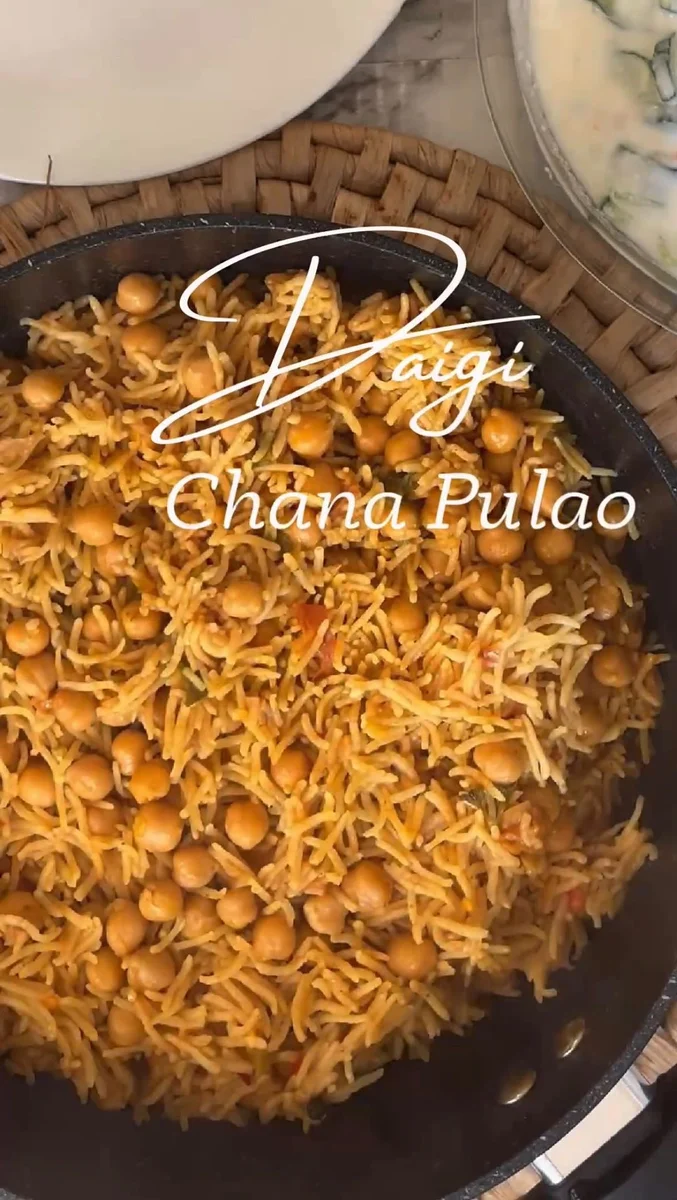
Daigi Chana Pulao is a fragrant rice dish cooked with chickpeas, tomatoes, whole spices and fresh herbs. It makes a substantial one-pot meal, with yoghurt and lemon adding a cool, tangy contrast at the table.
Ingredients
- 500 gboiled chickpeas
- 750 grice
- 1onion, sliced
- 1 tbspginger and garlic paste
- 3 tbspoil
- 2tomatoes, sliced
- 2–3green chillies, chopped
- 1 tbspcoriander seeds, coarsely ground
- 1 tbspcumin seeds, coarsely ground
- 1 tspred chilli powder
- 1 tspred pepper flakes
- 2black cardamom pods
- 2green cardamom pods
- 1bay leaf
- 1 inchcinnamon stick
- 1star anise
- 4–5cloves
- 10–12black peppercorns
- ½ tspturmeric powder
- 2vegetable stock cubes (optional)
- 2 tbspyoghurt
- 5 g (⅓ cup)fresh coriander, chopped
- 5 g (⅓ cup)mint leaves
- ½lemon, sliced
- 4–5whole green chillies
- to tastesalt
- optionalfood colouring
Instructions
- 1
Brown the onion
Heat the oil in a pot. Add the sliced onion and fry until browned.
- 2
Cook the spices
Add the ginger and garlic paste, tomatoes, chopped green chillies, all the ground and whole spices, and the optional vegetable stock cubes.
- 3
Reduce the tomatoes
Cook until the tomatoes have broken down and the oil separates.
- 4
Add the chickpeas
Stir in the boiled chickpeas and cook for 5 minutes.
- 5
Mix in yoghurt
Add the yoghurt and mix it through. Cook for 5 minutes.
- 6
Boil the water
Add water and bring the mixture to a boil.
- 7
Add the rice
As soon as the water boils, add the washed and soaked rice.
- 8
Add the herbs
Add the coriander, mint, lemon slices and whole green chillies.
- 9
Evaporate and cover
Cook over high heat until all the water has evaporated. Add optional food colouring, then cover the pot.
- 10
Steam the rice
Leave the rice over low heat for 10 minutes.
- 11
Fluff and serve
Fluff the rice and serve hot with yoghurt.
What is Daigi Chana Pulao?
Chana pulao is a South Asian rice dish in which chickpeas cook with rice and a seasoned base. “Daigi” evokes the large-pot style of cooking often associated with this kind of pulao, though recipes vary from kitchen to kitchen.
This version builds flavour with whole and ground spices, then adds fresh mint, coriander and lemon. The chickpeas make it hearty, while the herbs and citrus keep the rice lively.
Nutrition and macros by portion
The nutrition label shows one serving as written: 1000 calories, 27g protein, 205g carbs, 13g fat.
| Portion | Adjustment | kcal | Protein | Carbs | Fat |
|---|---|---|---|---|---|
| Lighter | Less rice, more chickpeas | 700 kcal | 19g | 144g | 9g |
| This serving | As written | 1000 kcal | 27g | 205g | 13g |
| Hungry | Larger rice portion | 1500 kcal | 41g | 308g | 20g |
Most of the carbohydrates come from the rice and chickpeas; the chickpeas also provide much of the protein and fibre. Oil contributes most of the fat, while yoghurt adds a smaller amount of protein and fat. Serve with cucumber or salad and plain yoghurt to balance the substantial rice portion; the nutrition estimate is approximate and salt and stock cubes can change the sodium considerably.
The spice base
Whole spices: black and green cardamom, cinnamon, star anise, cloves, peppercorns and bay leaf infuse the oil and cooking liquid. They remain in the finished pulao, so diners can move them aside while eating.
Ground spices: coarsely ground coriander and cumin give the dish a textured, aromatic base, while turmeric, chilli powder and flakes add warmth. The optional stock cubes also season the pot, so taste carefully before adding salt.
Building the masala
Onion: fry it until browned for a deep, savoury foundation, taking care not to let it burn. Add the ginger and garlic paste, tomatoes, chillies and spices as directed.
Tomatoes: cook them until they dissolve and the oil separates, as this signals that the masala has reduced. Adding the chickpeas at this point lets them take on the seasoning before the rice goes in.
Rice and water cues
Rinsing and soaking: wash and soak the rice before adding it to the boiling pot, as the method specifies. Drain it before use so excess soaking water does not alter the pot’s liquid balance.
Evaporation: cook on high heat until the water has evaporated, then cover and steam on low for 10 minutes. Since the recipe gives no water quantity, use enough for your rice and pot, and watch the surface closely as it cooks.
Herbs and finishing
Fresh additions: coriander and mint go in with the lemon slices and whole green chillies, bringing fragrance and a bright note to the rice. Keep the whole chillies intact if you want their flavour without distributing their heat as much.
Rest and fluff: the covered 10-minute low-heat stage finishes the rice gently. Fluff it carefully so the grains stay as separate as possible, then serve while hot.
Serving the pulao
Yoghurt: serve extra alongside for a cool, creamy contrast to the spiced rice. A simple bowl of plain yoghurt is an easy match for the dish’s chillies and whole spices.
Fresh sides: pair the pulao with a crisp salad or sliced cucumber if you want a lighter, refreshing accompaniment. The recipe already includes lemon, so taste before adding more at the table.
Recipe notes & tips
- Use a pot with a close-fitting lid so the rice can steam evenly during the final 10 minutes.
- Drain the soaked rice well before adding it to the boiling mixture.
- Keep an eye on the pot as the water evaporates to avoid scorching the base.
- Use the optional stock cubes only if you want their extra savoury seasoning, and adjust salt to taste.
- Leave the whole spices in the pulao for cooking, then pick them out as you eat if preferred.
Variations
- Milder heat: Use fewer chopped and whole green chillies for a gentler pulao.
- Extra herbs: Increase the fresh coriander or mint slightly for a more pronounced herbal finish.
- More tang: Serve with extra lemon wedges so each person can season their portion.
- No stock cubes: Omit the optional cubes and season the masala with salt to taste.
- Vegetable addition: Add a few diced vegetables with the chickpeas for a more varied pulao.
Common mistakes to avoid
- Burnt onion: Fry until browned but stir and watch closely, since burnt onion can turn the masala bitter.
- Undercooked tomatoes: Let them break down and the oil separate before adding chickpeas so the base is properly cooked.
- Unmeasured water: The recipe gives no amount, so avoid pouring in too much; the rice should cook without ending up soupy.
- Wet rice: Drain the washed and soaked grains well before adding them to the pot.
- Lifting the lid early: Keep the pot covered for the full 10-minute low-heat rest so the rice can finish steaming.
How to store
Cool leftovers promptly and refrigerate in a covered container for up to 3 days. Reheat until steaming hot, adding a small splash of water if the rice seems dry; stir gently to avoid breaking the grains.
Frequently asked questions
How much water should I add?
The recipe does not specify a quantity, and the amount depends on the rice and pot. Add enough for the rice to cook, then follow the stated cue to cook until the water has evaporated before covering.
Do I need to soak the rice?
Yes, the method calls for washed and soaked rice. Drain it well before adding it once the water boils.
Can I leave out the stock cubes?
Yes. They are optional; omit them and season with salt to taste.
Is the food colouring necessary?
No, it is optional and does not affect the method. Leave it out if you prefer the natural colour of the rice and spices.
How can I tell when the pulao is ready?
The method’s cues are that the water has evaporated, followed by 10 minutes covered over low heat. Fluff the rice before serving.
Cook it from the original
This recipe comes from fooooods.com. Their page has the author’s own photos, notes and tips — the best place to cook it from.
Open the recipe on fooooods.com