
Mutton Curry
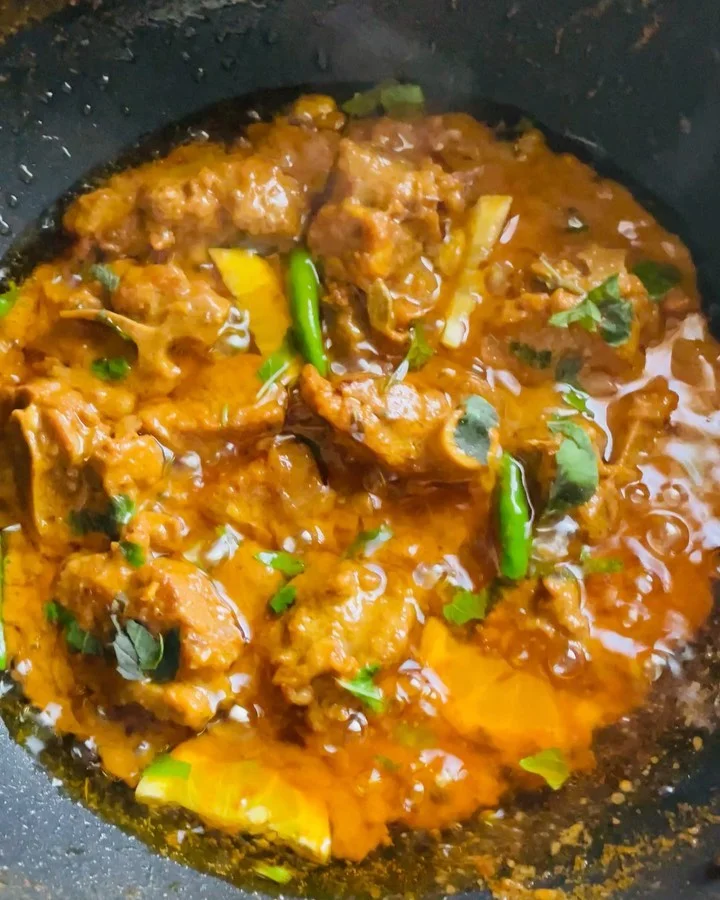
Mutton curry is a slow-simmered dish of bone-in mutton in a spiced yoghurt sauce. Marinating the meat first and cooking it until tender gives the sauce time to take on the flavour of the whole spices.
Ingredients
- 500 gbone-in mutton
- 1 largeonion, sliced
- 2 tablespoonsginger and garlic paste
- 240 ml (1 cup)yoghurt
- a few podscardamom
- 3–4cloves
- 3–4black peppercorns
- 1 tablespoonwhole cumin seeds
- 1 large stickcinnamon
- 1 tablespoonwhole coriander seeds
- to tastesalt
- 1 teaspoonred chilli powder
- 1 teaspoonturmeric powder
- 1 teaspoonKashmiri red chilli powder
- 1 teaspoonroasted, crushed cumin
- 1 teaspoonroasted, crushed coriander
- 1 teaspoonall-spice powder
- 240 ml (1 cup)cooking oil
- 480 ml (2 cups)water
Instructions
- 1
Marinate the mutton
Mix the mutton with the ginger and garlic paste, all-spice powder and yoghurt. Cover and leave to marinate for 2–3 hours.
- 2
Fry the whole spices
Heat the oil or ghee in a wok. Add the dried whole spices and fry for a few minutes, until their aroma is released.
- 3
Brown the onion
Add the sliced onion and fry for a few minutes, until golden brown.
- 4
Cook the mutton
Add the marinated mutton and cook over a high heat until its colour changes.
- 5
Simmer until tender
Pour in 480 ml (2 cups) of water. Cook over a low to medium heat until the mutton is soft and tender and the oil rises to the surface.
- 6
Garnish and serve
Garnish with green chillies, coriander and roasted, crushed cumin.
What is mutton curry?
Mutton curry is a broad family of South Asian dishes in which mutton is cooked with spices and a sauce. Recipes vary by region and household, so there is no single standard spice blend or method.
This version combines yoghurt-marinated meat with whole spices fried in oil, then simmers it until tender. The slow cooking helps the spices season the meat and the cooking liquid.
Nutrition and macros by portion
The nutrition label shows one serving as written: 780 calories, 22g protein, 9g carbs, 65g fat.
| Portion | Adjustment | kcal | Protein | Carbs | Fat |
|---|---|---|---|---|---|
| Lighter | Use less cooking oil | 546 kcal | 15g | 6g | 46g |
| This serving | As written | 780 kcal | 22g | 9g | 65g |
| Hungry | Serve with extra rice | 1170 kcal | 33g | 14g | 98g |
The mutton supplies most of the protein, while the oil and the meat contribute much of the fat; the yoghurt and onion add smaller amounts of carbohydrate. Serve a moderate portion with vegetables and rice or flatbread, rather than adding more oil-rich sides.
The marinade and spice blend
Yoghurt: it coats the mutton alongside the ginger and garlic paste and all-spice powder. Give it the full 2–3 hours stated in the method, keeping it covered while it marinates.
Layered spices: whole cumin, coriander, cardamom, cloves, peppercorns and cinnamon are fried for aroma, while the powdered spices and roasted, crushed cumin and coriander add further seasoning.
Frying the aromatics
Whole spices: fry them in the oil or ghee for just a few minutes, watching for their aroma rather than waiting for them to darken. Burnt spices can make the sauce taste harsh.
Onion: cook the slices until golden brown before adding the mutton. This gives the curry a savoury base, so allow the onion to colour without letting it catch.
Cooking the mutton
Colour change: start the marinated mutton over a high heat and cook until its colour changes, as directed. Stir so the pieces cook evenly in the onion and spice mixture.
Tenderness: once the water is added, lower the heat and simmer until the meat is soft. The recipe gives no fixed cooking time, so use tenderness as your guide.
Watching the sauce
The curry is ready when the mutton is tender and oil has risen to the surface, both cues specified in the method. Keep the heat low to medium during the simmer and check that there is enough liquid to prevent the meat catching.
The amount of sauce depends on how much liquid remains during cooking. If the meat is not tender yet, continue simmering rather than relying on the surface oil alone.
Serving the curry
The method suggests finishing with green chillies, coriander and roasted, crushed cumin. These garnishes are mentioned in the method but are not quantified in the ingredient list.
Serve the curry with rice or flatbread to make a meal, and add a simple vegetable side if you would like a fresher contrast to the rich sauce.
Recipe notes & tips
- Keep the mutton covered while it marinates for 2–3 hours.
- Let the whole spices become fragrant, but take care not to burn them.
- Wait for the onion to turn golden brown before adding the mutton.
- Stir the mutton over a high heat until its colour changes.
- Simmer gently until the meat is soft and tender.
- Use the rise of oil to the surface as one of the recipe’s doneness cues.
Variations
- Adjust the heat: use less red chilli powder for a milder curry.
- Use ghee: replace the cooking oil with ghee, as the method allows.
- Add a fresh garnish: finish with green chillies and coriander as suggested in the method.
- Serve with rice: pair the curry with plain rice to catch the sauce.
- Serve with flatbread: use flatbread to scoop up the mutton and sauce.
Common mistakes to avoid
- Skipping the marinade: leave the mutton in the yoghurt mixture for the stated 2–3 hours.
- Burning the whole spices: fry for a few minutes only, stopping when their aroma is released.
- Pale onions: cook the slices until golden brown before adding the mutton.
- Rushing the simmer: keep cooking until the mutton is soft and tender.
- Using high heat throughout: lower the heat to low or medium after adding the water.
How to store
Refrigerate leftover curry in a covered container and use within 3 days. Reheat in a pan over a gentle heat until piping hot throughout, adding a splash of water if the sauce has thickened.
Frequently asked questions
How long should I marinate the mutton?
The method specifies 2–3 hours in the ginger and garlic paste, all-spice powder and yoghurt.
How do I know when the mutton is cooked?
It should be soft and tender, and the method also notes that oil will rise to the surface. If the meat is still firm, continue simmering.
Can I use ghee instead of oil?
Yes. The method says to use oil or ghee for frying the whole spices.
How spicy is this curry?
It contains red chilli powder and Kashmiri red chilli powder. For a milder result, reduce the red chilli powder.
What should I serve with mutton curry?
Rice or flatbread both work well with the sauce. A vegetable side can add a fresh contrast.
Why does the ingredient list not give quantities for the garnish?
Green chillies and coriander appear in the method but not in the ingredient list, so the recipe does not specify amounts.
Cook it from the original
This recipe comes from fooooods.com. Their page has the author’s own photos, notes and tips — the best place to cook it from.
Open the recipe on fooooods.com