
Authentic Pakistani Beef Masala Curry
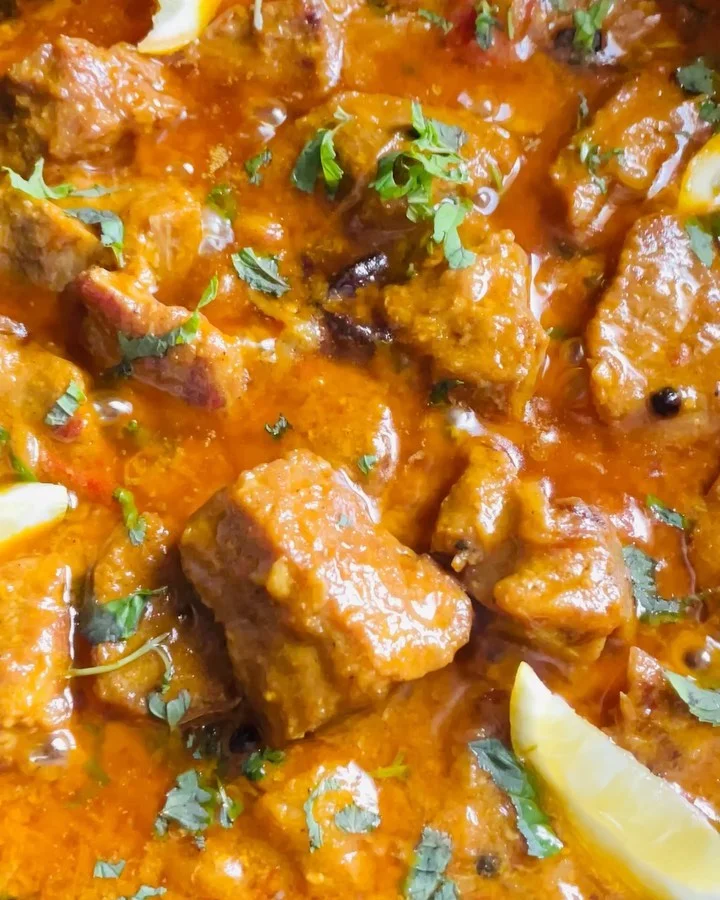
A Pakistani-style beef curry cooked with whole spices, yoghurt and tomato until the meat is tender and the masala is rich. It takes time for the beef to soften, but most of the cooking is hands-off.
Ingredients
- 500 gbone-in beef or mutton (beef used)
- 1 largeonion, thinly sliced
- 1 largetomato, quartered, cooked for 5 minutes and mashed
- 2 tablespoonsginger-garlic paste
- 4 tablespoonsyoghurt
- a few podscardamom
- 3–4cloves
- 3–4black peppercorns
- 1 tablespoonwhole cumin seeds
- 1 large stickcinnamon
- 1 tablespoonwhole coriander seeds
- to tastesalt
- 1 teaspoonred chilli powder
- 1 teaspoonturmeric powder
- 1 teaspoonKashmiri red chilli powder
- 1 teaspooncumin powder
- 1 teaspoonall-spice powder
- 240 ml (1 cup)cooking oil
- 480 ml (2 cups)water
- to tastefresh lemon juice
- to tastegreen chillies, for garnish
- to tastefresh coriander, for garnish
Instructions
- 1
Fry the onion
Heat the oil in a wok. Add the sliced onion, cardamom, cloves, peppercorns, cinnamon, coriander seeds and cumin seeds. Sauté for a few minutes, until the onion is lightly golden.
- 2
Add the paste
Stir in the ginger-garlic paste.
- 3
Brown the beef
Add the washed beef or mutton and fry over medium-high heat for 5 minutes, until the meat changes colour.
- 4
Add the spices
Stir in the salt, red chilli powder, turmeric, Kashmiri red chilli powder, cumin powder and all-spice powder.
- 5
Cook the masala
Add the yoghurt and mashed tomato. Cook over high heat for 5–8 minutes.
- 6
Simmer until tender
Pour in 480 ml (2 cups) of water and reduce the heat. Cook gently until the meat is tender and the oil begins to rise to the surface.
- 7
Finish the curry
Turn the heat up and bhunofy the masala for 2–3 minutes, stirring as it cooks.
- 8
Garnish and serve
Finish with freshly squeezed lemon juice and garnish with green chillies and fresh coriander.
What is Pakistani beef masala curry?
This is a slow-simmered South Asian curry in which beef cooks in a spiced onion, tomato and yoghurt masala. Its layered flavour comes from whole spices fried with the onions, followed by ground spices added to the meat.
This version uses bone-in beef and a generous amount of oil, with the cooking liquid reduced at the end so the masala coats the meat.
Nutrition and macros by portion
The nutrition label shows one serving as written: 850 calories, 30g protein, 20g carbs, 73g fat.
| Portion | Adjustment | kcal | Protein | Carbs | Fat |
|---|---|---|---|---|---|
| Lighter | Use less cooking oil | 595 kcal | 21g | 14g | 51g |
| This serving | As written | 850 kcal | 30g | 20g | 73g |
| Hungry | Serve with extra rice | 1275 kcal | 45g | 30g | 110g |
The beef provides most of the protein, while the onion, tomato and yoghurt contribute some carbohydrates. Most of the fat comes from the cooking oil, with additional fat from the beef; serve with a modest portion of rice or bread and a vegetable side to balance the plate.
Build flavour with whole spices
Whole spices: Cardamom, cloves, peppercorns, cinnamon, coriander seeds and cumin seeds go into the oil with the onion. Let them sizzle gently as the onion softens, without letting them scorch.
Ground spices: Add these after browning the meat so they season the beef and can cook with the yoghurt and tomato.
Get the onion and beef right
Golden onion: Cook the sliced onion until lightly golden, rather than deeply browned. This gives the curry a savoury base without making the spices taste burnt.
Changed colour: Fry the beef for the full 5 minutes, turning it so the pieces colour on the outside before adding the wet ingredients.
Simmer for tender meat
Low heat: Once the water is added, keep the curry at a gentle simmer. A steady, low bubble gives the beef time to soften without rapidly reducing the liquid.
Doneness: The beef is ready when it is tender to a fork. The method does not give a fixed simmering time, so check the meat as it cooks and continue until it reaches that texture.
Reduce the masala at the end
Bhunofy: The final 2–3 minutes over high heat help the masala cook down and cling to the meat. Stir attentively during this stage so the thickening sauce does not catch on the bottom.
Oil cue: The recipe uses oil rising to the surface as a sign that the curry is ready to finish. Some oil may remain on top, so spoon off any excess if you prefer.
How to serve it
Rice or bread: Serve the curry with plain rice or flatbread to catch the sauce. A simple vegetable side can add freshness and make the meal more varied.
Fresh finish: Lemon juice, green chillies and coriander are added at the end. Adjust the chilli garnish to suit the heat you want at the table.
Recipe notes & tips
- Use a heavy-based wok or pan so the masala is less likely to catch during the final reduction.
- Keep the heat moderate while frying the onions and whole spices.
- Stir the yoghurt into the curry thoroughly so it combines with the tomato and spices.
- Check the beef periodically during the simmer, as the recipe does not specify a total cooking time.
- Add the lemon juice and fresh garnishes just before serving.
Variations
- Choose mutton: Use bone-in mutton instead of beef, as allowed by the recipe.
- Adjust the heat: Reduce the chilli powders or serve the green chillies separately.
- Use boneless beef: Choose boneless pieces if you prefer, and check them for tenderness as they cook.
- Add more lemon: Serve extra lemon at the table for a brighter finish.
Common mistakes to avoid
- Burning the onion: Keep it moving and take it only to lightly golden.
- Scorching the spices: Fry them with the onion over controlled heat rather than letting them darken too quickly.
- Rushing the simmer: Keep the heat low until the beef is tender.
- Leaving the masala unattended: Stir during the final 2–3 minutes over high heat to prevent sticking.
- Adding too much garnish heat: Start with a small amount of green chilli and add more to taste.
How to store
Refrigerate leftovers in a covered container for up to 3 days. Reheat gently in a saucepan until steaming hot throughout, adding a splash of water if the masala has thickened.
Frequently asked questions
Can I use mutton instead of beef?
Yes. The ingredient list gives beef or mutton as options. Simmer until the chosen meat is tender, since cooking time can vary.
How long should I simmer the curry?
The method does not specify a duration. Simmer gently until the meat is tender and the oil begins to rise to the surface.
Can I use boneless beef?
Yes, though the listed recipe uses bone-in meat. Check boneless pieces as they cook so they do not become overdone.
What does bhunofy mean here?
It refers to cooking the masala over high heat for the final 2–3 minutes, stirring so the sauce reduces and coats the meat.
What should I serve with the curry?
Plain rice or flatbread both work well with the sauce. A vegetable side is another useful accompaniment.
Cook it from the original
This recipe comes from fooooods.com. Their page has the author’s own photos, notes and tips — the best place to cook it from.
Open the recipe on fooooods.com