
Mjadrah (Lentil Rice Pilaf)
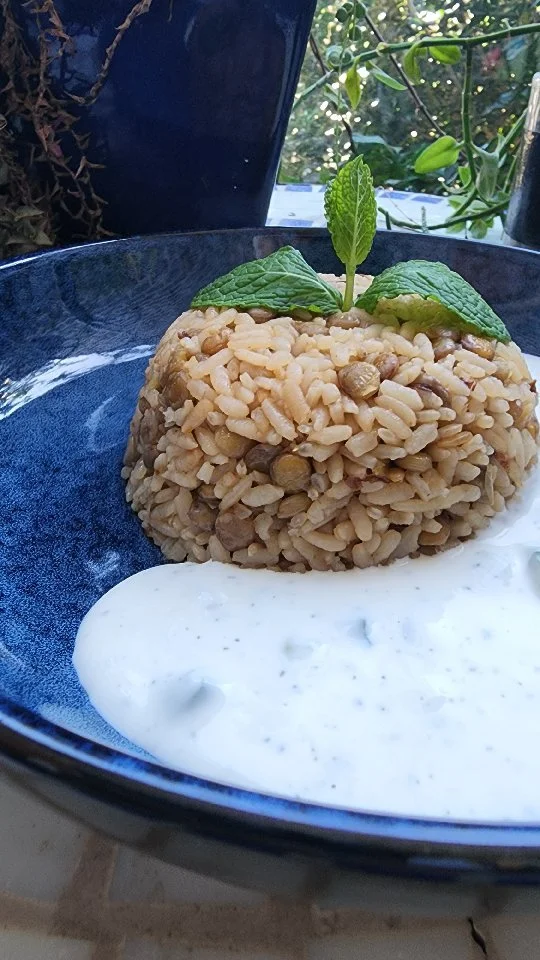
Mjadrah is a comforting pilaf of lentils and medium-grain rice, cooked with golden onion and ghee. The lentil cooking liquid gives the rice flavour as it finishes absorbing the stock.
Ingredients
- 400 g (2 cups)lentils, washed
- 380 g (2 cups)medium-grain rice, washed
- 1 largeonion, diced
- To tastesalt
- 42 g (3 tbsp)ghee
- 830 ml (3½ cups)reserved lentil cooking stock
Instructions
- 1
Cook the lentils
Bring the lentils to the boil in a pot and cook until about 80% done: tender but not soft. Drain them, reserving the cooking stock, and set the lentils aside.
- 2
Brown the onion
In the same pot, heat the ghee and sauté the onion until deep golden, taking care not to burn it. It should be dark enough to colour the rice.
- 3
Coat the rice
Add the washed rice and stir until each grain is coated with the ghee and onion.
- 4
Add lentils and stock
Mix in the lentils and salt to taste. Pour in 830 ml (3½ cups) of the reserved lentil stock, stir, and cover the pot over high heat until it boils.
- 5
Simmer the rice
As soon as the mixture boils, turn the heat right down to low and let the rice absorb the liquid.
- 6
Rest the pilaf
When the liquid has reduced, turn off the heat and leave the pot covered for 15 minutes so the rice can finish steaming.
- 7
Fluff and serve
Remove the lid and fluff the rice with a fork. Serve alongside cucumber and yoghurt sauce.
What is mjadrah?
Mjadrah is a lentil-and-rice pilaf found in Levantine cooking, with variations across households and regions. Lentils and rice make a filling, straightforward dish built from pantry staples.
Here, the lentils are partly cooked before the rice goes in, then both finish together in the reserved cooking stock. Golden onion and ghee add colour and savoury depth.
Nutrition and macros by portion
The nutrition label shows one serving as written: 800 calories, 27g protein, 145g carbs, 13g fat.
| Portion | Adjustment | kcal | Protein | Carbs | Fat |
|---|---|---|---|---|---|
| Lighter | Use less ghee | 560 kcal | 19g | 102g | 9g |
| This serving | As written | 800 kcal | 27g | 145g | 13g |
| Hungry | Serve a larger portion | 1200 kcal | 41g | 218g | 20g |
Most of the carbohydrates come from the rice and lentils, while the lentils also supply much of the protein and fibre. Ghee contributes most of the fat. Pair a serving with cucumber, yoghurt sauce and extra vegetables for a fresh, balanced plate.
The lentils and their stock
Lentils first: cook them only until they are nearly tender, rather than letting them turn soft. They need to hold their shape through the later simmer.
Reserved stock: keep the lentil cooking liquid after draining. It becomes the cooking liquid for the rice and brings the lentil flavour through the whole pot.
Getting the onion right
Golden onion: cook it in the ghee until deeply coloured but not burnt. This stage matters because the onion colours the rice as well as seasoning it.
Rice coating: stir the washed rice through the onion and ghee until the grains are coated. This helps distribute the flavour before adding the lentils and stock.
Cooking the rice evenly
Initial boil: cover the pot and bring the stock to a boil over high heat, as directed. Once it boils, reduce the heat to low so the rice can absorb the liquid gently.
Covered rest: when the liquid has reduced, turn off the heat and leave the lid on for 15 minutes. This lets the rice finish steaming without further direct heat.
How to judge the texture
Tender lentils: they should be cooked through but still intact, not mushy. If they are already very soft before the rice is added, they may break up during mixing.
Fluffed rice: after resting, lift and separate the grains gently with a fork. Avoid vigorous stirring, which can mash the lentils and make the pilaf clump.
Serving mjadrah
Cool cucumber and yoghurt sauce is suggested alongside the warm pilaf, adding a fresh contrast to the soft rice and lentils. Serve it as a main or as part of a larger spread.
For a fuller plate, add a crisp salad or extra vegetables. Keep the accompaniments separate until serving so the pilaf stays fluffy.
Recipe notes & tips
- Wash the rice before cooking, as specified, and drain it well.
- Reserve the lentil stock before tipping the lentils into a colander.
- Use the same pot for the onion and rice to retain the browned-onion flavour.
- Taste the stock after adding salt so the seasoning is distributed through the pilaf.
- Keep the lid on during the low-heat cooking and the 15-minute rest.
- Fluff with a fork just before serving rather than stirring repeatedly.
Variations
- Add cumin: stir a little ground cumin into the onion for a warm, earthy note.
- Use olive oil: replace the ghee with olive oil for a different flavour.
- Finish with herbs: scatter chopped parsley over the pilaf just before serving.
- Add fried onions: top each serving with extra crisp, browned onion.
- Serve with salad: add tomatoes and cucumber for a fresh accompaniment.
Common mistakes to avoid
- Overcooking the lentils: stop when they are nearly tender so they keep their shape in the finished pilaf.
- Burning the onion: stir it as it browns and take the pot off the heat if it darkens too quickly.
- Skipping the stock: reserve the lentil liquid, then measure out 830 ml for cooking the rice.
- Stirring too much: mix to combine, then leave the covered pot undisturbed while the rice absorbs the stock.
- Lifting the lid during the rest: keep it covered for the full 15 minutes so the rice can finish steaming.
How to store
Cool leftovers promptly and refrigerate in an airtight container for up to 3 days. Reheat until piping hot, adding a small splash of water if the rice seems dry.
Frequently asked questions
Can I use a different type of rice?
The recipe specifies medium-grain rice, which gives the intended texture. Other rice types may need a different amount of liquid or cooking time.
Why should I keep the lentil cooking liquid?
It is used as the stock for cooking the rice, carrying the lentil flavour into the pilaf. Measure out 830 ml for the recipe.
How do I know when the lentils are 80% cooked?
They should be nearly tender but still hold their shape and have a little firmness. They will cook further with the rice.
What does ‘falafel’ mean in the method?
In this context, it appears to mean letting the rice finish steaming and become fluffy under the lid. Leave the covered pot off the heat for 15 minutes, then fluff with a fork.
What can I serve with mjadrah?
The recipe suggests cucumber with yoghurt sauce. A fresh salad or extra vegetables also work well alongside it.
Cook it from the original
This recipe comes from fooooods.com. Their page has the author’s own photos, notes and tips — the best place to cook it from.
Open the recipe on fooooods.com