
Butter Chicken
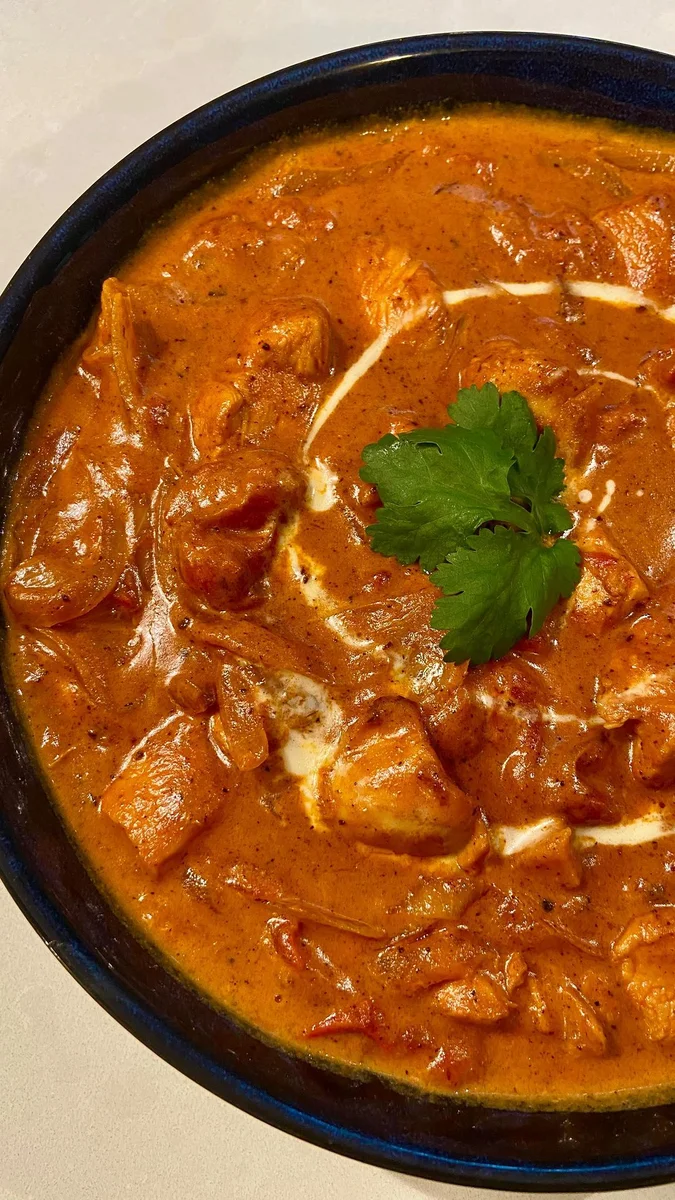
Butter chicken pairs spiced, yoghurt-marinated chicken with a creamy tomato sauce. A short sear before simmering helps the chicken take on colour and flavour, while the cream softens the sauce.
Ingredients
- 1 kgchicken breast or thigh, cut into cubes
- 1/2 tspchilli powder
- 1 tsppaprika
- 1/2 tspturmeric
- 3 tbspGreek yoghurt
- 1 largeonion, sliced
- 1 x 400 gtinned tomatoes
- 1 tspchilli powder
- 1 tsppaprika
- 1/2 tspturmeric
- 1 tbspgaram masala
- 4 tbspGreek yoghurt
- 250 ml (1 cup)thickened cream
- to tastesalt
- 4 tbspghee
Instructions
- 1
Marinate chicken
Mix the chicken with the first measure of chilli powder, paprika and turmeric, and 3 tbsp of Greek yoghurt. Leave to marinate for at least 2 hours.
- 2
Fry chicken
Heat 2 tbsp of ghee in a pan and lightly fry the chicken for a couple of minutes.
- 3
Set chicken aside
Lift the chicken out of the pan and set it aside.
- 4
Heat remaining ghee
Add the remaining 2 tbsp of ghee to the same pan.
- 5
Cook aromatics
Add the sliced onion and garlic-ginger paste, then sauté. The method calls for garlic-ginger paste, but it is not included in the supplied ingredient list.
- 6
Add spices
Stir in the remaining chilli powder, paprika and turmeric along with the garam masala, then return the chicken to the pan.
- 7
Simmer tomatoes
Add the tinned tomatoes, 4 tbsp of Greek yoghurt and salt to taste. Simmer for 10 minutes.
- 8
Finish with cream
Pour in the thickened cream and simmer for another 10–12 minutes.
What is butter chicken?
Butter chicken is a curry of chicken in a rich, spiced tomato-and-cream sauce, associated with North Indian cooking. This version uses a yoghurt marinade and cooks the chicken in ghee before it simmers in the sauce.
The method is straightforward: briefly fry the marinated chicken, then finish cooking it in the tomato mixture. Cream added towards the end gives the sauce its mellow, velvety character.
Nutrition and macros by portion
The nutrition label shows one serving as written: 690 calories, 54g protein, 16g carbs, 44g fat.
| Portion | Adjustment | kcal | Protein | Carbs | Fat |
|---|---|---|---|---|---|
| Lighter | Use less cream and ghee | 483 kcal | 38g | 11g | 31g |
| This serving | As written | 690 kcal | 54g | 16g | 44g |
| Hungry | Add rice or flatbread | 1035 kcal | 81g | 24g | 66g |
Chicken supplies most of the protein, while the cream and ghee contribute much of the fat and saturated fat. Tomatoes, onion and any rice or bread served alongside provide most of the carbohydrates. For a more balanced plate, serve a moderate portion of curry with plenty of vegetables and a measured serving of rice or flatbread.
The marinade and spices
Marinade: the first portion of yoghurt and spices coats the chicken before cooking. Give it at least 2 hours, as specified, and keep it covered in the fridge while it marinates.
Spice blend: the recipe uses chilli powder, paprika and turmeric both in the marinade and in the sauce, with garam masala added to the latter. Keep the two sets of measured spices separate as you prepare the dish.
Searing the chicken
Ghee: use half for the brief chicken fry and the rest for the onion and aromatics. Fry the chicken lightly for a couple of minutes rather than trying to cook it through at this stage.
Pan space: if the chicken pieces are crowded, they can release moisture instead of frying lightly. Work in batches if needed, then return all the chicken to the pan for the simmer.
Building the sauce
Onion: cook it in the same pan after removing the chicken, so it picks up the flavour left behind. The method also calls for garlic-ginger paste, but gives no quantity and omits it from the ingredient list.
Tomatoes and yoghurt: add these with salt and simmer for 10 minutes before adding the cream. Stir well so the yoghurt blends into the sauce rather than sitting in clumps.
Checking doneness and texture
Chicken: after the final 10–12-minute simmer, check that the largest pieces are cooked through. The recipe does not specify a target internal temperature, so use a food thermometer if you want a precise check.
Sauce: it should be hot and creamy after the final simmer. Stir gently as it cooks to keep the sauce even and prevent anything catching on the bottom of the pan.
Timing and serving
Marinating: allow at least 2 hours before cooking; the recipe does not give a total preparation or cooking time. Once cooking begins, the stated simmering time is 20–22 minutes, in addition to the brief frying and sautéing.
On the plate: serve with rice or flatbread to accompany the sauce. Add a simple vegetable side, such as green beans or a salad, for freshness and contrast.
Recipe notes & tips
- Measure the marinade spices separately from the spices intended for the sauce.
- Marinate the chicken for at least 2 hours, as directed.
- Fry the chicken in batches if the pan is crowded.
- Stir the sauce when adding the yoghurt so it blends in smoothly.
- Check the largest chicken pieces are cooked through before serving.
- Clarify how much garlic-ginger paste to use, as the method mentions it but the ingredient list does not.
Variations
- Adjust the heat: use less chilli powder for a milder curry.
- Choose chicken thigh: use thigh pieces for a richer texture.
- Serve with rice: spoon the curry over rice to make it a more substantial meal.
- Add vegetables: serve with cooked green beans or another vegetable on the side.
- Use a thinner sauce: replace some of the thickened cream with milk, though the sauce will be less rich.
Common mistakes to avoid
- Skipping the marinade: allow at least 2 hours so the yoghurt and spices have time to coat the chicken.
- Frying all the chicken at once: overcrowding can make it release moisture; cook in batches if necessary.
- Cooking the chicken through during the first fry: fry it lightly, then finish it in the sauce.
- Adding cream too early: follow the stated order and add it after the 10-minute tomato simmer.
- Guessing the garlic-ginger paste amount: the recipe does not give one, so check the original source before cooking if you need an exact quantity.
How to store
Refrigerate leftovers in a covered container and eat within 3 days. Reheat gently in a pan until piping hot throughout, stirring occasionally; add a splash of water if the sauce has thickened.
Frequently asked questions
How long should I marinate the chicken?
The recipe specifies at least 2 hours. Keep it covered in the fridge while it marinates.
Can I use chicken breast or thigh?
Either works; the ingredient list allows for breast or thigh. Cut the meat into similarly sized cubes so it cooks evenly.
How much garlic-ginger paste should I add?
The method mentions garlic-ginger paste but the ingredient list gives no amount. Check the original recipe for the intended quantity.
Can I make the curry less spicy?
Yes. Reduce the chilli powder, keeping in mind that it appears in both the marinade and the sauce.
What should I serve with butter chicken?
Rice or flatbread works well with the creamy sauce. A simple vegetable side adds freshness to the meal.
How do I know the chicken is cooked?
Check the largest pieces after the final simmer to make sure they are cooked through. A food thermometer can help you check precisely.
Cook it from the original
This recipe comes from fooooods.com. Their page has the author’s own photos, notes and tips — the best place to cook it from.
Open the recipe on fooooods.com