
Sauteed Zucchini and Squash 20 Minute Wonder
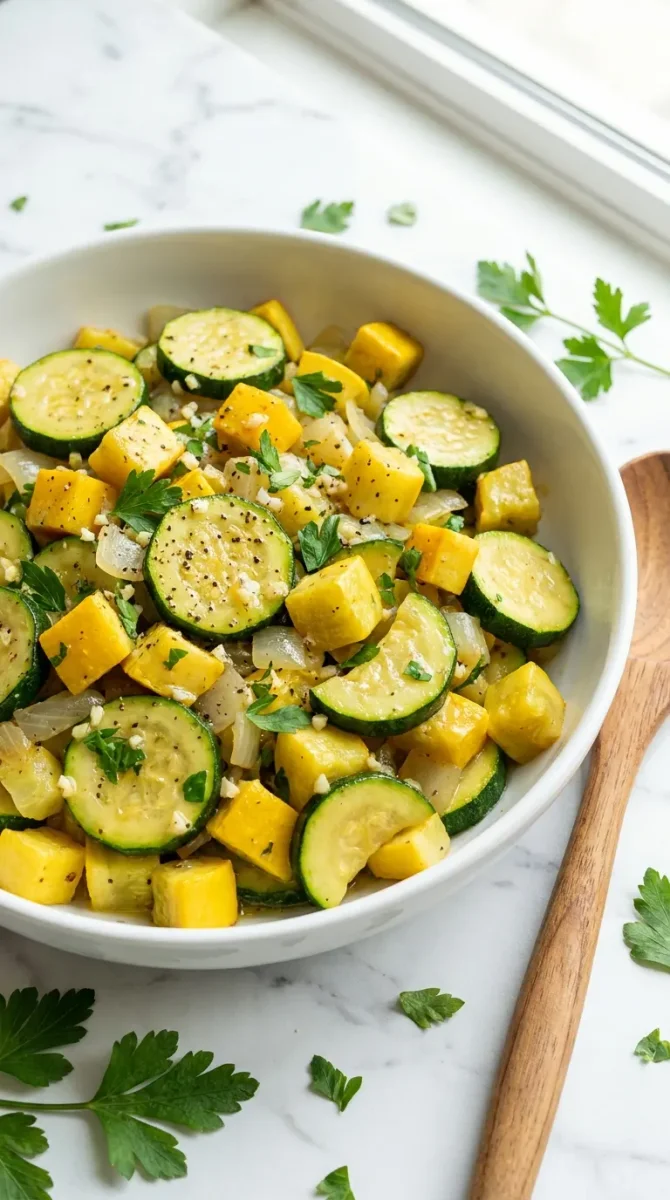
A quick American-style side of zucchini and yellow squash, seared until golden and finished with butter and garlic. Salting and drying the slices helps them brown instead of turning watery.
Ingredients
- 2 medium (about 454 g total)zucchini
- 2 medium (about 454 g total)yellow squash
- 28 g (2 tablespoons)unsalted butter
- 15 ml (1 tablespoon)olive oil
- 3 clovesgarlic, minced
- 2.5 g (½ teaspoon)salt
- 1 g (¼ teaspoon)freshly cracked black pepper
- To garnish (optional)fresh parsley or basil
- To garnish (optional)red pepper flakes
Instructions
- 1
Slice the vegetables
Wash the zucchini and yellow squash, trim off their ends and cut them into even half-moons or quarter-moons about 6 mm (¼ inch) thick.
- 2
Salt the slices
Set a colander over a bowl, add the vegetables and toss them with 2.5 g (½ teaspoon) salt. Leave them for 10 minutes to release excess moisture.
- 3
Dry them well
After 10 minutes, pat the zucchini and squash very dry with a clean kitchen towel or paper towels.
- 4
Heat the oil
Set a large, heavy frying pan over medium-high heat. Add the olive oil and wait until it shimmers.
- 5
Sear the slices
Carefully arrange the dried vegetables in a single layer in the pan, working in two batches if needed to avoid crowding. Leave them undisturbed for 3–4 minutes, until the undersides are deeply golden.
- 6
Finish cooking
Toss the vegetables and cook for another 2–3 minutes, until tender but still with a slight bite.
- 7
Cook the garlic
Turn the heat to low and push the vegetables to one side of the pan. Add the butter and minced garlic to the empty space and let the garlic sizzle in the butter for about 30 seconds, just until fragrant.
- 8
Coat and remove
Toss everything together to coat the vegetables, then immediately take the pan off the heat.
- 9
Season and serve
Taste and add more salt and pepper if needed. Finish with fresh herbs or red pepper flakes, if desired, and serve hot.
What is sautéed zucchini and squash?
This is a simple American-style vegetable side, built around tender summer squash cooked quickly in a frying pan. The recipe does not point to a particular regional origin; its appeal is the straightforward combination of seasonal vegetables, browning and a savoury finish.
Salting the slices and searing them in a hot pan give this version its character. Butter and garlic added at the end bring a glossy coating without obscuring the vegetables.
Nutrition and macros by portion
The nutrition label shows one serving as written: 120 calories, 0g protein, 0g carbs, 0g fat.
| Portion | Adjustment | kcal | Protein | Carbs | Fat |
|---|---|---|---|---|---|
| Lighter | Use less butter | 84 kcal | 0g | 0g | 0g |
| This serving | As written | 120 kcal | 0g | 0g | 0g |
| Hungry | Serve a larger portion | 180 kcal | 0g | 0g | 0g |
The squash supplies most of the carbohydrates, while the butter and olive oil contribute most of the fat; the vegetables provide only a modest amount of protein. Balance the plate by serving a portion alongside a protein-rich main and a grain or other filling side.
Why salt the vegetables first?
Moisture: the 10-minute rest draws water from the cut surfaces, which can otherwise collect in the pan and hinder browning.
Drying: pat the slices thoroughly before cooking. Wet vegetables are more likely to steam than develop the deeply golden undersides the recipe calls for.
Choosing and cutting the squash
Vegetables: medium zucchini and yellow squash cook at a similar pace, so they work well together in this dish. Choose firm ones and wash them before trimming.
Slices: keep the half-moons or quarter-moons around 6 mm thick and as uniform as you can. Even pieces make it easier to get a browned exterior while keeping a slight bite inside.
The key to a good sear
Hot pan: let the olive oil shimmer over medium-high heat before adding the dried slices. Arrange them in one layer and leave them alone for 3–4 minutes so the undersides can brown.
Batches: if the pan is crowded, cook the vegetables in two batches. Give each piece room rather than piling slices on top of one another.
Garlic and butter timing
Garlic: lower the heat and clear a space in the pan before adding the butter and minced garlic. About 30 seconds is enough for the garlic to become fragrant.
Finish: toss the vegetables through the butter and garlic, then take the pan off the heat immediately. This keeps the garlic from continuing to cook in the hot pan.
How to judge doneness
Colour: after the first sear, the undersides should be deeply golden before you toss the slices. If they have not browned, give them a little more time undisturbed.
Texture: the second cooking stage takes 2–3 minutes; the squash should be tender while retaining a slight bite. Taste before serving and adjust the seasoning if needed.
What to serve alongside
This squash makes an easy side for a simple main course, such as grilled chicken, fish or beans. Its buttery garlic coating also pairs naturally with rice, pasta or another plain grain.
Fresh parsley or basil adds a fresh finish, while red pepper flakes bring heat. Use either garnish, both, or leave them off.
Recipe notes & tips
- Cut the zucchini and yellow squash into evenly sized slices so they cook at a similar rate.
- Give the slices the full 10-minute salting rest, then dry them carefully before they go into the pan.
- Wait for the oil to shimmer before adding the vegetables.
- Cook in batches if needed to keep the slices in a single layer.
- Add the garlic only after lowering the heat, and take the pan off the heat as soon as everything is coated.
Variations
- Add chilli: use the optional red pepper flakes for a hotter finish.
- Choose herbs: garnish with parsley or basil, as preferred.
- Use a single squash: make the dish with all zucchini or all yellow squash.
- Change the cut: use half-moons or quarter-moons, keeping the slices about 6 mm thick.
- Serve with grains: spoon the hot vegetables alongside rice or pasta for a more substantial plate.
Common mistakes to avoid
- Skipping the salt rest: the slices may release more water in the pan; let them sit for 10 minutes.
- Leaving the vegetables damp: moisture works against browning; pat them very dry before cooking.
- Crowding the pan: the slices can steam instead of searing; cook in two batches if needed.
- Stirring too soon: the undersides need 3–4 minutes undisturbed to turn deeply golden.
- Cooking the garlic too long: it can lose its fragrant quality; give it about 30 seconds over low heat and remove the pan promptly.
How to store
Refrigerate leftovers in a covered container and use within 3–4 days. Reheat in a frying pan until hot; the squash will be softer than when freshly cooked.
Frequently asked questions
Can I skip salting the squash?
The recipe relies on salting the slices for 10 minutes to draw out moisture. Skipping it may make browning less reliable, so patting the vegetables very dry becomes especially important.
How do I keep the squash from going soggy?
Dry the slices thoroughly and avoid crowding the pan. Cook in two batches if necessary, and leave the first side undisturbed until golden.
Can I cook it all in one batch?
Only if the vegetables fit in a single layer in your pan. If they overlap or crowd together, cook them in two batches as directed.
How thick should I slice the vegetables?
Aim for slices about 6 mm (¼ inch) thick, cut into half-moons or quarter-moons. Keeping the pieces uniform helps them cook evenly.
When should I add the garlic?
Add it after the vegetables have cooked and you have turned the heat to low. Let it sizzle with the butter for about 30 seconds, then toss everything together and remove the pan from the heat.
Can I make this ahead?
It is best served hot just after cooking. Leftovers can be refrigerated in a covered container for 3–4 days and reheated in a frying pan.
Cook it from the original
This recipe comes from besthomemaderecipes.com. Their page has the author’s own photos, notes and tips — the best place to cook it from.
Open the recipe on besthomemaderecipes.com