
Italian Stuffed Artichokes One Pot Wonder
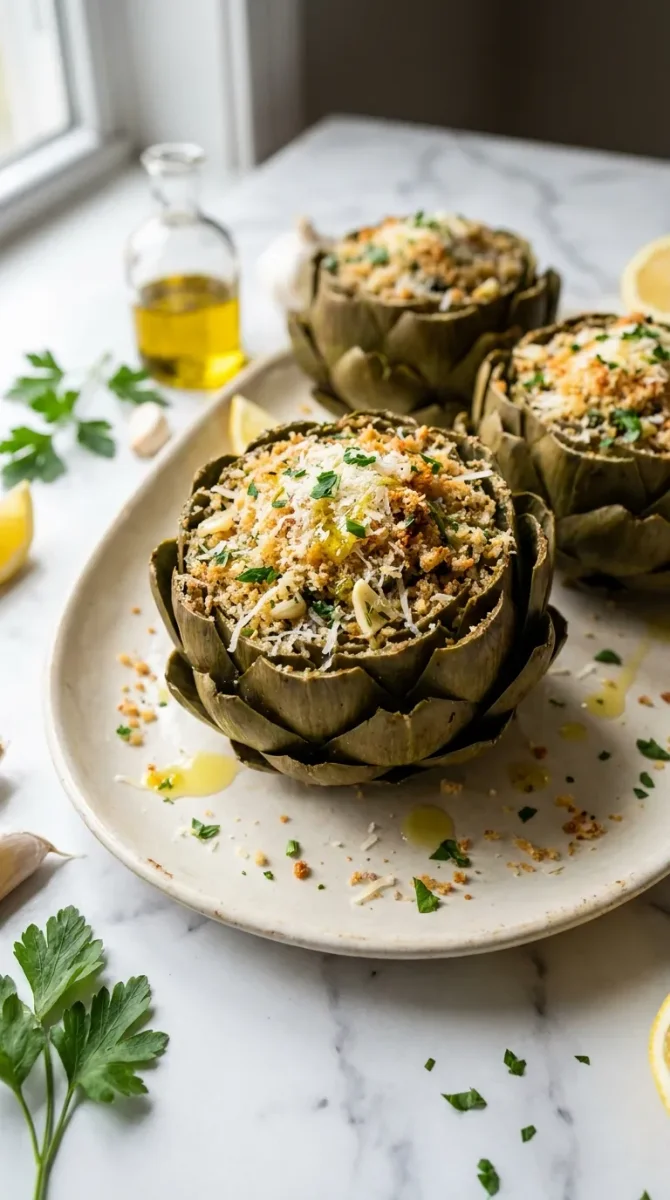
These Italian-style stuffed globe artichokes are braised in one pot until their leaves are tender, with a garlicky breadcrumb, cheese and herb filling. They make a rustic centrepiece for a leisurely meal, with less washing-up than a separate bake and sauce would require.
Ingredients
- 4 largeglobe artichokes
- 110 g (1 cup)seasoned breadcrumbs
- 45 g (1/2 cup)grated Pecorino Romano or Parmesan cheese
- 4 clovesgarlic, minced
- 15 g (1/4 cup)fresh parsley, chopped
- 10 g (1/4 cup)fresh mint, chopped
- 120 ml (1/2 cup)extra-virgin olive oil
- 1lemon, juiced
- 480 ml (2 cups)vegetable or chicken broth
- to tastesalt
- to tasteblack pepper
Instructions
- 1
Prepare the artichokes
Fill a large bowl with cold water and the juice of the lemon. Working with one artichoke at a time, use a serrated knife to cut about 2.5 cm (1 inch) off the top of the leaves. Snip the sharp tips from the remaining outer leaves with kitchen shears. Trim the stem so the artichoke sits flat, leaving about 2.5 cm (1 inch) attached. Gently part the centre leaves with a spoon to make a cavity, then rub all the cut surfaces with the lemon water to help prevent browning.
- 2
Mix the stuffing
In a medium bowl, combine the breadcrumbs, grated cheese, garlic, parsley, mint, 60 ml (1/4 cup) of the olive oil, and a generous pinch of salt and pepper. Stir with a fork until moist and slightly clumpy. Taste a little and check that it is well seasoned and aromatic.
- 3
Fill the artichokes
Hold an artichoke in your palm and spoon the breadcrumb mixture into its centre and between the outer leaves. Gently press the stuffing into the gaps with your fingers, without packing it too tightly, so the leaves can open as they cook. Arrange the stuffed artichokes snugly in a single layer in a heavy-bottomed pot or Dutch oven.
- 4
Braise until tender
Drizzle the remaining 60 ml (1/4 cup) of olive oil and the lemon juice over the artichokes. Pour the broth into the bottom of the pot; it should reach about 2.5 cm (1 inch) up their sides. Bring it to a gentle simmer over medium heat, cover tightly, then reduce the heat to low and braise for 50–60 minutes. They are ready when a knife slides easily into the stem base and the outer leaves pull away with little resistance.
- 5
Rest and serve
Take the pot off the heat and leave the artichokes covered for 10 minutes so the juices can redistribute. Transfer each one to a serving platter with a slotted spoon, then spoon some braising liquid over the top.
What are Italian stuffed artichokes?
Stuffed artichokes are a familiar Italian home-style preparation: the leaves are opened and filled with a seasoned breadcrumb mixture, then cooked until tender. This version combines garlic, herbs and hard cheese for a savoury filling, with broth doing double duty as the braising liquid.
The one-pot method keeps the artichokes moist as they cook and leaves you with a flavourful liquid to spoon over them at the table.
Nutrition and macros by portion
The nutrition label shows one serving as written: 420 calories, 0g protein, 0g carbs, 0g fat.
| Portion | Adjustment | kcal | Protein | Carbs | Fat |
|---|---|---|---|---|---|
| Lighter | Use less olive oil | 294 kcal | 0g | 0g | 0g |
| This serving | As written | 420 kcal | 0g | 0g | 0g |
| Hungry | Add bread alongside | 630 kcal | 0g | 0g | 0g |
The breadcrumbs supply most of the carbohydrates, while the olive oil contributes much of the fat; cheese adds some fat and protein. Serve an artichoke with a green salad or another vegetable side to make a more balanced plate.
Choosing and trimming artichokes
Globe artichokes: choose large ones that fit upright or snugly in a single layer in your pot. Trimming the tops and sharp leaf tips makes them easier to handle and leaves room for the stuffing.
Lemon water: rub the cut surfaces as you work, since they can discolour after trimming. Keep the prepared artichokes in the lemon water while you finish the others.
Getting the stuffing right
Breadcrumbs and cheese: the crumbs give the filling its body, while Pecorino Romano or Parmesan adds a salty, savoury note. Season the mixture before filling, remembering that the cheese may already be salty.
Herbs and oil: parsley, mint and garlic make the stuffing fragrant, and the first portion of olive oil helps it hold together. Aim for a mixture that is moist and lightly clumped rather than wet.
Filling without packing
Centre cavity: spoon some filling into the middle, then work it into the spaces between the outer leaves. Use your fingers to ease it in rather than forcing the leaves apart.
Leave room: avoid compressing the stuffing or filling every gap tightly. The leaves need space to open as the artichokes soften during braising.
Braising and checking doneness
Gentle heat: bring the broth to a simmer before covering the pot, then turn the heat down low. A tight-fitting lid helps retain the moisture needed to soften the artichokes.
Doneness cues: begin checking at 50 minutes. The stem base should take a knife easily, and an outer leaf should come away with very little resistance; continue braising up to 60 minutes if needed.
Serving at the table
Braising liquid: spoon a little over each artichoke just before serving to add moisture and carry the savoury flavour through the leaves. A shallow serving dish helps catch any extra liquid.
What to serve alongside: pair the artichokes with crusty bread to mop up the juices, or serve them with a simple green salad for a lighter accompaniment.
Recipe notes & tips
- Use a pot that holds all four artichokes in a snug single layer.
- Keep the lemon water nearby while trimming to rub each cut surface promptly.
- Check the seasoning of the stuffing before you start filling the artichokes.
- Distribute stuffing between the leaves as well as in the centre for flavour throughout.
- Keep the braise at a gentle simmer rather than a hard boil.
- Save some braising liquid to spoon over the artichokes at the table.
Variations
- Change the cheese: use Pecorino Romano for a sharper, saltier flavour or Parmesan for a milder one.
- Choose the broth: vegetable broth keeps the dish meat-free, while chicken broth gives it a different savoury base.
- Adjust the herbs: use more parsley or mint to suit the flavour you prefer.
- Add lemon at the table: serve with extra lemon wedges for anyone who wants a brighter finish.
- Serve as a side: share the artichokes alongside a main dish rather than serving one per person.
Common mistakes to avoid
- Skipping the lemon water: cut surfaces can discolour; rub them with the lemon water as you trim.
- Overfilling the leaves: tightly packed stuffing can stop them opening; push it in gently and leave room.
- Using a pot that is too wide: the broth may not reach the artichokes as intended; choose a snug-fitting pot.
- Boiling too vigorously: the liquid should simmer gently; lower the heat after bringing it to a simmer.
- Stopping before they are tender: check the stem base and leaf resistance, and braise longer if needed.
How to store
Refrigerate leftover artichokes in an airtight container with some braising liquid for up to 3 days. Reheat gently, covered, in a pan with the liquid until warmed through.
Frequently asked questions
How do I know when the artichokes are cooked?
A knife should slide easily into the base of the stem, and an outer leaf should pull away with little resistance. The recipe gives a braising time of 50–60 minutes.
Can I prepare the artichokes ahead?
You can trim and fill them before cooking, keeping the cut surfaces in lemon water while you work. Braise them according to the method when you are ready to serve.
Can I use Parmesan instead of Pecorino Romano?
Yes. The recipe allows either cheese; Parmesan gives a milder result than the sharper, saltier Pecorino Romano.
What broth should I use?
Use vegetable broth for a meat-free version or chicken broth if you prefer. Both are listed as options for the braise.
Why do the artichokes need to rest after cooking?
The covered 10-minute rest gives the juices time to redistribute before serving. Keep the lid on while they rest.
Cook it from the original
This recipe comes from besthomemaderecipes.com. Their page has the author’s own photos, notes and tips — the best place to cook it from.
Open the recipe on besthomemaderecipes.com