
Oxtail Noodle Soup (Sop Buntut Pakai Mie)
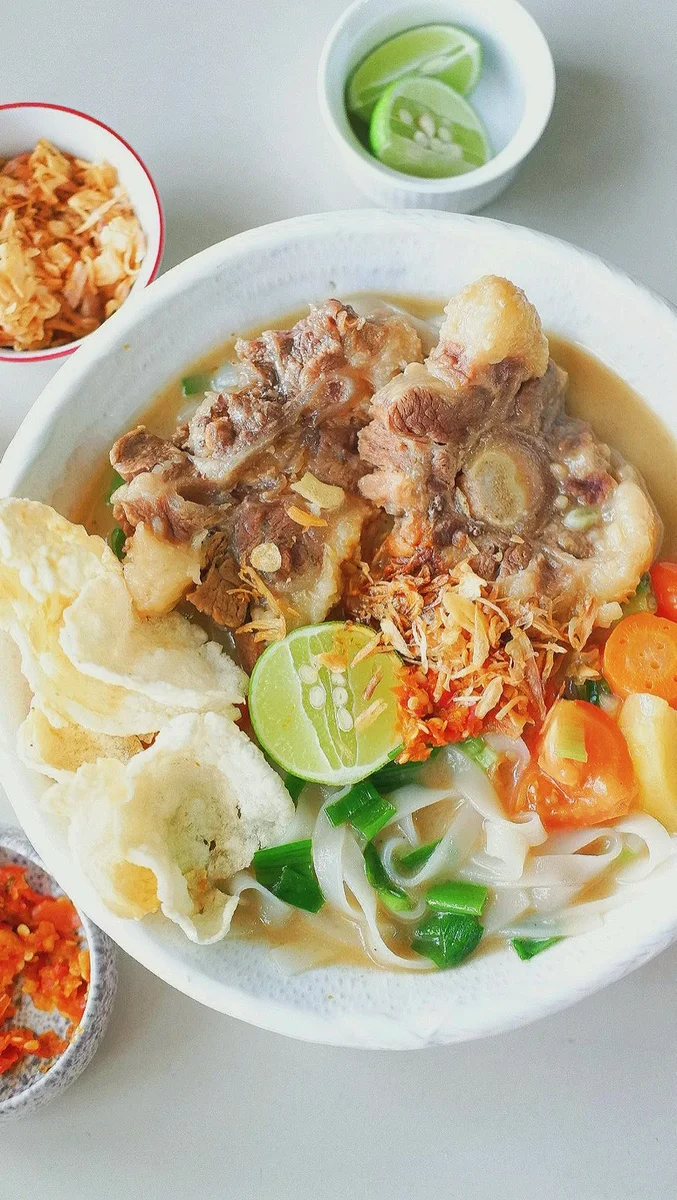
This Indonesian-style oxtail soup pairs a slowly simmered, savoury broth with tender oxtail, vegetables and rice noodles. Blanching the meat first helps keep the finished broth clearer, while the noodles make it a substantial meal.
Ingredients
- 1 kgchopped oxtail
- 3–4 Lwater
- 3potatoes, chopped
- 2carrots, chopped
- 2tomatoes, chopped
- 2spring onions, chopped
- 2 tbspoil
- Unspecifiedrice noodles
- To tastesalt
- To tastesugar
- To tasteground black pepper
- To tasteMSG
- Unspecifiedonion
- Unspecifiedgarlic
- Unspecifiedginger
- Unspecifiedcloves
- Unspecifiednutmeg
- Unspecifiedstar anise
- Unspecifiedcinnamon stick
Instructions
- 1
Blanch the oxtail
Cover the oxtail with water in a pot and blanch for 10–15 minutes. Drain it and rinse it.
- 2
Fry the aromatics
Heat the oil in a pot. Char the onion, garlic and ginger first, then add the cloves, nutmeg, star anise and cinnamon stick; cook until fragrant.
- 3
Simmer the oxtail
Add 3 L of water and the oxtail. Cover the pot and cook over low heat for 2–3 hours, or until the meat is soft and tender.
- 4
Strain the broth
Lift out the oxtail and strain the broth into another pot. Discard the aromatics.
- 5
Cook the vegetables
Bring the broth to a simmer and return the oxtail to the pot. Add sugar, salt, pepper and MSG, then cook the carrots and potatoes for 10 minutes, until tender.
- 6
Add fresh toppings
Turn off the heat, then add the tomatoes and spring onions.
- 7
Cook the noodles
Prepare the rice noodles according to the instructions on the packet.
- 8
Serve the soup
Serve the oxtail soup with the rice noodles and all the accompaniments.
What is oxtail noodle soup?
Sop buntut is an Indonesian oxtail soup, usually built around a broth simmered until the meat becomes tender. This version serves the soup with rice noodles, making it a filling bowl with both broth and a starchy accompaniment.
The method first blanches the oxtail, then simmers it with aromatics before adding vegetables. That sequence helps remove some initial scum and gives the broth time to develop flavour.
Nutrition and macros by portion
The nutrition label shows one serving as written: 550 calories, 30g protein, 58g carbs, 22g fat.
| Portion | Adjustment | kcal | Protein | Carbs | Fat |
|---|---|---|---|---|---|
| Lighter | Fewer noodles, more vegetables | 385 kcal | 21g | 41g | 15g |
| This serving | As written | 550 kcal | 30g | 58g | 22g |
| Hungry | Add extra rice noodles | 825 kcal | 45g | 87g | 33g |
The noodles and potatoes provide most of the carbohydrates, while the oxtail contributes protein and a substantial share of the fat. Balance the bowl with extra vegetables and adjust the noodle serving to your appetite; the nutrition estimate is approximate because the noodle amount and seasoning quantities are unspecified.
Start with a clean broth
Blanching: Give the oxtail 10–15 minutes in boiling water, then drain and rinse it as directed. This clears away the blanching liquid before the longer simmer.
Straining: Once the oxtail is tender, strain the broth and discard the aromatics. Return the meat to the strained liquid so the finished soup is easier to eat.
Build the aromatic base
Charred aromatics: The recipe calls for onion, garlic and ginger to be charred in oil before the whole spices go in. The quantities are not specified, so adjust them to your taste.
Whole spices: Cloves, nutmeg, star anise and a cinnamon stick bring warm, savoury notes. Cook them only until fragrant, as the broth will continue drawing out their flavour during the long simmer.
Cook the oxtail until tender
Low heat: Keep the covered pot at a gentle simmer for 2–3 hours. A hard boil can make the broth cloudy and may cause the liquid to reduce too quickly.
Doneness: The meat should be soft and tender before you remove it to strain the broth. If it is still firm, continue simmering and check it again.
Add vegetables in stages
Potatoes and carrots: These cook in the seasoned broth for 10 minutes, until tender. Cut them into similar-sized pieces so they cook at roughly the same pace.
Tomatoes and spring onions: Add these after turning off the heat, as the method specifies. They retain a fresher character than vegetables simmered for the full cooking time.
Prepare the noodles separately
Rice noodles: Follow the packet instructions, since noodle thickness and cooking time vary. Cooking them separately keeps the soup broth from becoming starchy or being absorbed while the oxtail simmers.
Serving: Divide noodles among bowls, then ladle over the hot soup, vegetables and oxtail. This also makes it easier to portion the noodles to suit each diner.
Make it a balanced bowl
The potatoes and rice noodles both contribute carbohydrates, while oxtail supplies protein and much of the dish’s fat. Carrots, tomatoes and spring onions add vegetables, but the amount depends on the pieces used.
For a plate with more vegetables, serve the soup with extra vegetables on the side and keep the noodle portion moderate. Season gradually, especially because both salt and MSG are added to taste.
Recipe notes & tips
- Blanch and rinse the oxtail before starting the long simmer, as directed, to remove the initial blanching liquid.
- Keep the covered broth at a low simmer for the full 2–3 hours, checking that it does not boil vigorously.
- Strain the broth carefully before returning the meat so the discarded aromatics do not end up in the bowls.
- Taste the broth after adding the seasonings and adjust salt, sugar, pepper and MSG gradually.
- Cook the rice noodles separately according to their packet instructions.
- Add the tomatoes and spring onions only after turning off the heat, following the method.
Variations
- More vegetables: Add extra carrots or potatoes if you want a greater share of vegetables in each bowl.
- Fresh finish: Offer extra chopped spring onion at the table for a sharper, fresher topping.
- Noodle choice: Use a different type of rice noodle, adjusting the cooking time to its packet instructions.
- Gentler seasoning: Add the salt, pepper, sugar and MSG a little at a time, tasting as you go.
- Broth adjustment: Use the recipe’s stated 3 L for the simmer, then add a little more water if you prefer a lighter broth.
Common mistakes to avoid
- Skipping the blanch: The first liquid can leave the broth cloudy; drain and rinse the oxtail after 10–15 minutes.
- Boiling too hard: A rolling boil can cloud the broth; keep it covered over low heat instead.
- Straining too early: The meat needs 2–3 hours or until soft and tender; continue simmering if it is still firm.
- Overcooking the tomatoes: They are added after the heat is turned off, so do not simmer them with the potatoes and carrots.
- Cooking noodles in the soup: Prepare them separately according to the packet, then serve with the soup.
How to store
Refrigerate the broth, oxtail and vegetables in a covered container for up to 3 days; store cooked noodles separately so they do not soak up the broth. Reheat the soup until steaming hot and prepare fresh noodles, or reheat the stored noodles separately according to their texture.
Frequently asked questions
How long does the oxtail need to simmer?
The method gives 2–3 hours over low heat, or until the meat is soft and tender. The exact time depends on the size of the pieces and how gently the pot simmers.
Can I use less water?
The recipe lists 3–4 L overall and directs you to add 3 L for the main simmer. Use the stated 3 L for that stage, then adjust the broth with additional water if needed.
Do I have to cook the noodles separately?
The method says to cook them according to the packet and serve them with the soup. Keeping them separate helps prevent them from absorbing broth as they sit.
When should I add the tomatoes and spring onions?
Add both after turning off the heat, as described in the method. This keeps them from cooking through during the vegetable simmer.
How can I tell when the oxtail is ready?
It should be soft and tender after the 2–3-hour simmer. If it still feels firm, continue cooking over low heat and check again.
Can I make the soup ahead?
Yes. Store the soup and noodles separately in the fridge, then reheat the soup until steaming hot and cook or reheat the noodles for serving.
Cook it from the original
This recipe comes from fooooods.com. Their page has the author’s own photos, notes and tips — the best place to cook it from.
Open the recipe on fooooods.com