
Gochujang Udon
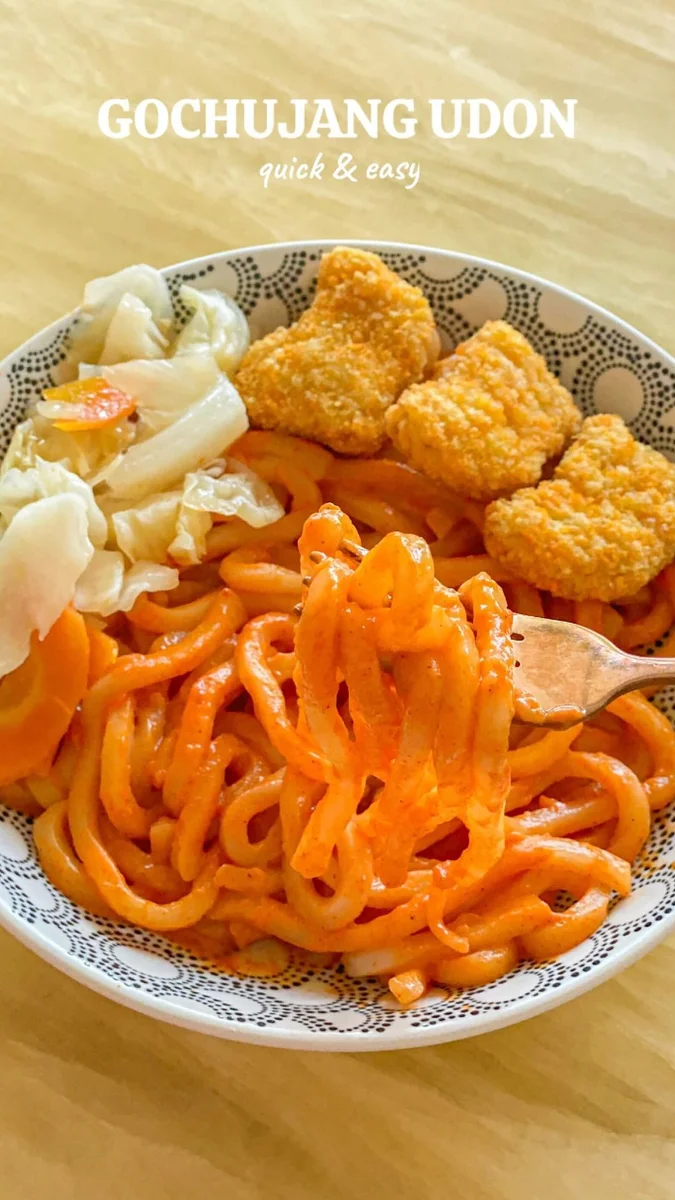
Gochujang udon combines chewy wheat noodles with a quick, creamy sauce sharpened by Korean gochujang. It is an easy way to make a warming noodle dish with a little heat, finished with vegetables and nuggets if you like.
Ingredients
- 1 pack (200 g)udon noodles
- 75 mlmilk
- 25 gdouble cream
- 15 ml (1 tbsp)gochujang
- to tastesalt and pepper
- to tastevegetables and nuggets, for topping
Instructions
- 1
Boil the udon
Boil the udon for 6–7 minutes, then set it aside.
- 2
Warm the dairy
Mix the double cream and milk, add them to a pan and cook over a low heat.
- 3
Stir in gochujang
Add the gochujang and mix it in well.
- 4
Return the noodles
Add the udon back to the pan.
- 5
Season the sauce
Add salt and pepper to taste.
- 6
Finish the dish
Cook until the cream has been absorbed by the noodles, then add your chosen toppings.
What is gochujang udon?
Udon are thick, chewy Japanese wheat noodles, while gochujang is a Korean fermented chilli paste with a savoury, sweet heat. This quick combination brings the two together in a creamy noodle dish.
The milk and cream soften the chilli paste’s punch, and the udon give the sauce a substantial base. Vegetables and nuggets make the finish easy to adapt.
Nutrition and macros by portion
The nutrition label shows one serving as written: 115 calories, 4g protein, 20g carbs, 3g fat.
| Portion | Adjustment | kcal | Protein | Carbs | Fat |
|---|---|---|---|---|---|
| Lighter | More vegetables, less cream | 81 kcal | 3g | 14g | 2g |
| This serving | As written | 115 kcal | 4g | 20g | 3g |
| Hungry | Larger noodle portion | 173 kcal | 6g | 30g | 5g |
The udon provide most of the carbohydrates, while the milk and double cream contribute fat and a little protein; gochujang adds flavour and some sodium. Add a substantial serving of vegetables alongside the noodles to make the plate more varied, and remember that optional nuggets will change the nutrition.
Choosing the noodles
Udon: use the pack’s cooking instructions if they differ from the 6–7 minutes given here, since noodle types and pack formats vary. Drain them before setting them aside so extra water does not thin the sauce.
Gochujang: stir the paste thoroughly into the warm dairy so it disperses evenly rather than staying in concentrated patches.
Making the creamy sauce
Gentle heat: keep the pan on low while warming the milk and cream. A slow, gentle heat helps the mixture warm evenly.
Even coating: once the noodles go back into the pan, stir them through the sauce so the creamy mixture can cling to their surface.
Checking the finish
Sauce: cook until the cream is absorbed into the noodles, as the method directs. If the pan looks dry before the noodles are heated through, lower the heat and keep stirring.
Seasoning: taste before adding salt and pepper, because the gochujang can already bring plenty of savoury flavour.
Adding toppings
Vegetables: choose vegetables that are already cooked or can be prepared separately, as the method adds toppings at the end rather than cooking them in the sauce.
Nuggets: add them as a finishing topping. Keeping them crisp until serving gives a contrast to the soft noodles and creamy sauce.
Serving the udon
Serve the noodles as soon as the sauce has been absorbed, while they are hot and chewy. A generous portion of vegetables alongside the noodles adds colour and variety to the bowl.
Since the recipe does not specify a cooking time for the toppings, prepare them separately according to their own cooking instructions.
Recipe notes & tips
- Check the udon packet before boiling, as pack formats can have different cooking directions.
- Drain the noodles well before setting them aside.
- Keep the milk and cream over a low heat.
- Stir the gochujang into the dairy until the sauce looks evenly coloured.
- Taste the sauce before adding salt, since gochujang is already savoury.
- Prepare vegetables and nuggets separately if they need cooking before serving.
Variations
- Add vegetables: top the noodles with cooked vegetables for extra colour and texture.
- Use different nuggets: choose your preferred nuggets and cook them separately before adding them on top.
- Adjust the heat: use less gochujang for a milder sauce.
- Make it more savoury: add a little more gochujang, tasting as you go.
- Change the finish: use a different combination of vegetables and nuggets to suit what you have.
Common mistakes to avoid
- Boiling too long: the noodles can turn soft, so check the pack instructions and drain them once ready.
- Heating too fast: the dairy can become unevenly heated, so keep the pan over a low heat.
- Leaving paste unmixed: concentrated spots can taste much hotter, so stir the gochujang through the sauce thoroughly.
- Adding salt too soon: gochujang is savoury, so taste the sauce before seasoning.
- Overcooking the finished noodles: they can become too soft, so stop once the sauce has been absorbed.
How to store
Refrigerate leftovers in a sealed container and use within 2 days. Reheat gently in a pan, stirring until hot; add a small splash of milk if the noodles seem dry.
Frequently asked questions
How spicy is gochujang udon?
The heat depends on the gochujang you use and how much goes into the sauce. Use less than the listed tablespoon for a milder bowl.
Can I use a different type of milk?
You can use another milk you have available, though the sauce’s flavour and texture may differ. Keep the heat low as it warms.
Do I need to cook the toppings in the sauce?
No. The method adds the toppings at the end, so prepare vegetables or nuggets separately if they need cooking.
How do I stop the udon from getting too soft?
Follow the packet directions if they differ from the stated 6–7 minutes, and drain the noodles promptly when cooked.
Can I make the sauce less spicy?
Yes. Start with less gochujang, stir it into the dairy, then taste and add more if you want extra heat.
Cook it from the original
This recipe comes from fooooods.com. Their page has the author’s own photos, notes and tips — the best place to cook it from.
Open the recipe on fooooods.com