
Japanese Tsukune Meatballs
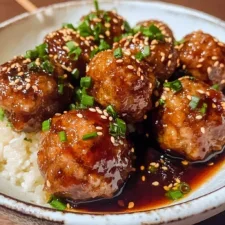
Tsukune are tender Japanese-style chicken meatballs, here flavoured with ginger and finished in a glossy soy-vinegar glaze. Serve them on skewers, with rice, or alongside steamed vegetables for a flexible meal.
Ingredients
- 454 g (1 pound)ground chicken or turkey
- 1egg
- 15 ml (1 tablespoon)tapioca flour
- 60 ml (4 tablespoons)soy sauce or tamari
- 2.5 cm (1 inch)fresh ginger, grated
- 45 ml (3 tablespoons)cooking apple vinegar or broth
- 15–30 ml (1–2 tablespoons)sugar
- as neededoil for frying
Instructions
- 1
Mix the sauce
Stir the soy sauce, cooking apple vinegar and sugar together in a small bowl, then set aside.
- 2
Combine the mixture
Put the ground meat and grated ginger in a large bowl. Add soy sauce, the egg and tapioca flour, then knead until evenly combined.
- 3
Shape the meatballs
Form the mixture into compact balls about 5 cm (2 inches) in diameter.
- 4
Brown and cook
Heat oil in a frying pan over medium heat. Brown the meatballs on all sides, then cover the pan and reduce the heat to cook them through.
- 5
Glaze the meatballs
Remove excess oil from the pan and pour in the prepared sauce. Cook until it thickens, turning the meatballs so they are coated evenly.
- 6
Serve warm
Serve the meatballs on skewers or with rice and steamed vegetables.
What are tsukune?
Tsukune are Japanese minced-meat patties or meatballs, commonly made with chicken and often served as skewers in yakitori-style cooking. Their appeal is the contrast between a tender centre and a savoury glaze.
This version uses ginger for freshness and a soy-based sauce with vinegar and sugar. The result works as a casual main meal or as a shareable appetiser.
Nutrition and macros by portion
The nutrition label shows one serving as written: 210 calories, 25g protein, 7g carbs, 10g fat.
| Portion | Adjustment | kcal | Protein | Carbs | Fat |
|---|---|---|---|---|---|
| Lighter | Use less frying oil | 147 kcal | 18g | 5g | 7g |
| This serving | As written | 210 kcal | 25g | 7g | 10g |
| Hungry | Add rice and vegetables | 315 kcal | 38g | 11g | 15g |
The meat provides most of the protein, while the sugar and tapioca flour contribute carbohydrates; the frying oil and egg account for much of the fat. Pair a serving with steamed vegetables and a measured portion of rice for a more complete plate.
Choosing the meat
Chicken: ground chicken keeps the flavour mild and suits the ginger and soy. Turkey is offered as an alternative and also works in the mixture.
Ginger: grate it finely so it spreads through the meat rather than leaving large, sharp pieces.
Getting the mixture right
Binding: the egg and tapioca flour help hold the ground meat together as it cooks. Knead until the ingredients are evenly mixed, but stop once the texture is cohesive.
Shaping: make compact balls of about 5 cm so they hold together in the pan. Keeping them a similar size helps them cook at a similar pace.
Cooking through gently
Browning: turn the meatballs to colour all sides over medium heat. If the pan is too hot, the outside can darken before the centres are done.
Finishing: cover the pan and lower the heat after browning. Check that the centres are cooked through before adding the glaze.
Making the glaze
Sauce: the soy sauce brings savoury depth, while vinegar adds a tangy edge and sugar balances both. Tamari can replace soy sauce as indicated in the ingredient list.
Coating: remove excess oil before adding the sauce so it can reduce and cling to the meatballs. Turn them gently as the sauce thickens.
Serving ideas
Rice: serve the glazed meatballs over rice to make a filling bowl and catch any extra sauce.
Vegetables: steamed vegetables add freshness alongside the rich, savoury glaze. For a party-style serving, thread the cooked meatballs onto skewers.
Recipe notes & tips
- Grate the ginger finely so its flavour is distributed throughout the meat.
- Shape the meatballs to a consistent size for more even cooking.
- Use medium heat to brown the outside without scorching it.
- Keep the pan covered and the heat low while the centres cook through.
- Remove excess oil before pouring in the sauce so it can thicken properly.
Variations
- Use turkey: swap in ground turkey for the chicken as suggested in the ingredients.
- Choose tamari: use tamari instead of soy sauce.
- Use broth: replace the cooking apple vinegar with broth for a less tangy sauce.
- Adjust the sweetness: use 15 ml sugar for a less sweet glaze or up to 30 ml for more.
- Serve as skewers: thread the cooked meatballs onto skewers for an easy sharing platter.
Common mistakes to avoid
- Uneven shaping: balls of different sizes cook at different rates, so keep them close to 5 cm.
- High heat: the outside may brown too quickly; use medium heat, then cover and lower it.
- Skipping the cover: the centres may take longer to cook through, so cover the pan after browning.
- Too much pan oil: excess oil can interfere with the glaze; remove it before adding the sauce.
- Sauce added too early: wait until the meatballs are cooked through before reducing the sauce around them.
How to store
Refrigerate leftovers in an airtight container and use within 3 days. Reheat gently in a covered pan until hot throughout, adding a small splash of water if the glaze has become too thick.
Frequently asked questions
Can I use turkey instead of chicken?
Yes. The ingredient list allows either ground chicken or ground turkey, and the method is the same.
Can I use tamari?
Yes, tamari is listed as an alternative to soy sauce. Use the same amount.
How do I know the meatballs are cooked through?
After browning, cover the pan and cook over low heat until the centres are no longer raw. Cut into one to check if you are unsure.
Can I make them without skewers?
Yes. Serve them straight from the pan over rice or alongside steamed vegetables.
Can I make the sauce less tangy?
Use broth instead of the cooking apple vinegar, as suggested in the ingredients.
Cook it from the original
This recipe comes from bazarecipe.com. Their page has the author’s own photos, notes and tips — the best place to cook it from.
Open the recipe on bazarecipe.com