
Halwa
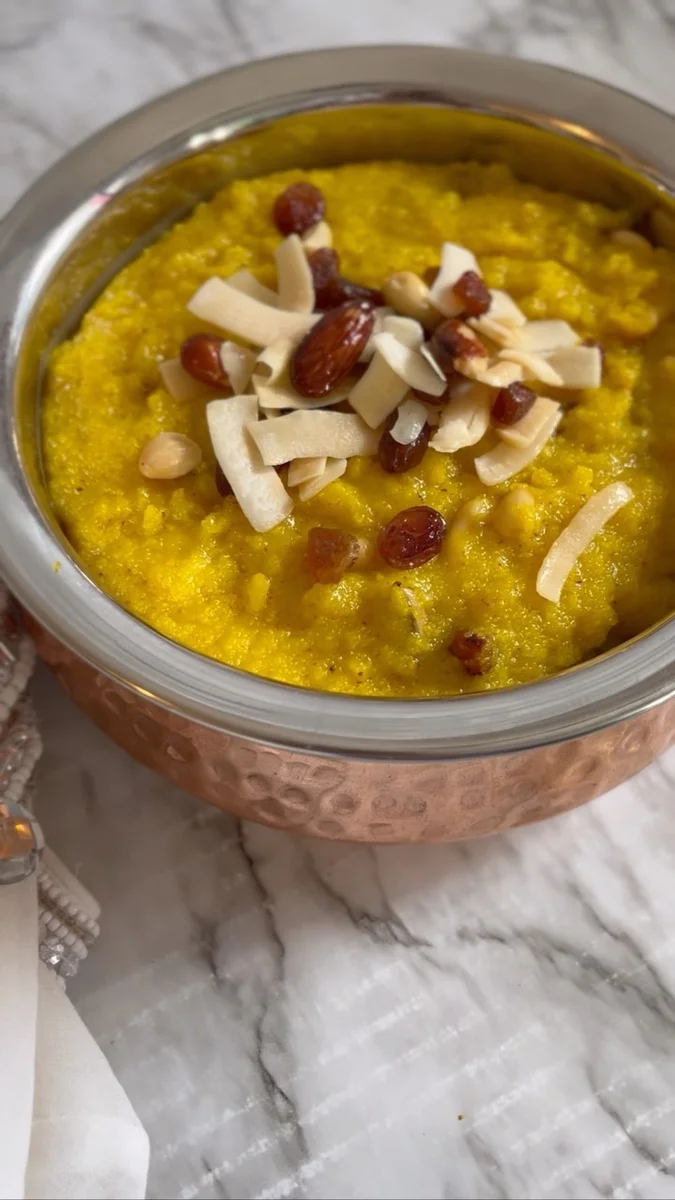
Halwa is a soft, spoonable semolina sweet cooked with ghee, milk and water, with cardamom and orange colouring. This simple stovetop version comes together by roasting the semolina before simmering it until thick.
Ingredients
- 170 g (1 cup)semolina
- 225 g (1 cup)ghee
- 240 ml (1 cup)milk
- 3cardamom pods
- to tasteorange food colouring
- 710 ml (3 cups)water
- Not specified; mentioned in the methodsugar
Instructions
- 1
Roast the semolina
Melt the ghee in a pan, then add the semolina and roast it until fragrant.
- 2
Add milk mixture
Add the sugar, milk and orange colouring. Cook, stirring, until the sugar has dissolved.
- 3
Simmer until thick
Pour in the water and cook until the halwa is thick, but not excessively so.
What is halwa?
Halwa is a broad family of sweets found across South Asia, the Middle East and beyond; ingredients and textures vary by region. This version is a semolina halwa, made by cooking the grain with ghee and liquid until it forms a soft, thick mixture.
Roasting the semolina first develops a warm, toasted aroma, while the milk gives the mixture a richer character. The recipe calls for sugar in the method, but does not specify its quantity.
Nutrition and macros by portion
The nutrition label shows one serving as written: 501 calories, 4g protein, 33g carbs, 42g fat.
| Portion | Adjustment | kcal | Protein | Carbs | Fat |
|---|---|---|---|---|---|
| Lighter | Use less ghee | 351 kcal | 3g | 23g | 29g |
| This serving | As written | 501 kcal | 4g | 33g | 42g |
| Hungry | Serve a larger portion | 752 kcal | 6g | 49g | 63g |
Semolina supplies most of the carbohydrates, while ghee contributes most of the fat; milk adds some protein as well as further fat and carbohydrate. The sugar quantity is missing from the recipe, so the estimate below excludes it; balance the plate with fruit or serve a smaller portion alongside a less rich dish.
Roasting the semolina
Low, steady heat: stir the semolina through the melted ghee so it roasts evenly rather than catching on the base of the pan. Stop when it smells fragrant; the method does not give a roasting time.
Adding the liquids
Milk and colouring: add these with the sugar and stir until the sugar has dissolved. The recipe gives no amount for the orange colouring, so add it sparingly if you want to control the shade.
Water: pour it in after the sugar has dissolved, then keep cooking until the mixture thickens. Take care as the liquid meets the hot semolina and ghee.
Getting the texture right
Thick but soft: the stated cue is a thick halwa that has not become too thick. Since no exact cooking time or liquid-reduction cue is provided, judge the consistency as it cooks and avoid letting it turn stiff.
Cardamom and flavour
Cardamom: the ingredient list includes three cardamom pods, but the method does not say when to add them. For a gentle aroma, you can lightly crush the pods and add them with the liquids; this is a practical suggestion rather than a specified recipe step.
Orange colouring: it changes the appearance rather than defining the texture, so use only enough to achieve the colour you prefer.
Serving the halwa
Serve it warm while it is still soft and spoonable. A small serving alongside unsweetened tea or fruit can make a simple dessert plate.
Recipe notes & tips
- Stir the semolina frequently as it roasts to help it colour evenly.
- Use a heavy-based pan to reduce the chance of the semolina catching.
- Add the orange colouring gradually, since the recipe does not specify an amount.
- Keep stirring as the mixture thickens so you can monitor its texture.
- The recipe gives no sugar quantity, so check the source recipe if you need a precise sweetness level.
Variations
- More cardamom: lightly crush the pods before adding them with the liquids for a stronger aroma.
- Less colouring: add only a small amount for a paler halwa.
- Dairy-free swap: use a suitable plant-based milk, noting that this changes the recipe.
- Toastier flavour: roast the semolina gently until fragrant, taking care not to scorch it.
Common mistakes to avoid
- Scorching the semolina: keep the heat steady and stir often while it roasts.
- Adding colouring all at once: start with a little and adjust the shade gradually.
- Cooking it too thick: stop when it is thick but still soft, as the method directs.
- Assuming a sugar quantity: the method mentions sugar but gives no amount, so verify it rather than guessing if precision matters.
How to store
Cool leftovers promptly and keep them covered in the fridge for up to 3 days. Reheat gently in a pan or microwave, adding a splash of water or milk if the halwa has firmed up.
Frequently asked questions
How much sugar should I use?
The method mentions sugar, but the ingredient list gives no quantity. Check the original recipe for the intended amount before making it.
When should I add the cardamom?
The method does not specify. You can lightly crush the three pods and add them with the milk, though that timing is a practical suggestion.
How do I know when the halwa is ready?
Cook it until it is thick but not stiff, as described in the method. No exact cooking time is provided.
Can I make the halwa less rich?
Using less ghee will make it less rich, but it will also change the recipe's texture and flavour.
Can I reheat leftovers?
Yes. Warm them gently and stir in a little water or milk if needed to loosen the texture.
Cook it from the original
This recipe comes from fooooods.com. Their page has the author’s own photos, notes and tips — the best place to cook it from.
Open the recipe on fooooods.com