
Honey Harissa Chicken Family Favorite
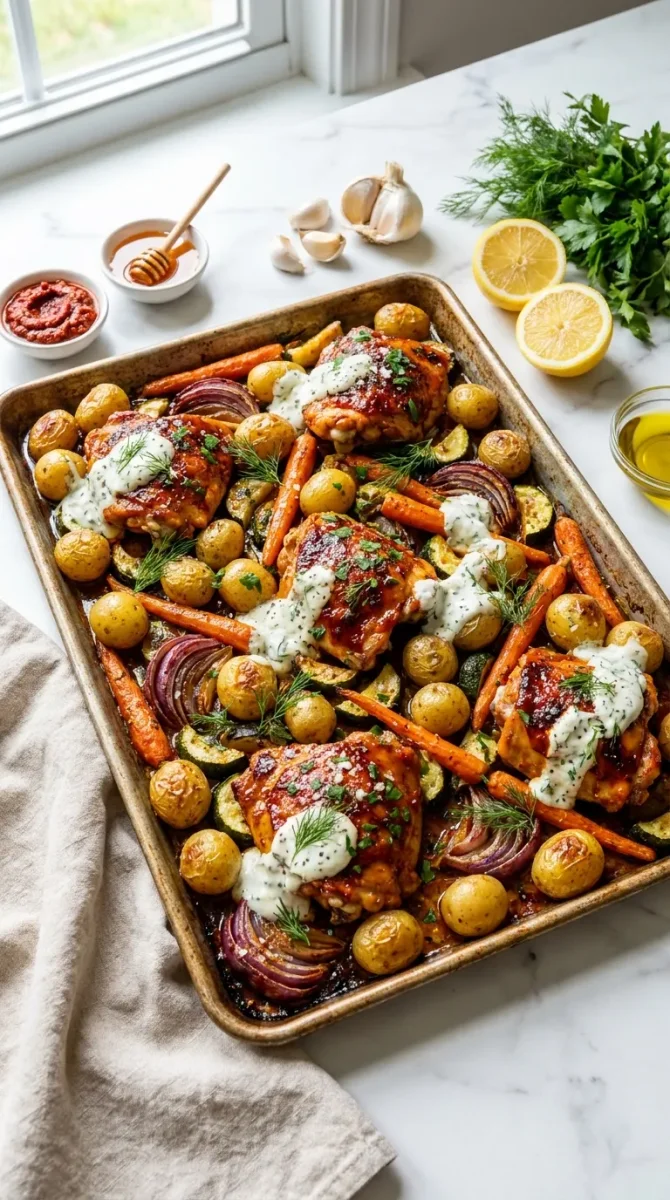
Honey harissa chicken pairs a sticky honey glaze with the warm, spicy flavour of harissa. Searing the chicken before baking gives it a golden exterior while keeping the method straightforward for a weeknight meal.
Ingredients
- 907 gboneless, skinless chicken thighs (or breasts)
- 45 mlharissa paste
- 45 ml, plus extra for drizzlinghoney
- 30 ml, plus extra for the panolive oil
- 3 clovesgarlic, minced
- 5 mlsmoked paprika
- 2.5 ml, or to tastesalt
- 1.25 mlblack pepper
- To garnishfresh coriander or parsley
Instructions
- 1
Preheat the oven
Heat the oven to 200°C.
- 2
Mix the marinade
In a medium bowl, whisk together the harissa paste, honey, olive oil, minced garlic, smoked paprika, salt and pepper.
- 3
Coat the chicken
Put the chicken thighs in a large bowl or resealable bag. Pour over the marinade and massage it into every piece until coated. Leave at room temperature for 15–30 minutes, or cover and refrigerate for up to 4 hours.
- 4
Sear the chicken
Heat a large, oven-safe frying pan over medium-high heat and add a drizzle of olive oil. When hot, lay the chicken in a single layer, working in batches if needed. Sear for 3–4 minutes on each side, until deeply golden.
- 5
Bake until cooked
If your pan is oven-safe, put it in the preheated oven. Otherwise, transfer the seared chicken to a baking dish. Bake for 15–20 minutes, until the chicken reaches an internal temperature of 74°C.
- 6
Glaze under grill
For a stickier finish, brush the cooked chicken with a little more honey and place it under the grill for 1–2 minutes, watching closely so it does not burn.
- 7
Rest and garnish
Take the chicken out of the oven and leave it to rest for 5 minutes. Garnish with fresh coriander or parsley before serving.
What is honey harissa chicken?
Harissa is a chilli-based North African condiment used widely in Middle Eastern-inspired cooking. Here, its savoury heat meets honey’s sweetness in a glossy marinade for chicken.
The combination of a quick pan sear and an oven finish builds colour while cooking the chicken through. The final honey glaze is optional, but gives the surface an extra-sticky finish.
Nutrition and macros by portion
The nutrition label shows one serving as written: 450 calories, 0g protein, 0g carbs, 0g fat.
| Portion | Adjustment | kcal | Protein | Carbs | Fat |
|---|---|---|---|---|---|
| Lighter | More vegetables, less honey | 315 kcal | 0g | 0g | 0g |
| This serving | As written | 450 kcal | 0g | 0g | 0g |
| Hungry | Larger chicken portion | 675 kcal | 0g | 0g | 0g |
The chicken provides most of the protein, while honey contributes carbohydrates and olive oil contributes fat. Serve it with vegetables and a measured portion of rice or couscous for a balanced plate.
Choosing the chicken
Thighs: Boneless, skinless thighs are forgiving and stay juicy through the sear and bake.
Breasts: These work too, but thickness affects cooking time; check the centre with a thermometer and remove them once they reach 74°C.
Balancing the marinade
Harissa: Different pastes vary in heat and saltiness, so taste yours before deciding whether to adjust the salt.
Honey and oil: Honey softens the chilli’s sharp edge and helps create a glaze, while olive oil helps the marinade coat the chicken evenly.
Getting a good sear
Hot pan: Let the pan heat before adding the chicken so the surface browns rather than steams.
Space: Arrange the pieces in one layer with room between them. Sear in batches if necessary, as crowding makes it harder to form a golden crust.
Checking doneness
Temperature: Check the thickest part of a piece with a thermometer; it should reach 74°C. Avoid relying only on the colour of the outside, which develops before the centre is necessarily cooked.
Resting: Leave the chicken for 5 minutes after baking. This gives the juices time to settle before serving.
Serving ideas
Serve the chicken with rice, couscous or flatbreads to soak up the glaze. A crisp salad or roasted vegetables make a fresh contrast to the sweet heat.
Spoon any pan juices over the chicken at the table, and offer extra herbs for a fresh finish.
Recipe notes & tips
- Use a thermometer to check the thickest part of the chicken reaches 74°C.
- If your harissa is particularly salty, taste it before adding the full amount of salt.
- Pat the chicken dry before marinating if it is wet, so the coating clings more readily.
- Sear in batches rather than crowding the pan.
- Keep a close eye on the chicken under the grill because the honey can darken quickly.
Variations
- More heat: Use a hotter harissa paste for a fierier glaze.
- Citrus finish: Add a squeeze of lemon at the table for a bright contrast.
- Herb swap: Garnish with parsley instead of coriander, or use both.
- Breast version: Use boneless, skinless chicken breasts and check their internal temperature carefully.
- Milder glaze: Reduce the harissa and keep the honey amount as written.
Common mistakes to avoid
- Crowding the pan: The chicken may steam instead of browning; sear it in batches.
- Skipping the temperature check: The outside can brown before the centre is cooked; check for 74°C.
- Burning the glaze: Honey colours quickly under the grill; watch it closely for the full 1–2 minutes.
- Using a cool pan: The chicken can release liquid before it sears; wait until the pan is hot.
- Cutting immediately: Juices can run out; rest the chicken for 5 minutes before serving.
How to store
Refrigerate leftovers in an airtight container for up to 3 days. Reheat until piping hot in a covered pan over a gentle heat or in the microwave; add a small splash of water if the glaze has thickened.
Frequently asked questions
Can I marinate the chicken ahead?
Yes. Cover it and refrigerate for up to 4 hours, as stated in the method. Let the chicken sit at room temperature for 15–30 minutes instead if cooking it straight away.
Can I use chicken breasts?
Yes, boneless, skinless breasts can be used. Their thickness may change the cooking time, so check the thickest part reaches 74°C.
Can I make this without an oven-safe frying pan?
Yes. Sear the chicken in your frying pan, then transfer it to a baking dish and bake as directed.
How can I tell when the chicken is done?
Use a thermometer in the thickest part of a piece. It should read 74°C.
Do I have to add the extra honey at the end?
No. The finishing honey is optional and gives the chicken a stickier glaze. If using it, watch the chicken carefully under the grill to prevent burning.
Cook it from the original
This recipe comes from besthomemaderecipes.com. Their page has the author’s own photos, notes and tips — the best place to cook it from.
Open the recipe on besthomemaderecipes.com