
Stuffed Grape Leaves With Meat
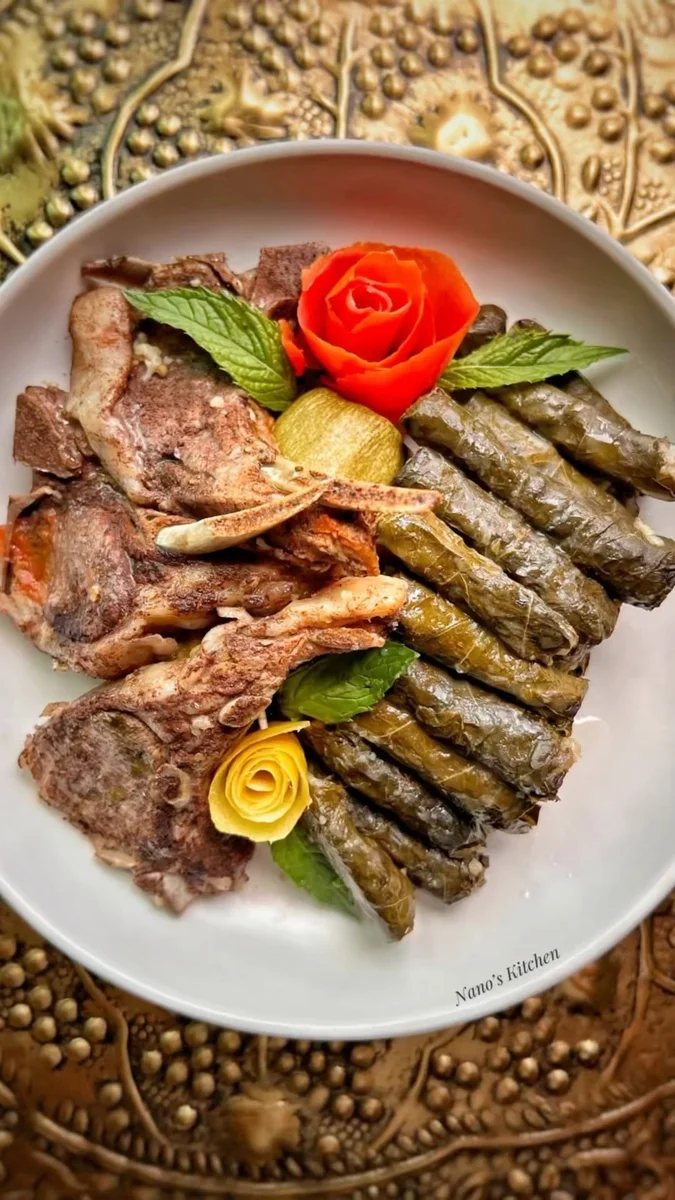
Stuffed grape leaves are layered in a pot with seasoned lamb chops and courgette, then slowly cooked with tomatoes and finished with lemon juice. The long, gentle simmer lets the flavours mingle and leaves the dish ready to serve hot with yoghurt and garden vegetables.
Ingredients
- 300 gfresh grape leaves, soaked, cleaned and boiled for about 6 minutes; drained
- Amount not specifiedlamb chops
- Amount not specifiedspices used for the stuffing
- Amount not specifiedtomato
- Amount not specifiedcourgette
- Amount not specifiedhot water
- To tastesalt
- Amount not specifiedlemon juice
- To servegarden vegetables
- To serveyoghurt
Instructions
- 1
Prepare the leaves
Soak and clean the fresh grape leaves, then boil them for about 6 minutes. Drain and set aside.
- 2
Season the lamb
Season the lamb chops with the same spices used for the stuffing.
- 3
Layer the tomatoes
Arrange the tomatoes over the bottom of the pan.
- 4
Build the layers
Add the meat, grape leaves and courgette, then finish with another layer of grape leaves.
- 5
Add water
Put a heavy clay plate on top to hold everything in place. Add hot water and salt to taste, using just enough water to slightly cover the contents.
- 6
Simmer the pot
Cover and bring to the boil, then turn the heat to its lowest setting and cook for 1 hour 30 minutes. Uncover, remove some of the sauce and stir in the lemon juice. Taste the sauce and adjust the seasoning if needed.
- 7
Finish cooking
Cook for another 30 minutes, then drain the sauce and serve hot with garden vegetables and yoghurt.
What are stuffed grape leaves?
Stuffed grape leaves are a dish found in several cuisines across the eastern Mediterranean and Middle East, with many regional fillings and cooking methods. This version cooks the leaves in layers with lamb, tomatoes and courgette rather than describing a separate filling recipe.
Slow cooking is central to the method: a weighted plate keeps the layers in place while they soften and take on flavour from the meat and cooking liquid.
Nutrition and macros by portion
The nutrition label shows one serving as written: 520 calories, 30g protein, 20g carbs, 36g fat.
| Portion | Adjustment | kcal | Protein | Carbs | Fat |
|---|---|---|---|---|---|
| Lighter | More vegetables, less lamb | 364 kcal | 21g | 14g | 25g |
| This serving | As written | 520 kcal | 30g | 20g | 36g |
| Hungry | Larger portion | 780 kcal | 45g | 30g | 54g |
Lamb is the main source of protein and fat, while the grape leaves and vegetables contribute some carbohydrate and fibre; yoghurt adds further protein and fat. The recipe omits quantities for most ingredients and gives no stuffing details, so the nutrition estimate is especially uncertain; serve with extra vegetables and yoghurt to round out the plate.
The ingredients and missing details
Grape leaves: the recipe specifies fresh leaves, soaked, cleaned and boiled for about 6 minutes before layering. Drain them well so excess water does not dilute the pot.
Seasoning: the instructions refer to spices used in the stuffing, but do not name them or give a stuffing method. The quantities for the lamb, tomatoes and courgette are also not provided, so the ingredient amounts need to be supplied by the original recipe source.
Why the plate matters
Weight: a heavy clay plate is placed over the layers to keep them from shifting as the liquid heats and simmers. Use the plate specified by the recipe, and make sure it fits inside the pot.
Water level: add hot water only until it slightly covers the contents. Too much liquid can leave the finished dish watery, particularly as the recipe calls for draining sauce before serving.
The long simmer
Low heat: after bringing the covered pot to the boil, turn the heat down to its lowest setting and cook for 1 hour 30 minutes. A gentle simmer helps the layers cook without being disturbed.
Second stage: after adding lemon juice, cook for a further 30 minutes. The method gives a total cooking time of 2 hours after the initial boil, not counting preparation.
Check the sauce and leaves
Leaves: they should be tender after the full cooking time. If they still feel firm, the recipe does not specify an adjustment, so check the pot and avoid letting it boil vigorously.
Seasoning: taste the sauce after adding lemon juice and adjust it if needed. The instructions do not specify how much lemon juice to use, so add it according to the amount available and your preference.
Serving the dish
Sides: serve the pot hot with garden vegetables and yoghurt, as suggested in the method. Fresh vegetables and cool yoghurt provide a contrast to the rich lamb and soft grape leaves.
Sauce: drain the sauce before serving, following the recipe. The method also says to remove some sauce before adding lemon, but does not explain whether or how the reserved sauce is served.
Recipe notes & tips
- Boil the fresh grape leaves for about 6 minutes, then drain them before layering.
- Use hot water and add only enough to slightly cover the layered ingredients.
- Keep the heat at its lowest setting once the covered pot reaches the boil.
- Use a heavy clay plate that fits inside the pot to hold the layers down.
- Taste the sauce after adding lemon juice and adjust the seasoning before the final cooking stage.
Variations
- Extra lemon: add more lemon juice to the sauce to give it a sharper finish.
- More courgette: increase the courgette in the layers for a vegetable-forward pot.
- Different vegetables: serve with other garden vegetables alongside the finished dish.
- Yoghurt on the side: offer extra yoghurt at the table for a cool accompaniment.
Common mistakes to avoid
- Skipping the leaf preparation: soak, clean and boil the fresh leaves for about 6 minutes before using them.
- Unweighted layers: place the heavy clay plate on top so the contents stay in place.
- Too much water: add just enough hot water to slightly cover the ingredients.
- High simmer: lower the heat to its lowest setting after bringing the covered pot to the boil.
- Seasoning without tasting: check the sauce after adding lemon juice and adjust it if needed.
How to store
Cool leftovers promptly and refrigerate in a covered container for up to 3 days. Reheat gently in a covered pan until piping hot throughout, adding a little water if needed.
Frequently asked questions
How long do the grape leaves need to boil before layering?
The recipe says to boil the fresh leaves for about 6 minutes after soaking and cleaning them, then drain and set them aside.
How much water should I add?
Add hot water just until it slightly covers everything in the pot. The recipe does not give a measured quantity.
How long does the dish cook?
Cook it for 1 hour 30 minutes at the lowest heat after bringing it to the boil, then add lemon juice and cook for another 30 minutes.
Which spices should I use?
The instructions say to use the same spices as in the stuffing, but they do not identify the spices or provide the stuffing recipe. Check the original recipe for those details.
Can I use preserved grape leaves?
The listed ingredient is fresh grape leaves, so the method is written for fresh leaves. Preserved leaves may need different preparation, which the recipe does not specify.
What should I serve with it?
The recipe suggests garden vegetables and yoghurt. Serve them alongside the dish while it is hot.
Cook it from the original
This recipe comes from fooooods.com. Their page has the author’s own photos, notes and tips — the best place to cook it from.
Open the recipe on fooooods.com