
Dinner Rolls
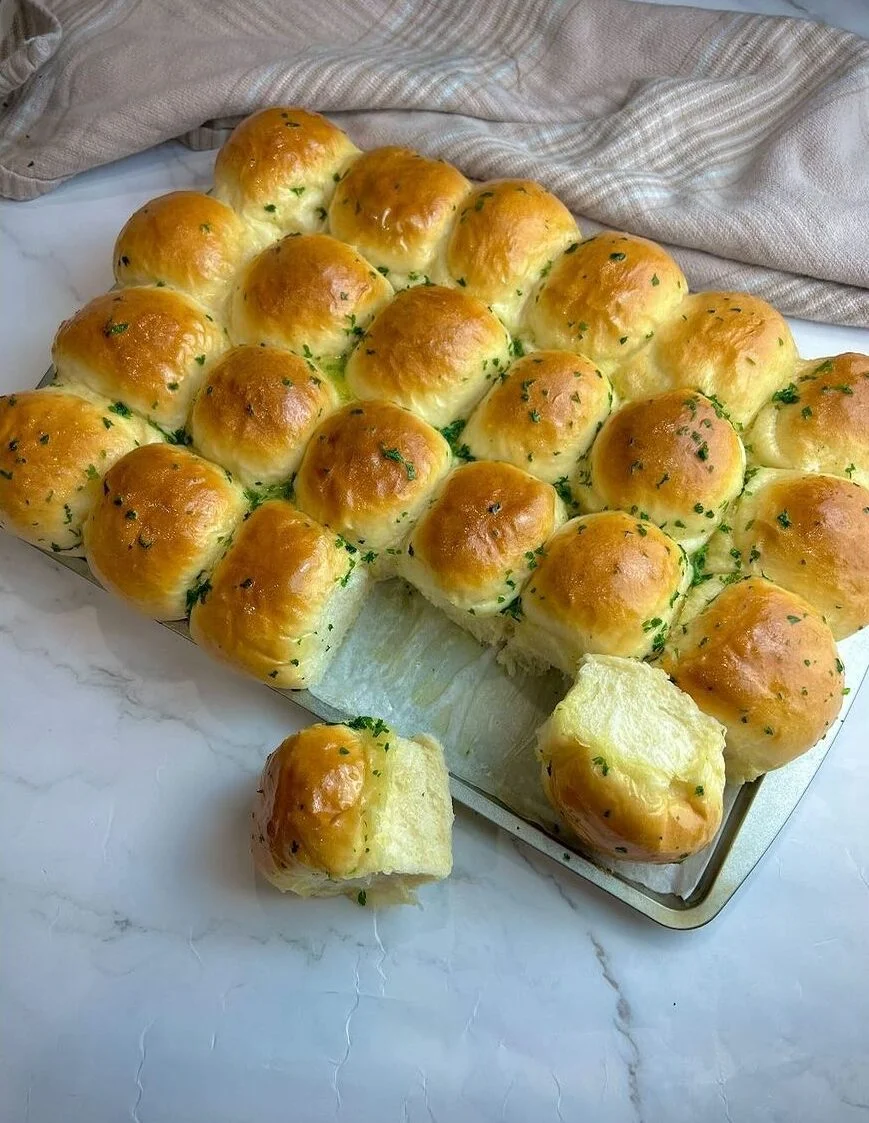
These soft, lightly sweet dinner rolls are made with an enriched yeast dough and baked close together for tender sides and golden tops. They’re well suited to serving warm alongside soup, a roast or a family meal.
Ingredients
- 625 g (5 cups)plain flour
- 30 g (¼ cup)milk powder
- 2 tbspyeast
- 25 g (2 tbsp)sugar
- 7.5 g (½ tbsp)salt
- 540 ml (2¼ cups)warm milk
- 120 ml (½ cup)vegetable oil
Instructions
- 1
Mix the starter
In a bowl, combine 2 cups of the flour with the salt, sugar, yeast, milk powder and warm milk. Mix well and leave for 10–15 minutes.
- 2
Knead the dough
After 10 minutes, the mixture should have doubled in size. If it has not, leave it for another 5 minutes, then add the remaining flour and the oil. Knead by hand or with a stand mixer until a soft dough forms.
- 3
Shape the rolls
Shape the rolls straight away; the dough does not need to rest before shaping.
- 4
Divide the dough
Cut the dough into roughly 24 equal-sized pieces.
- 5
Form each roll
Flatten each piece, roll it up and shape it into a round. Rolling the dough helps make the inside light and fluffy.
- 6
Arrange on a tray
Line a tray with baking parchment and set the rolls beside one another, leaving only a small gap between them.
- 7
Proof the rolls
Cover and leave to rise for at least 30 minutes and up to 1 hour, but no longer.
- 8
Bake until golden
After 30 minutes, the rolls should have doubled in size. Brush them with milk and bake at 200°C (400°F) for about 25 minutes, until golden.
- 9
Finish while warm
Take the rolls out of the oven and brush them with melted butter, or brush them with milk to help keep them soft.
What are dinner rolls?
Dinner rolls are small, soft bread rolls served alongside a meal. This version uses an enriched yeast dough with milk, milk powder and oil for a tender crumb.
The recipe uses a quick initial rest for the yeast mixture, then shapes the rolls before their main rise. Baking them close together helps keep their sides soft.
Nutrition and macros by portion
The nutrition label shows one serving as written: 740 calories, 23g protein, 127g carbs, 29g fat.
| Portion | Adjustment | kcal | Protein | Carbs | Fat |
|---|---|---|---|---|---|
| Lighter | One or two rolls | 518 kcal | 16g | 89g | 20g |
| This serving | As written | 740 kcal | 23g | 127g | 29g |
| Hungry | Larger roll portion | 1110 kcal | 35g | 191g | 44g |
The flour supplies most of the carbohydrates, while the vegetable oil contributes much of the fat; the milk, milk powder and flour provide protein. Pair a portion with vegetables and a protein-rich main for a more balanced plate.
Why the first rest matters
Yeast mixture: the flour, milk, yeast, sugar, salt and milk powder rest together for 10–15 minutes. It should look puffy; if it has not risen after 10 minutes, give it another 5.
Getting a soft dough
Flour and oil: add the remaining flour and oil after the initial rest, then knead until the dough is soft. Add the flour as directed rather than putting all of it into the first mixture.
Shaping for a fluffy centre
Rolling: flatten each piece, roll it up and round it into a roll. The recipe calls for shaping straight away, without a separate rest before dividing and forming the dough.
How to judge the rise
Proofing: cover the shaped rolls and leave them for at least 30 minutes, up to 1 hour. They should look roughly doubled in size before baking.
Baking and serving
Tray spacing: arrange the rolls close together with a small gap, as they will expand during the rise and bake. Bake at 200°C (400°F) for about 25 minutes, looking for golden tops.
Serving: brush the rolls after baking as directed and serve warm. They go well with soup, stews or a roast dinner.
Recipe notes & tips
- Measure out 2 cups of flour for the first mixture, then reserve the rest for kneading.
- If the yeast mixture has not puffed up after 10 minutes, wait the extra 5 minutes before continuing.
- Aim for similarly sized pieces so the rolls finish baking at about the same time.
- Keep the rolls close together on the tray, with only a small gap between them.
- Use the doubling in size as the cue to bake, while keeping the rise within the recipe’s 1-hour maximum.
Variations
- Seeded tops: sprinkle seeds over the rolls before baking.
- Herb flavour: knead dried herbs into the dough with the remaining flour.
- Garlic finish: brush the baked rolls with garlic butter.
- Wholemeal blend: replace some of the plain flour with wholemeal flour, keeping the dough soft as you knead.
- Sweet variation: add a little extra sugar for a sweeter roll.
Common mistakes to avoid
- Skipping the first rest: give the yeast mixture 10–15 minutes, plus up to 5 more if it has not puffed.
- Adding all the flour at once: use 2 cups in the first mixture and add the remainder after the rest.
- Uneven pieces: divide the dough into roughly 24 similar-sized portions for more even baking.
- Crowding too tightly: leave a small gap between the rolls so they have room to expand.
- Over-proofing: keep the covered rise between 30 minutes and 1 hour.
- Baking by time alone: use the golden colour as well as the approximate 25-minute baking time to judge doneness.
How to store
Keep cooled rolls in an airtight container at room temperature for up to 2 days. Rewarm briefly in a low oven, or freeze them for longer storage and thaw before reheating.
Frequently asked questions
How many rolls does this make?
The dough is divided into about 24 pieces. With four servings listed, that is roughly six rolls per serving.
Can I use a stand mixer?
Yes. The recipe allows kneading by hand or with a stand mixer; stop when the dough is soft.
What if the yeast mixture does not double?
Leave it for another 5 minutes after the initial 10-minute rest. If it still does not rise, the yeast may not be active.
Can I let the shaped rolls rise for longer than an hour?
The recipe specifies a rise of at least 30 minutes and no more than 1 hour.
Can I brush the rolls with milk after baking?
Yes. The method suggests brushing with melted butter or with milk to help keep the rolls soft.
Cook it from the original
This recipe comes from fooooods.com. Their page has the author’s own photos, notes and tips — the best place to cook it from.
Open the recipe on fooooods.com