
Spicy Prawn Laksa
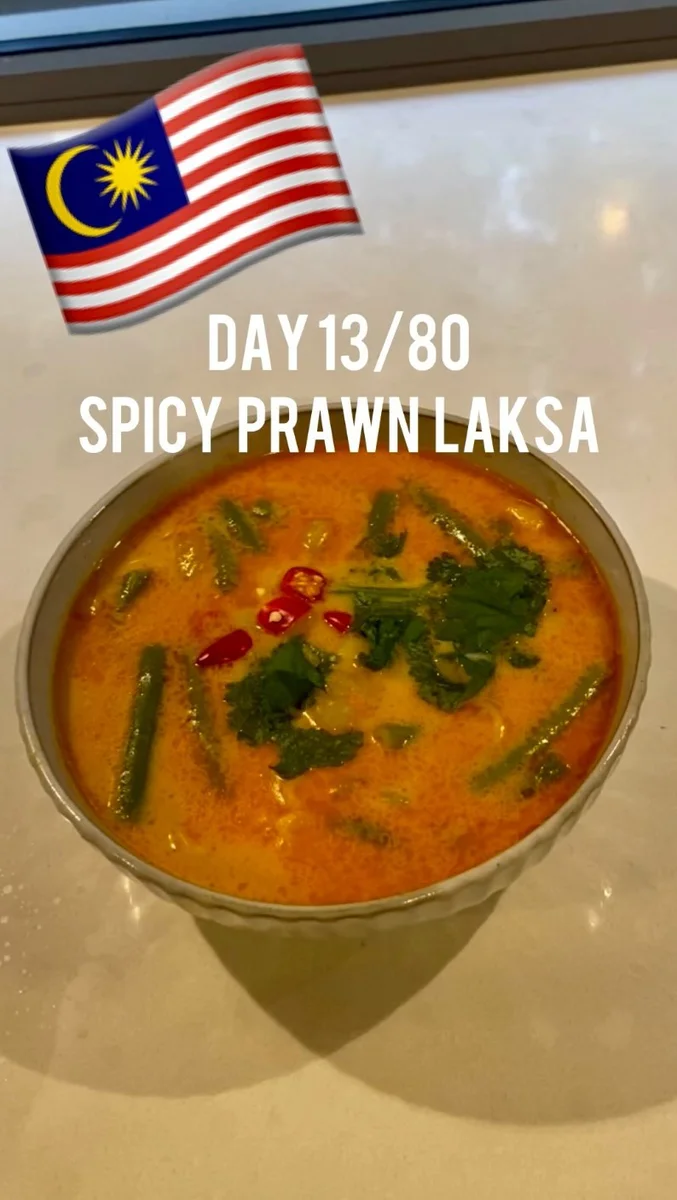
Spicy prawn laksa is a coconut-rich noodle soup flavoured with a homemade paste of chillies, aromatics and spices. It makes a warming meal with prawns, green beans and fresh coriander in every bowl.
Ingredients
- 3 clovesgarlic
- 2 tbspginger paste
- 5dried red chillies
- 2 tbsppeanut oil
- 3 tbspwater
- to tastesalt
- 1 tspground coriander
- 1 tsppaprika
- ½ tspturmeric
- 1 tspground cumin
- 1 smallred onion
- 1 stalk, choppedlemongrass
- 2 tbsppeanut oil
- 2kaffir lime leaves
- 200 gprawns
- 400 mlcoconut cream
- 625 ml (2½ cups)water
- 225 g (1½ cups)frozen green beans
- 100 gcooked rice noodles
- 2 tbspsugar
- to tastesalt
- 15 g (½ cup)fresh coriander
- 2red chillies
Instructions
- 1
Blend the paste
Blend the garlic, ginger paste, dried chillies, 2 tbsp peanut oil, 3 tbsp water, salt, ground coriander, paprika, turmeric, ground cumin, red onion and lemongrass to make the laksa paste.
- 2
Fry the paste
Heat 2 tbsp peanut oil in a saucepan. Add the laksa paste and fry until aromatic.
- 3
Add the prawns
Add the kaffir lime leaves and prawns to the pan.
- 4
Simmer the soup
Add the water, green beans and coconut cream. Simmer until the mixture comes to a boil.
- 5
Season the broth
Once the soup boils, season it with sugar and salt.
- 6
Add the noodles
Stir in the cooked rice noodles.
- 7
Finish and serve
Top with fresh coriander and red chillies, then serve.
What is prawn laksa?
Laksa is a family of spicy noodle soups associated with Southeast Asia, especially Malaysia and Singapore. Recipes vary, but many combine a fragrant spice paste with noodles and a rich, seasoned broth.
This version builds its flavour from a blended paste and coconut cream, then adds prawns, green beans and rice noodles. Fresh coriander and red chillies provide a bright, sharp finish.
Nutrition and macros by portion
The nutrition label shows one serving as written: 430 calories, 14g protein, 24g carbs, 35g fat.
| Portion | Adjustment | kcal | Protein | Carbs | Fat |
|---|---|---|---|---|---|
| Lighter | Less coconut cream | 301 kcal | 10g | 17g | 25g |
| This serving | As written | 430 kcal | 14g | 24g | 35g |
| Hungry | More noodles and prawns | 645 kcal | 21g | 36g | 53g |
The coconut cream and peanut oil contribute most of the fat, while the noodles and sugar provide much of the carbohydrate. Prawns supply most of the protein, with smaller contributions from the beans. For a more balanced plate, serve with extra green vegetables alongside.
Building the laksa paste
Aromatics: garlic, ginger, onion and lemongrass give the paste its savoury, fragrant base. Blend them thoroughly so they cook evenly in the pan.
Spices and chillies: dried chillies bring heat, while coriander, cumin, paprika and turmeric add warmth and colour. Adjust the chilli quantity if you prefer a milder soup.
Frying for fragrance
Cook the paste in the peanut oil until it smells aromatic before adding the liquid. Stir it as it fries so it warms evenly and does not catch on the bottom of the saucepan.
The method gives no exact frying time, so use the aroma as your cue rather than relying on a timer.
Getting the broth right
Coconut cream: this makes the soup rich and gives the spice paste a creamy base. Stir it into the water to combine before bringing the mixture to a boil.
Seasoning: add sugar and salt once the broth boils, as directed. Taste and adjust the salt gradually, since the amount needed depends on your ingredients.
Prawns and vegetables
Prawns: they cook quickly, so keep an eye on them as the soup heats. They are ready when opaque throughout; avoid leaving them boiling longer than necessary.
Green beans: the recipe uses frozen beans, which can go straight into the pan. Simmer until the soup comes to a boil, as the method specifies.
Noodles and serving
Rice noodles: use cooked noodles and add them after seasoning the broth. Stir gently so they are coated without breaking up.
Toppings: finish each serving with fresh coriander and red chillies. If you are sensitive to heat, add the chillies a little at a time.
Recipe notes & tips
- Blend the paste until it is as smooth as your blender allows.
- Stir the paste while frying to help prevent it sticking.
- Use cooked rice noodles as listed, rather than adding them dry to the broth.
- Add salt gradually, then taste the broth before serving.
- Keep the fresh coriander and chillies for the final topping.
Variations
- Milder broth: use fewer dried chillies in the paste and omit some of the fresh chilli topping.
- More vegetables: add extra green beans to the simmering broth.
- Noodle swap: use another cooked noodle variety if rice noodles are unavailable.
- Herb finish: add the coriander just before serving to keep its flavour fresh.
- Lime accent: serve with lime wedges for a sharp squeeze at the table.
Common mistakes to avoid
- Scorching the paste: stir it regularly as it fries and lower the heat if it begins to catch.
- Overcooking the prawns: watch for them to turn opaque and avoid prolonged boiling.
- Adding dry noodles: cook them first, as this recipe calls for cooked rice noodles.
- Over-seasoning early: add salt gradually after the broth boils and taste before serving.
- Using too much chilli: start with less fresh chilli on top, then add more to taste.
How to store
Refrigerate leftovers in a covered container and use within 2 days. Reheat gently in a saucepan until piping hot, stirring carefully; the noodles may soften as they sit in the broth.
Frequently asked questions
Can I make the laksa paste ahead?
Yes. Blend the paste in advance and keep it covered in the fridge until you are ready to fry it.
Can I use fresh green beans?
Yes. Trim and cut them into bite-sized pieces, then simmer them in the broth until tender.
How can I make this laksa less spicy?
Use fewer dried chillies in the paste and reduce or omit the fresh red chillies on top.
Can I use uncooked prawns?
The ingredient list does not specify whether the prawns are raw or cooked. If using raw prawns, cook them in the broth until opaque throughout.
Can I prepare the whole soup ahead?
It is best to add the cooked noodles close to serving, as they can absorb broth and soften while stored. Keep leftovers chilled and reheat gently.
Cook it from the original
This recipe comes from fooooods.com. Their page has the author’s own photos, notes and tips — the best place to cook it from.
Open the recipe on fooooods.com