
Eggplant Stir-Fry
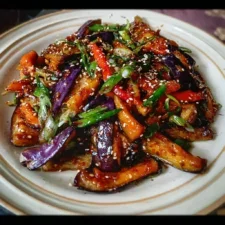
This Chinese-inspired eggplant stir-fry pairs seared, creamy eggplant with a savoury, tangy sauce, garlic, ginger and scallions. Salting the eggplant first helps it brown rather than turn soggy, and optional beef makes the dish more substantial.
Ingredients
- 900 g (2 lb)Chinese or Japanese eggplants
- 1 tablespoon (15 ml)kosher salt
- 60 ml (1/4 cup), dividedavocado oil or another high-smoke-point oil
- 225 g (1/2 lb), optionallean minced beef
- 6–8 cloves, mincedgarlic
- 1-inch (2.5 cm) piece, mincedfresh ginger
- 4–5 stalks, whites and greens separatedscallions
- 3 tablespoons (45 ml)soy sauce or tamari
- 2 tablespoons (30 ml)Shaoxing wine
- 1 tablespoon (15 ml)Chinkiang vinegar
- 1 tablespoon (15 ml), optionaldoubanjiang
- 1 tablespoon (12 g)sugar
- 1 teaspoon (5 ml)toasted sesame oil
- 1 teaspoon (3 g)cornflour
- 60 ml (1/4 cup)water or low-sodium chicken stock
Instructions
- 1
Cut the eggplant
Rinse the eggplants and pat them completely dry. Trim off the stems, then cut the eggplants on a 45-degree angle into pieces about 5 cm (2 inches) long and 2.5 cm (1 inch) thick. Halve or quarter each piece lengthways to make wedges, keeping the pieces a consistent size.
- 2
Salt and rest
Put the eggplant in a large colander over a bowl or in the sink. Sprinkle with 1 tablespoon of kosher salt and toss to coat. Leave to rest for 30–60 minutes.
- 3
Check the moisture
As the eggplant rests, moisture should bead on its surface and brownish liquid should collect below. The salt draws out some moisture and helps season the eggplant.
- 4
Rinse and dry
Rinse the eggplant thoroughly under cold running water to remove the salt. Transfer it to a clean tea towel or paper towels and pat it very dry, pressing gently to remove surface moisture.
- 5
Mix the sauce
While the eggplant rests, combine the soy sauce or tamari, Shaoxing wine, Chinkiang vinegar, sugar and optional doubanjiang in a small bowl.
- 6
Make a slurry
In a separate small bowl, whisk the cornflour with 60 ml (1/4 cup) of water or chicken stock until completely smooth.
- 7
Finish the sauce
Pour the cornflour slurry into the bowl with the other sauce ingredients and whisk to combine. Set aside, then stir again just before using.
- 8
Prepare the ingredients
Have the dried eggplant, sauce, minced garlic and ginger, separated scallions and optional minced beef ready by the hob before you begin stir-frying.
- 9
Sear the eggplant
Heat a large wok or heavy-based frying pan over high heat until very hot. Add 2–3 tablespoons of the oil. When it shimmers, carefully add the eggplant in a single layer, working in two batches if needed.
- 10
Brown the pieces
Cook the eggplant undisturbed for 2–3 minutes per side, until golden brown with a few charred spots. Use a slotted spoon to transfer it to a plate.
- 11
Cook aromatics and beef
Reduce the heat to medium-high and add the remaining 1–2 tablespoons of oil. If using beef, add it and break it up with a spatula; cook for about 3–4 minutes, until browned and cooked through. Add the garlic, ginger and white parts of the scallions, then stir-fry for about 30–45 seconds until fragrant, taking care not to burn the garlic.
- 12
Add the sauce
Return the seared eggplant to the wok. Stir the sauce once more, then pour it over the eggplant.
- 13
Thicken and coat
Gently toss to coat the eggplant. Cook for 1–2 minutes, stirring gently, until the sauce bubbles, thickens and turns glossy.
- 14
Finish and serve
Turn off the heat, drizzle over the toasted sesame oil and add the green parts of the scallions. Toss gently once more and serve immediately.
What is eggplant stir-fry?
Stir-frying is a quick Chinese cooking technique in which ingredients are cooked over high heat and tossed with a flavourful sauce. This version takes inspiration from Sichuan-style flavours, with doubanjiang, soy, vinegar, ginger and garlic.
Long Chinese or Japanese eggplants are well suited to the pan because their slender shape makes them easy to cut into even wedges. Salting, drying and searing them before adding the sauce helps the pieces become tender while still holding their shape.
Nutrition and macros by portion
The nutrition label shows one serving as written: 320 calories, 0g protein, 0g carbs, 15g fat.
| Portion | Adjustment | kcal | Protein | Carbs | Fat |
|---|---|---|---|---|---|
| Lighter | Use less oil | 224 kcal | 0g | 0g | 11g |
| This serving | As written | 320 kcal | 0g | 0g | 15g |
| Hungry | Add a larger rice portion | 480 kcal | 0g | 0g | 23g |
The eggplant and sugar contribute most of the carbohydrates, while the oil and sesame oil provide much of the fat. Beef, if used, adds protein; the sauce ingredients also contribute sodium. Serve with a moderate portion of rice and add a vegetable side to round out the plate.
Choose the right eggplant
Long varieties: Chinese or Japanese eggplants are the recipe’s first choice. Their shape gives you wedges that can brown on the outside and soften inside.
Even pieces: Cut the eggplant to a consistent size so the pieces cook at a similar rate. Dry them thoroughly after rinsing to help them sear rather than steam.
Why salt and rest the eggplant
Salting: A 30–60 minute rest draws moisture to the surface and seasons the eggplant. Rinse it well afterwards so the finished dish is not overly salty.
Drying: Pat every piece very dry before it meets the hot oil. Wet surfaces can cause splattering and make it harder to develop browned patches.
Build the sauce before cooking
Mix ahead: The sauce ingredients and cornflour slurry are combined before they go into the wok, making the final stir-fry easier to manage. Stir the sauce again just before pouring, as the cornflour can settle.
Balance: Soy brings savouriness, vinegar adds tang and sugar balances both. Doubanjiang is optional, so you can leave it out for a milder result.
Get a good sear
Hot pan: Heat the wok or heavy-based pan thoroughly before adding the oil and eggplant. Cook in a single layer, in batches if necessary, so the pieces have room to brown.
Leave it alone: Let each side cook undisturbed for 2–3 minutes before turning. The eggplant absorbs oil quickly, so avoid adding more than the recipe calls for.
Finish with a glossy coating
Gentle tossing: Once the sauce is in the wok, toss carefully so the softened wedges stay intact. The cornflour thickens the sauce as it bubbles for 1–2 minutes.
Off the heat: Add the sesame oil and green scallion tops after turning off the heat. This keeps their aroma fresh in the finished dish.
Serve it while hot
For a fuller meal, serve the stir-fry with steamed rice, which works well with the savoury sauce. Keep the eggplant in the pan only until the sauce coats it; the recipe calls for serving it immediately.
The minced beef is optional and makes the dish heartier. Without it, the eggplant and sauce remain the focus; you can serve the vegetarian version alongside another protein if desired.
Recipe notes & tips
- Keep the eggplant pieces a similar size so they cook evenly.
- Rinse away the salt thoroughly after the resting period.
- Pat the eggplant very dry before it goes into the hot oil.
- Sear in batches if the pan cannot hold the eggplant in a single layer.
- Stir the sauce just before adding it so the cornflour is evenly distributed.
- Add the sesame oil and scallion greens only after turning off the heat.
Variations
- Milder sauce: Omit the doubanjiang for a less spicy result.
- Beef option: Add the minced beef and cook it through before stirring in the aromatics.
- Gluten-free option: Use tamari in place of soy sauce.
- Wine substitute: Use dry sherry instead of Shaoxing wine.
- Vinegar substitute: Use balsamic vinegar if Chinkiang vinegar is unavailable, noting that the flavour will differ.
- Alcohol-free sauce: Replace the Shaoxing wine with chicken or vegetable stock and a teaspoon of rice vinegar.
Common mistakes to avoid
- Skipping the rest: Salt the eggplant for 30–60 minutes before cooking.
- Leaving it wet: Rinse off the salt, then pat the pieces thoroughly dry.
- Crowding the pan: Sear in batches so the eggplant browns rather than steams.
- Moving it too soon: Let each side cook undisturbed for 2–3 minutes to develop colour.
- Burning the garlic: Stir-fry the garlic, ginger and scallion whites for only 30–45 seconds.
- Adding the sauce unstirred: Give it a quick stir before pouring so the cornflour has not settled.
How to store
Refrigerate leftovers in a covered container and use within 3 days. Reheat gently in a frying pan until hot throughout, adding a small splash of water if the sauce has thickened too much.
Frequently asked questions
Can I skip salting the eggplant?
The recipe uses salting to draw out moisture and season the pieces, so it is best not to skip it. Allow 30–60 minutes for the rest, then rinse and dry the eggplant.
Can I use a large globe eggplant?
The recipe calls for Chinese or Japanese eggplants, which are long and slender. If using a globe eggplant, cut it into similarly sized wedges and check the texture as it cooks.
Is the beef essential?
No. The 225 g of minced beef is optional, and the eggplant stir-fry can be made without it.
How can I make the dish less spicy?
Leave out the optional doubanjiang. The rest of the sauce still includes soy, vinegar, wine and sugar.
What can I use instead of Shaoxing wine?
Dry sherry is the recipe’s suggested substitute. For an alcohol-free version, use chicken or vegetable stock with a teaspoon of rice vinegar.
How do I know when the sauce is ready?
After 1–2 minutes of gentle cooking, it should be glossy, thickened and clinging to the eggplant. Turn off the heat and add the sesame oil and scallion greens.
Cook it from the original
This recipe comes from betterhomerecipes.com. Their page has the author’s own photos, notes and tips — the best place to cook it from.
Open the recipe on betterhomerecipes.com