
Spicy Korean BBQ Chicken Sandwich
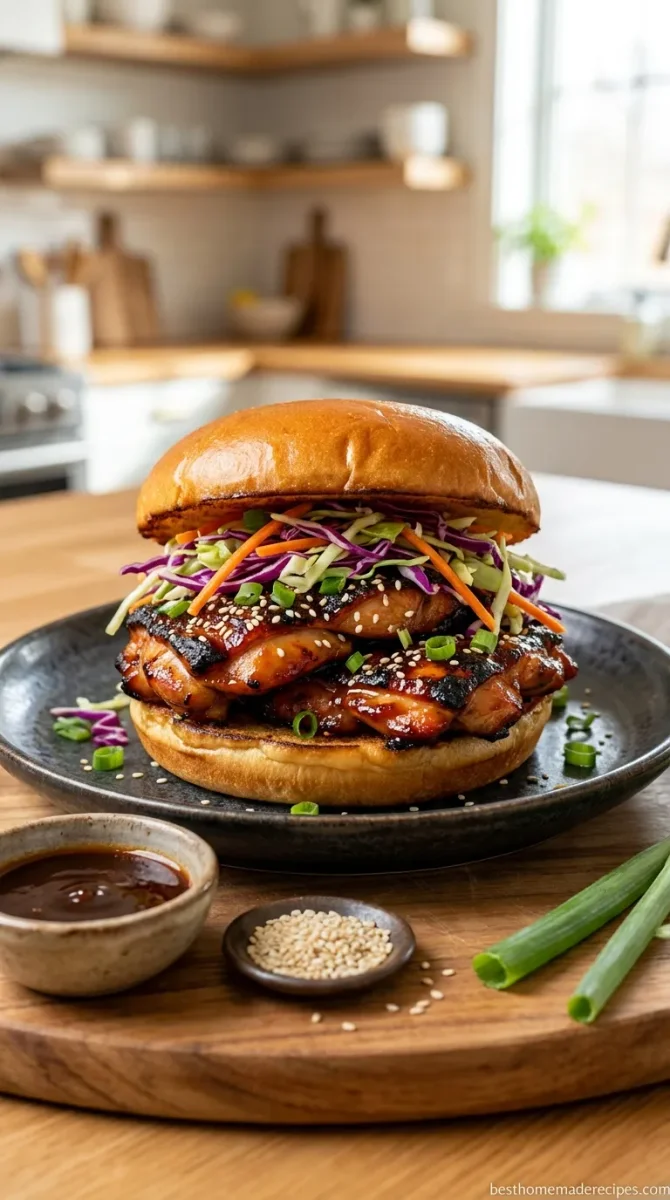
Pan-seared chicken thighs coated in a sweet, savoury gochujang glaze are served in toasted brioche buns with quick-pickled slaw and spicy mayo. It brings Korean-inspired flavours to a comforting sandwich and comes together in about 30 minutes.
Ingredients
- 680 g (1.5 lb)boneless, skinless chicken thighs (or chicken breasts)
- 45 ml (3 tbsp)gochujang (Korean chilli paste)
- 30 ml (2 tbsp)soy sauce
- 25 g (2 tbsp)brown sugar
- 15 ml (1 tbsp)sesame oil
- 3 clovesgarlic, minced
- 5 ml (1 tsp)grated ginger
- About 180 g (2 cups)shredded cabbage and carrot mix
- 30 ml (2 tbsp)rice vinegar
- 5 ml (1 tsp)sugar, for the slaw
- A pinchsalt, for the slaw
- 4brioche buns (or potato rolls)
- 30 g (2 tbsp)butter, for toasting the buns
- 60 ml (¼ cup)mayonnaise
- 5 ml (1 tsp)sriracha or gochujang, for the spicy mayo
- 15 ml (1 tbsp)neutral oil, for searing the chicken
Instructions
- 1
Quick-pickle slaw
Toss the cabbage and carrot mix in a medium bowl with the rice vinegar, a pinch of salt and the teaspoon of sugar. Set it aside to pickle while you prepare the chicken.
- 2
Mix the sauce
Whisk the gochujang, soy sauce, brown sugar, sesame oil, minced garlic and grated ginger together in a small bowl. Set aside 30 ml (2 tablespoons) of the mixture for basting later.
- 3
Sear the chicken
Pat the chicken dry with paper towels. Heat a large skillet or cast-iron pan over medium-high heat with the neutral oil. Cook the chicken for 4–5 minutes per side, until golden and cooked through to an internal temperature of 74°C (165°F). Cook in batches if needed to avoid crowding the pan.
- 4
Glaze the chicken
Lower the heat to medium-low and pour the unreserved sauce over the chicken. Turn the chicken to coat, then simmer for 1–2 minutes, flipping once, until the sauce thickens and clings to the meat. Take the pan off the heat and leave the chicken to rest for 2 minutes.
- 5
Toast and mix
Split the buns and spread the cut sides with butter. Toast them in a separate pan or under the grill until golden. In a small bowl, mix the mayonnaise with the sriracha or extra gochujang.
- 6
Assemble sandwiches
Spread spicy mayo on both halves of each toasted bun. Add the glazed chicken and pickled slaw, then close the sandwiches and serve immediately.
What is a Korean BBQ chicken sandwich?
This is an American-style sandwich built around flavours associated with Korean barbecue: chilli paste, soy, sesame, garlic and ginger. The recipe pairs the glazed chicken with a familiar soft bun and a crisp, tangy slaw.
The contrast is what makes this version work: sweet-spicy chicken meets sharp, lightly pickled vegetables, while brioche and spicy mayo make the filling rich and satisfying.
Nutrition and macros by portion
The nutrition label shows one serving as written: 680 calories, 0g protein, 0g carbs, 0g fat.
| Portion | Adjustment | kcal | Protein | Carbs | Fat |
|---|---|---|---|---|---|
| Lighter | Use less spicy mayo | 476 kcal | 0g | 0g | 0g |
| This serving | As written | 680 kcal | 0g | 0g | 0g |
| Hungry | Add an extra chicken thigh | 1020 kcal | 0g | 0g | 0g |
The buns and brown sugar provide much of the carbohydrates, while the chicken supplies most of the protein. Fat comes mainly from the thighs, sesame oil, butter, mayonnaise and brioche. Balance the sandwich with extra slaw or a fresh vegetable side.
Build flavour into the glaze
Gochujang: This fermented Korean chilli paste brings heat and savoury depth. Its thick texture helps the sauce cling to the chicken as it simmers.
Aromatics: Garlic and ginger add freshness to the sweet-savoury mix. Grate the ginger finely so it blends evenly into the sauce.
Give the slaw a head start
Quick pickle: Rice vinegar, sugar and salt season the cabbage and carrot while the chicken cooks. Toss the mixture well so the dressing reaches the vegetables throughout.
Texture: The slaw should soften slightly but remain crisp. Drain off excess liquid before adding it to the buns if it has released a lot of moisture.
Sear before glazing
Dry chicken: Patting the thighs dry helps them brown in the hot pan rather than steam. Leave space around each piece, working in batches when necessary.
Sauce timing: Add the unreserved sauce only after the chicken has cooked through. A short simmer thickens it; prolonged cooking can make the sugary glaze scorch.
Check the chicken and sauce
Doneness: Check the thickest part of the chicken with a food thermometer; the method specifies 74°C (165°F). Rest it for 2 minutes after taking the pan off the heat.
Glaze: Look for sauce that has thickened enough to coat the meat. If it starts sticking or darkening too quickly, lower the heat.
Toast and assemble just before eating
Buns: Butter the cut sides and toast until golden. This adds flavour and gives the bread a little resistance to the saucy filling.
Assembly: Spread mayo on both bun halves, then add the chicken and slaw. Putting the slaw on top keeps its crunch prominent and helps prevent the bun from becoming soggy.
What to serve alongside
Fresh sides: Serve with cucumber slices, leafy greens or a simple salad to add a cool, crisp contrast to the spicy filling.
Heartier sides: Roasted potatoes or a small portion of rice work well if you want a more substantial meal. Serve the sandwiches promptly while the buns are still warm.
Recipe notes & tips
- Use a large pan or sear the chicken in batches so the pieces brown instead of crowding together.
- Pat the chicken dry just before it goes into the hot pan.
- Stir the slaw once or twice while it sits so the vinegar dressing is distributed.
- Keep the heat medium-low when simmering the glaze, as the brown sugar can darken quickly.
- Toast the buns near the end so they are warm when you assemble the sandwiches.
- Taste the spicy mayo before spreading it and add more sriracha or gochujang if you want more heat.
Variations
- Use chicken breasts: Choose boneless, skinless breasts as the recipe allows and check the thickest part for doneness.
- Swap the buns: Use potato rolls instead of brioche for a softer, less buttery bun.
- Adjust the heat: Use less sriracha or gochujang in the mayo for a milder finish.
- Add cucumber: Layer in thin cucumber slices for extra crunch and freshness.
- Change the slaw mix: Use shredded cabbage alone if you do not have a cabbage and carrot blend.
Common mistakes to avoid
- Crowding the pan: The chicken may steam rather than brown; cook it in batches if needed.
- Adding the glaze too early: The sugary sauce can burn before the chicken cooks through; wait until after searing.
- Overcooking the glaze: It can become too dark or sticky; simmer briefly over medium-low heat.
- Skipping the chicken temperature check: Test the thickest part and cook to 74°C (165°F).
- Leaving excess slaw liquid: It can soak the buns; drain the slaw if it has become very wet.
- Assembling too far ahead: The buns can soften; build the sandwiches just before serving.
How to store
Store leftover chicken, slaw and spicy mayo separately in covered containers in the fridge for up to 3 days. Reheat the chicken in a pan until hot, then assemble with freshly toasted buns; keep the slaw cold.
Frequently asked questions
Can I use chicken breasts instead of thighs?
Yes. The recipe allows for boneless, skinless chicken breasts. Check the thickest part for doneness and take care not to overcook them.
How spicy is the sandwich?
The gochujang glaze and spicy mayo both contribute heat. Use less sriracha or gochujang in the mayo if you prefer a milder sandwich.
Can I make any components ahead?
You can pickle the slaw and mix the spicy mayo ahead, keeping each covered in the fridge. Toast the buns and assemble the sandwiches just before serving.
How do I know the chicken is cooked?
Check the thickest part with a food thermometer; the method calls for 74°C (165°F). Let the chicken rest for 2 minutes after cooking.
What can I use instead of brioche buns?
The recipe suggests potato rolls as an alternative. Toast whichever buns you use with butter as directed.
What does the reserved sauce do?
The method sets aside 30 ml (2 tablespoons) for basting later, while the remaining sauce is used to glaze the cooked chicken. The assembly instructions do not specify an additional basting step.
Cook it from the original
This recipe comes from besthomemaderecipes.com. Their page has the author’s own photos, notes and tips — the best place to cook it from.
Open the recipe on besthomemaderecipes.com