
Stuffed Vegetarian Vine Leaves
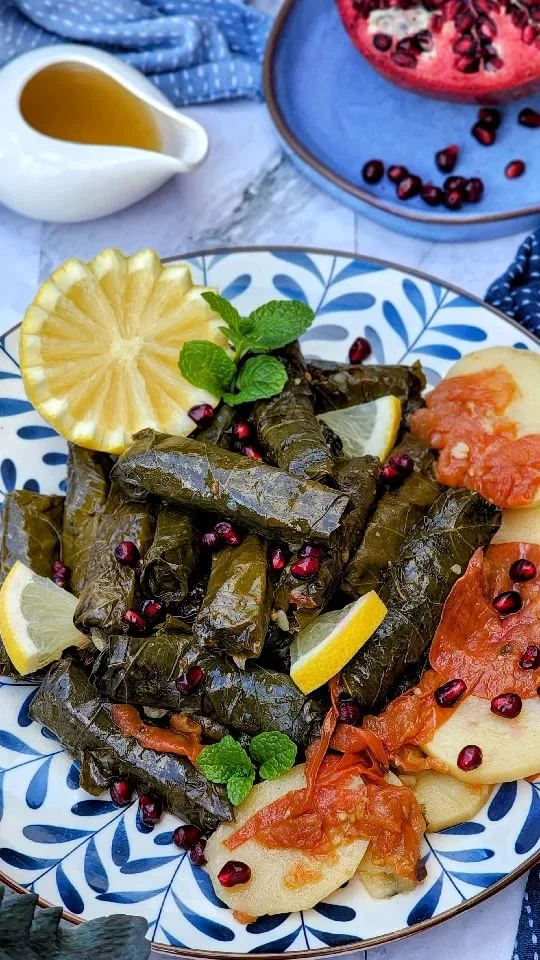
These vegetarian vine leaves are filled with rice, herbs, tomato and lemon, then slowly cooked over layers of potato and tomato. They take time to prepare, but make a fragrant, generous dish that can be served warm or at room temperature.
Ingredients
- 2 packets (400 g each)vine leaves
- 570 g (3 cups)medium-grain rice, washed very well
- 3–4 bunches (use 4 if the bunches are small)parsley, chopped
- 4–5ripe tomatoes, diced
- 1 bunchmint, chopped
- 4 sprigsspring onions, chopped
- 2 large, juicy lemons (about 180 ml juice; use more if the lemons are small)lemons
- To coatolive oil
- To tastesalt and ground black pepper
- 3–4potatoes, peeled and cut into discs
- 3–4tomatoes, cut into discs
- 2 large, juicy lemons (more if needed)lemons
- A drizzleolive oil
- To tastepepper
Instructions
- 1
Rinse the leaves
Put the vine leaves in a large bowl and rinse them with very hot water for a few minutes to soften them and wash away excess brine. Rinse them thoroughly.
- 2
Mix the filling
Combine the rice, parsley, mint, spring onions, diced tomatoes, lemon juice, olive oil, salt and pepper in a bowl. Mix well, then taste and adjust the seasoning if needed.
- 3
Prepare the leaves
Prepare the vine leaves as shown in the original recipe's reel.
- 4
Layer the pot
Arrange the potato discs and tomato discs in a very large pot, then add the prepared vine leaves neatly on top. Add a little pepper, olive oil and lemon juice, followed by boiling water.
- 5
Add the weight
Place a weight over the leaves and press down to check the water level. Add only enough water to reach and coat the leaves when they are held down by the weight.
- 6
Check the seasoning
The recipe does not add salt to the pot, as salt remaining on the leaves from their brine should season the liquid. Since brands vary, taste the cooking liquid after 20 minutes and add salt or lemon juice if needed.
- 7
Bring to boil
Cook over high heat and bring the pot to the boil. Leave it uncovered for about 25 minutes.
- 8
Reduce the heat
Lower the heat and cook for a further 5–10 minutes.
- 9
Slow cook gently
Remove the weight, turn the heat to its lowest setting and cover the pot. Continue slow cooking; the original cook reports that theirs took about 4 hours.
- 10
Serve the leaves
Enjoy.
What are stuffed vine leaves?
Stuffed vine leaves are a familiar dish across parts of the eastern Mediterranean and Middle East, with many regional names and fillings. This version uses rice, fresh herbs, tomato and lemon rather than meat.
Herbs and lemon give the rice a bright, savoury flavour, while the potato and tomato discs form a soft base in the pot. Slow cooking lets the filling and leaves become tender together.
Nutrition and macros by portion
The nutrition label shows one serving as written: 720 calories, 15g protein, 112g carbs, 23g fat.
| Portion | Adjustment | kcal | Protein | Carbs | Fat |
|---|---|---|---|---|---|
| Lighter | Use less olive oil | 504 kcal | 11g | 78g | 16g |
| This serving | As written | 720 kcal | 15g | 112g | 23g |
| Hungry | Serve a larger portion | 1080 kcal | 23g | 168g | 35g |
Rice supplies most of the carbohydrate, while olive oil contributes most of the fat; the herbs and vegetables add smaller amounts of carbohydrate and fibre. The rice provides some protein, but this is not a particularly protein-rich meal, so serve it with yoghurt or another protein-rich side and a salad for balance.
The rice and herb filling
Rice: wash it very thoroughly before mixing so excess surface starch is removed. Medium-grain rice is specified here; the filling is uncooked when it goes into the leaves.
Herbs: parsley and mint make up much of the filling's fresh flavour, with spring onion adding a mild savoury note. Chop them finely enough to distribute through the rice.
Rinsing the vine leaves
Brine: vine leaves from packets can be quite salty, so the recipe rinses them in very hot water for a few minutes. Handle them gently as you separate and rinse them to avoid tearing.
Seasoning: the leaves may still contribute salt to the pot, so the recipe leaves salt out initially. Taste the cooking liquid after 20 minutes and adjust salt or lemon juice to suit the leaves you have.
Rolling and arranging
Filling: the original method refers to a reel for preparing the leaves, so follow that visual guide for the wrapping and rolling. Keep the finished parcels neatly arranged in the pot.
Layers: potato and tomato discs go beneath the vine leaves. They provide a base for the parcels as they cook and take on some of the lemony cooking liquid.
Keeping the parcels in place
Weight: a weight placed over the leaves holds them down during cooking. Press it down before judging the water level, since the parcels should be just coated when held in place.
Water: the recipe gives no fixed amount, so add boiling water gradually until it reaches the right level under pressure. Avoid adding substantially more than needed.
Cooking slowly
Initial boil: the pot starts uncovered over high heat for about 25 minutes, followed by another 5–10 minutes at lower heat. Keep an eye on the liquid during this stage.
Gentle finish: after removing the weight, cover the pot and cook on the lowest heat. The source reports a cooking time of about 4 hours, so use tenderness and the remaining liquid as cues rather than treating that time as exact.
Serving the vine leaves
Serve the parcels with the potato and tomato from the pot, spooning over a little of the lemony cooking liquid. They can make a substantial meal on their own.
For a fuller spread, pair them with plain yoghurt, a crisp salad or bread. A squeeze of lemon at the table can lift the flavour if the parcels taste mild.
Recipe notes & tips
- Wash the rice thoroughly before mixing it with the herbs and vegetables.
- Rinse the vine leaves well to remove excess brine, but handle them gently.
- Taste the cooking liquid after 20 minutes before deciding whether it needs salt or more lemon.
- Add boiling water gradually and check the level with the weight pressing down on the parcels.
- Keep the heat very low during the covered, slow-cooking stage.
- Use the original reel as a visual guide for preparing and rolling the leaves.
Variations
- More lemon: add extra lemon juice to the filling or cooking liquid for a sharper flavour.
- Extra herbs: increase the parsley or mint slightly for a greener, more aromatic filling.
- Garlic: mix a little finely chopped garlic into the filling for a more savoury note.
- Spiced filling: add a pinch of ground allspice or cinnamon to the rice mixture.
- Yoghurt side: serve with plain yoghurt for a cool contrast to the lemony parcels.
Common mistakes to avoid
- Under-rinsing the leaves: excess brine can make the dish too salty, so rinse them thoroughly with very hot water.
- Adding salt too soon: the leaves may season the pot as they cook, so taste the liquid after 20 minutes first.
- Overfilling the leaves: leave room for the rice to cook; use the original reel as a guide to wrapping.
- Adding too much water: check the level with the weight in place and add only enough to coat the parcels.
- Cooking over high heat throughout: after the initial stages, reduce the heat to its lowest setting for the covered finish.
- Rushing the final cook: give the parcels time to cook slowly and check their tenderness before serving.
How to store
Cool leftovers promptly and refrigerate them in a covered container for up to 3 days. Reheat gently in a covered pan with a splash of water, or microwave until piping hot throughout.
Frequently asked questions
Do I need to cook the rice before filling the leaves?
No. The recipe mixes washed, uncooked rice with the herbs, tomatoes and lemon, then cooks it inside the leaves.
How much water should I add to the pot?
There is no fixed quantity in the recipe. Add boiling water until the leaves are just coated when pressed down by the weight.
Should I add salt to the cooking water?
The recipe does not add salt at the start because the vine leaves may still carry salt from their brine. Taste the liquid after 20 minutes and season if necessary.
How long do the vine leaves take to cook?
The method includes an uncovered boil of about 25 minutes, another 5–10 minutes over lower heat and then a covered, very slow cook. The original cook reports that the final stage took about 4 hours.
Can I serve stuffed vine leaves cold?
Yes. They are also good at room temperature or chilled, though the recipe describes them simply as ready to enjoy once cooked.
What can I serve with them?
Try them with plain yoghurt, salad or bread. The potatoes and tomatoes cooked in the pot can be served alongside the parcels.
Cook it from the original
This recipe comes from fooooods.com. Their page has the author’s own photos, notes and tips — the best place to cook it from.
Open the recipe on fooooods.com